Showing posts with label Food Books. Show all posts

06 August 2022

6 Books for Food and Wine Lovers

Happy Saturday and Weekend Cooking day. Because it's been ridiculously hot here (as everywhere in the Northern Hemisphere), I haven't been overly motivated to cook or bake, and that has put me more than a little behind in my cookbook reviews.

Today I'm going to feature six food books that are on my radar. Three of these are for reading (or listening) and three are for cooking and baking. It may be a few weeks (or even into September) before I'll be ready to turn on the oven, but I should be able to tell you my thoughts on the foodie books before the end of summer.

Note that all these books were (or will be) published in 2022. I want to thank the publishers and publicists for the review copies. Because I haven't yet explored these books in depth, the following thoughts are based on my first impressions.

book cover of Mediterranean Small Plates by Clifford A. WrightMediterranean Small Plates by Clifford A. Wright (Harvard Common Press, August): Who doesn't love having substantial appetizers for dinner? In this cookbook, Wright takes us all the way around the Mediterranean Sea in small plates: from tapas in Spain to hors d'oeuvres in France; meze in Greece, Turkey, and the Balkans; and ending with mazza in the Mideast and North Africa. The opening chapters introduce us to the health benefits of the Mediterranean diet, how to make a balanced small-plate meal, and a list of ingredients to have on hand. The chapters explore each region separately, providing recipes, background info, tips, wine pairings, and more. The cookbook ends with almost 20 menus for small-plate meals for entertaining. Pretty much everyone will find more than a few recipes that will fit their dietary plan; I was impressed with the variety of flavors and types of dishes. Note too that many of the recipes are easy and quick enough for weeknight dinners.

book cover of Ultimate Food Atlas from National Geographic KidsUltimate Food Atlas from National Geographic Kids (Hachette, June): I cannot wait to delve into this fun, colorful, and informative atlas. Each chapter focuses on a continent (the Australia chapter includes Oceania) plus there's a chapter dealing with climate change and the world food supply. Each chapter discusses a variety of topics pertaining to the continent (such as food production, festivals, and global issues) and includes descriptions and photos of regional foods. Instead of going country by country, the maps and sections home in on areas that share climatic, geographical, or ecological traits. Fun facts, recipes, activities, games, quizzes, and super graphics make the book a delight to look through and easy to read.

book cover of Bake by Paul HollywoodBake by Paul Hollywood (Bloomsbury, July): In this cookbook, the world's favorite expert on all things baking shares his recipes for classic bakes: cakes, cookies, breads, pastries, and other desserts. I love to bake and am looking forward to the fall when I can try some of Hollywood's versions of naan bread, shortbread, brownie cheesecake, orange brioche, sausage rolls, bread pudding ... and well, just about everything! Beautiful photographs (some showing a step-by-step process) inspire me to don my apron, get out my pastry board, and start baking. While waiting for cooler temperatures, I plan to read through the cookbook and learn Hollywood's techniques and tweaks and tips for achieving my best bakes yet.

book cover of To Fall in Love, Drink This by Alice FeiringTo Fall in Love, Drink This by Alice Feiring (Scribner, August): If you don't know, Feiring is a James Beard award winner for her wine journalism. Besides books and articles, she also writes The Feiring Line newsletter about natural wine (see her website for more). The essays and short pieces in this volume work together as a memoir. Among the stories Feiring shares are ones about her observant Jewish family and childhood, about how she discovered the world of wine, about winemakers and the industry, and about the men in her life. Her focus is on wines that are free from the many additives used in most mainstream wines. She also introduces us to various wine regions around the world and suggests wines to put on your to-buy lists. I plan to savor this collection, one essay at a time.

book cover for A Dish for All Seasons by Kathryn PaulineA Dish for All Seasons by Kathryn Pauline (Chronicle, August): I'm intrigued with the concept of this cookbook. Instead of dividing her recipes into four chapters (winter, spring, summer, fall), Pauline features a single dish and offers variations and transformations to fit the season. The main chapters are by meal or type of dish (breakfast, salads, sides); those chapters are organized by specific dishes. I'll illustrate the idea by focusing on one dish. Under "Mains" we find a section called "Sandwiches." Pauline describes her idea of a deli sandwich and then provides a grid for mixing and matching seasonal produce and flavors. Then she gives her best tips on how to create the "perfect" sandwich. Next she offers four recipes, one for each season. In this case, we find Shrimp Rolls, Boiled Corn, and Potatoes for summer, Falafel with Lemon Tahini Sauce and Lacto-Fermented Torshi for fall, a Meatball Sub with Caramelized Fennel for winter, and Bánh Mi for spring. Despite the examples I gave here, vegans, gluten-free eaters, and vegetarians will find plenty of recipes and seasonal combos to fit their needs. I'll likely use this cookbook before fall because I'd love to try some summer recipes while the farmer's markets are still in full swing.

book cover of Eat Up! by Ruby TandohEat Up! by Ruby Tandoh (Vintage, July): If the name Ruby Tandoh sounds familiar to you, it may be because she was a finalist in the Great British Bake Off or because you've read some of her articles focusing on the intersection of food and society and culture at large. In this collection of essays, Tandoh focuses on issues that are near and dear to her, especially how attitudes about what we eat, what we look like, and who we are entangled and difficult to unknot. She talks about body shaming, being gay, emotional eating, and food in movies. She isn't shy to praise or condemn the foodie elite and food snobs. As I often do with essay collections, I plan to read this one piece at a time, all the while, taking Tandoh's advice to enjoy what I'm eating and ignore the naysayers. Note that she has a cookbook coming out in November.

Shared with Weekend Cooking, hosted by Marg at The Intrepid Reader (and Baker)

Click for more

26 February 2022

Weekend Cooking: Food IQ by Daniel Holzman and Matt Rodbard

book cover of Food IQ by Daniel Holzman and Matt RodbardToday I want to talk about one of my new favorite kitchen companions, Food IQ by Daniel Holzman and Matt Rodbard (Feb 22.). I was very excited to get a review copy of this book of "100 questions, answers, and recipes to raise your cooking smarts" from Harper Wave because I love increasing my food knowledge, and Holzman and Rodbard make it fun to learn.

The book is divided into chapters (for example, "Tools and Technology"), which are further broken down into sections. Each section is introduced by a question ("I talk the talk, but should I buy a wok?"). What follows is not only an answer (yes, buy a wok) but also advice pertaining to the question (how a wok is used, what kind to buy, etc.). Finally, Holzman and Rodbard provide a recipe that puts your newfound knowledge to work (Wok-Blistered Green Beans with Black Bean Sauce). Some sections include bonus material, like the interview with Shirley Chung, who gives us even more insight into using a wok.

Holzman and Rodbard write in a relaxed, conversational style, making it easy to absorb the information. They talk about their own biases and explain their conclusions. Even when they're less enamored over an ingredient, they don't have an either-or attitude. For example, though Holzman pretty much insists on using beans cooked from dried, Rodbard points out that most people don't plan and prep ahead and like the convenience of opening a can instead of remembering to soak the beans before cooking them for upwards of 45 minutes. After discussion, Rodbard agreed that making beans from dried wasn't hard and the end dish was tastier, and Holzman noted that it was okay to used canned, though he couldn't quite advocate it. (My advice is to get a pressure cooker for your dried beans!)

Photo of chicken and rice in a cast iron panI browsed Food IQ, reading the sections that caught my attention, rather than starting on the first page and reading straight through to the end. I still have plenty more to read, but here are three things I discovered:

  • The majority of canned tomatoes sold in the United States as San Marzano, are not really San Marzanos. What's more, several California brands of canned plum tomatoes are every bit as good as the real thing, and likely a whole lot cheaper and easier to find.
  • Always undercook pasta by a minute or two and finish it (unrinsed) directly in the sauce. Add a little pasta water or hot tap water and allow the sauce to emulsify, which makes it stick to the noodles.
  • The world's best cooking pot is a heavy-sided enameled cast-iron Dutch oven with a tight lid. It can do just about everything those specialty pots do. No need to own a tagine, clay cooker, and donabe.
I have only one problem with Food IQ. I can't quite decide if my digital edition will work for me or if I'd rather own the physical hardcover edition for easier exploring. That's a good dilemma to have! I recommend that you track down a copy of Food IQ by Daniel Holzman and Matt Rodbard. It's an interesting and informative read. Note that the "recipes play a critical role in increasing your food knowledge and learning to cook smarter." Plus I've found the recipes to be tasty and doable as well as educational.

The recipe I'm sharing is the one from the tomato section. I picked it because, as the recipe introduction says, "it's extremely easy to make a delicious utility sauce with only five ingredients plus salt." The sauce can be used for dipping, in lasagna, for pizza, or for chicken parm. The key to this recipe is in the way the garlic is cooked. You can use any good-quality canned tomatoes.

Forty-Minute Sauce That Works with Everything
A picture of a hand crushing canned tomatoes into a bowlMakes about 5 cups

  • 1 head garlic, cloves separated and peeled, then smashed
  • 1/2 cup extra-virgin olive oil
  • pinch of red chile flakes
  • 2 (28-ounce) cans good-quality whole peeled tomatoes with their juice
  • Kosher salt
  • 6 fresh basil leaves
In a large Dutch oven or heavy-bottomed pot, slowly heat the garlic and oil over medium-low heat. Cook slowly, being very careful not to brown the garlic, until the smashed cloves are soft and pungent, about 8 minutes. You should watch the garlic for the entire duration, as it can burn quickly. Toss in the chile flakes at the very end.

Add the tomatoes and 2 teaspoons salt, raise the heat to medium-high, and bring to a boil, stirring frequently. Lower the heat to a simmer and cook, stirring frequently and mashing the tomatoes to break them up as they cook, until one-fourth of the liquid has evaporated and the sauce begins to thicken, the color darkens, and the oil begins to float and separate, about 30 minutes.

Stir in the basil and adjust the seasoning with salt as needed. Use immediately or let cool and then store until needed. The sauce will keep in an airtight container in the refrigerator for up to 2 weeks or in the freezer for up to 2 months.

Note: The scans and the recipe are used in the context of a review; all rights remain with the original copyright holders.

Shared with Weekend Cooking, hosted by Marg at The Intrepid Reader (and Baker)

Click for more

12 February 2022

Weekend Cooking: Reading for the Food & Drink Lover

In the upcoming weeks, I'll share my thoughts and recipes from some of this season's cookbooks. Meanwhile, here's what I've been reading.

Book cover of Born Hungry by Alex Prud'hommeFirst up is Born Hungry: Julia Child Becomes "The French Chef" by Alex Prud'homme and illustrated by Sarah Green (Calkins Creek, Feb. 8). This delightful picture book, geared to young readers, is a biographical sketch of how Julia met her husband, moved to France, learned to cook, and started teaching others how to cook.

While the story is brief, Julia's dedication to learning and her delight in eating come shining through. I particularly love that Julia's size is neither hidden nor spotlighted. Instead the illustrations show her as she was (see scan below).

Born Hungry ends with a note about Julia's life once she returned to the United States. The resources section includes a list of Child's books as well as places to visit (virtual and real) to learn more about her. A fun read for foodies of all ages.

illustration of Child in a Fench marketplace

Book cover of Paddy Drinks by Jillian Vose, Sean Muldoon, and Jack McGarryThe next book, Paddy Drinks: The World of Modern Irish Whiskey Cocktails by Jillian Vose, Sean Muldoon, and Jack McGarry (Harvest, Feb. 22), is all about Irish whiskey. The authors are from the New York City bar and distillery Dead Rabbit, and they know the ins and outs of this popular spirit. The book has two main components: detailed information about the whiskey and recipes for cocktails.

In the first part of Paddy Drinks, the authors give a history of Irish-influenced drinks in America (Irish bars have been in the Americas since colonial days), provide a timeline of Irish whiskey, describe how the spirit is distilled, and detail the four main types (single grain, single malt, single pot still, and blended) along with examples of each.

Vose, Muldoon, and McGarry then provide recipes for almost 100 cocktails, including homemade syrups and mixers and guidelines for equipment and techniques. The drinks look delicious, but I'm not sure how many I'll make at home. Quite a few cocktails call for liqueurs and other ingredients that most home drinkers don't stock, that I can't get in my small town, or that are too expensive to buy for a single cocktail. To be fair, the authors note in the introduction that Paddy Drinks is as much for professional bartenders as it is for "civilians," so it's understandable that the cocktails are more elaborate than the mix, shake, and pour types found in most drinks books. That said, I have my eye on a couple of drinks that I plan to make at home. The book ends with a helpful glossary.

I recommend you check Paddy Drinks out from the library for the excellent information about Irish whiskey. If you're a more ambitious cocktail maker than I am, you may need to buy yourself a copy. The scan below shows the authors' recipe for Irish Coffee (to click to enlarge)--an easy cocktail that's perfect for a cold winter's night.

Recipe for Irish Coffee from Paddy Drinks by Jillian Vose, Sean Muldoon, and Jack McGarry

Book cover of The Sweetheart Deal by Miranda LiassonFinally, my light reading this week was The Sweetheart Deal by Miranda Liasson (Entangled, Amara; Jan 25), a rom-com involving two feuding families (a la Romeo and Juliet) in a small Indiana town. The Montgomerys own a French bakery specializing in savory offerings. The Castorinis own an Italian restaurant specializing in the classics.

Tessa is a master bread baker but dreams of being a pastry chef,. Unfortunately, her family needs her help and skills to keep the boulangerie afloat. Leo, a business major, works for his father and wants to modernize the restaurant. The problem is that his father is determined to stick with the decades-old menu, despite declining business. Tessa and Leo come up with a plan: they'll join forces via an on-paper-only marriage and together save both family businesses and mend the rift. Rom-com humor and love ensue.

Sweetheart Deal is a light afternoon read full of breads, pastry, pasta, and wine all wrapped up in a predictable, but fun, plot. Recommended for delicious escape reading.

Note: The scans are used in the context of a review; all rights remain with the original copyright holders.

Shared with Weekend Cooking, hosted by Marg at The Intrepid Reader (and Baker)

Click for more

15 January 2022

Weekend Cooking: Good Reading, Good Food--4 Books

I doubt I’m the only one among us who enjoys reading cookbooks almost as much as I like cooking from them. Today’s post is about two cookbooks that fit this description and two novels that I picked up because they have a food element in the plot. Some worked better for me than others, and I hope at least one will be a good match for you.

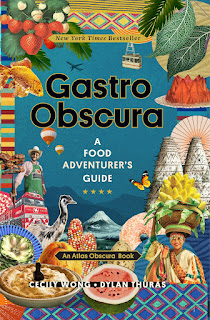
Book cover of Gastro Obscura by Cecily Wong and Dylan ThurasFirst up is Gastro Obscura: A Food Adventurer’s Guide by Cecily Wong and Dylan Thuras (Workman). Like our Weekend Cooking host, Marg, I was gifted a copy of this for Christmas. I haven’t had time to really get into it, but I thought I’d share my initial thoughts. I know Marg will be talking about this book too.

The best way to describe Gastro Obscura is to quote the introduction:

This book is more than a menu of food worth tasting—it’s a collection of forgotten histories and endangered traditions, obscure experiences, culinary ingenuity, and edible wonders.
The entries cover the entire globe, allowing us to virtually visit more than 120 countries and to learn about all kinds of obscure, traditional, trendy, and famous food traditions and dishes. For example, one entry takes us into the ancient Persian ice houses in Yakhchals, Iran. Another is all about how to try an Australian Tim Tam Slam (a subject Marg wrote about a while back).

The book is well illustrated with drawings, maps, and photos and includes quite a number of recipes. Gastro Obscura is a book to dip into when the mood hits or as you’re planning your next travel adventure.

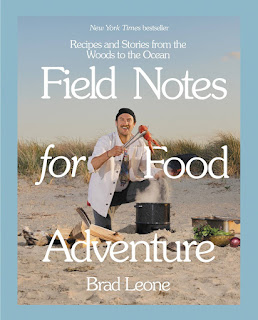
Book Cover for Field Notes for Food Adventures by Brad LeoneI received Field Notes for Food Adventure by Brad Leone from Voracious Books as part of their Ambassador Program. The subtitle is “Recipes and Stories from the Woods to the Ocean.” Leone takes us along on a year of outdoor and food adventures set mostly in the U.S. Northeast woods and along the waterways and coast.

The thirteen chapters are arranged by principal ingredient and largely follow the seasons, starting in late winter and spring with maple and wild ramps; moving into the summer with a pool party, shellfish, and trout; and heading back into the cooler months with mushrooms, venison, and hearty meat-forward dinners. Vegetarians should note that most of the recipes and chapters are centered on seafood or meat.

The book is illustrated with family photos, and each section includes a personal story and each recipe is accompanied by Leone’s notes and tips. Many of the fish and seafood recipes aren’t quite doable for me, because of where I live, but the meat and vegetable dishes look really good, like maple pork tenderloin and tomato and bean salad.

I haven’t cooked out of Field Notes for Food Adventure yet, but I have a handful of recipes marked to try. Leone also has me dreaming of our next shore vacation.

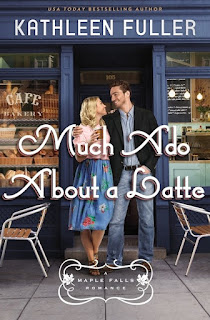
Book cover of Much Ado About a Latte by Kathleen FullerI picked up Kathleen Fuller’s Much Ado About a Latte, which I received from the publisher (Thomas Nelson), based on the title. I’m not much of a romance reader but a good foodie story makes for great escape reading. This is a clean, fun story about Anita and Tanner who have been attracted to each other since high school, although they each think their feelings are not returned.

Tanner is the cook at the local diner, and Anita is a waitress. They are on friendly terms, but besides not sharing their deeper feelings, neither has revealed their long-term ambitions. So Tanner is surprised and shocked to find out Anita is planning to open a coffee shop next door to the diner he just secretly bought! Will being business rivals put an end to any romantic dreams?

Of course the plot is completely predictable, but the food references and the deeper themes of loyalty, friendship, family, and overcoming adversity make for an enjoyable read. Although this is the second entry in the Maple Falls series, Much Ado About a Latte reads like a standalone. No recipes are included in the book.

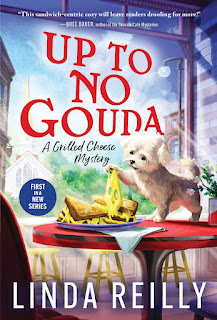
Book cover of Up to No Gouda by Linda ReillyI’ve often written about culinary cozy mysteries, and my latest read is Up to No Gouda by Linda Reilly, which I received from the publisher (Poisoned Pen Press). I’m not quite finished (a couple of chapters to go as of this writing), but I’ve really enjoyed this first in a new series.

Carly uses her late-husband’s life insurance money to open her dream restaurant in her small, quaint Vermont hometown. Open from lunch through dinner, the Grilled Cheese Eatery serves down-home and fancy variations of the iconic grilled cheese sandwich. The day after Carly learns her lease won’t be renewed, a dead body is discovered in the alley behind the restaurant.

Though Carly herself is not really considered to be a suspect, several people she knows, including one of her employees, are tagged by the local police. Of course, Carly gets involved in the investigation and doesn’t give up, even when she may be putting herself in danger.

This book has all the good elements of fun cozy series: quirky town characters, a well-plotted mystery, a likeable main character, a cute dog, and a budding romance. The book ends with several grilled cheese recipes and tips. By the time this post goes live, I will have learned if I was able to ID the killer before Carly did. If you’re into cozy culinary mysteries, give Up to No Gouda a try.

Shared with Weekend Cooking, hosted by Marg at The Intrepid Reader (and Baker)

Click for more

25 September 2021

Weekend Cooking: A Trio of Books for Cooks

Three September Food BooksI’m beyond thrilled and honored to tell you I’ve been accepted once again to be part of the Abrams Dinner Party for this coming publishing year. Many of the participants have already received the first three fall cookbooks, and I can’t wait to see my own copies and to share my thoughts and a recipe or two with you. At the moment, however, I’m in Maine and my cookbooks are in Pennsylvania. We’ll all just have to wait a little bit until my first Dinner Party post.

Today’s post is about three books I mean to read while on my first vacation since fall 2019. So far, I've done more exploring and walking than reading. Perhaps I should have left these food books at home for our house-sitter to enjoy. The good news is that I’ve dipped in to each one enough to suggest you add them to your reading list. Thanks to the publishers for the review copies.

Three September Food BooksFirst is a book I never intended to read all in one go. In fact, Dorothy Kalins’s The Kitchen Whisperers (William Morrow) is already slated to live on my bedside table, so I can read a few pages every day. Kalins is the founding editor-in-chief of Saveur magazine, and this book is a collection of her thoughts and recollections about the foods, places, and people she’s encountered in all kinds of kitchens. She, of course, had the opportunity to learn about cooking from famous chefs, but she gained much of her kitchen wisdom the same way we all have: via family, friends, and neighbors. As Kalins writes in the introduction,

This is not a cookbook, rather, it is a book about cooking, and what—and who—we think about as we cook. I believe that the recipes we remember best, and the moves we make, seemingly automatically, are those that tell familiar stories.
Read this not only to discover a new culinary method or two but also to spark your own memories of those you’ve shared a kitchen with.

Three September Food BooksThe next book is more of kitchen companion than a straight-out cookbook, though it does contain traditional recipes. Cal Peternell’s Burnt Toast and Other Disasters (William Morrow) is subtitled “A Book of Heroic Hacks, Fabulous Fixes, and Secret Sauces,” which fairly accurately describes what you’ll find inside the covers. Have you ever overcooked the broccoli by mistake? Don’t throw it out, Peternell tells you several ways to make good use those soft veggies and other dishes that didn’t turn out quite how you had hoped. You’ll also find some creative ways to use your pantry items and to repurpose leftovers as well as a few good sauces and a half dozen cocktails. You might want to see if your local bookstore or library has a copy of this.

Three September Food BooksFinally, I have a copy of Shanna Farrell’s A Good Drink (Island Press). Farrell, who worked as a bartender in San Francisco, wondered why the farm-to-table, organic, and artisan movements weren't more focused on spirits. Since distilled alcohol is made from crops, shouldn’t we be as concerned about what we put in our glasses as we are about what we put on our plates? To learn more, she sought out growers and distillers who were involved in the sustainable spirits movement. Each chapter covers a different type of alcohol (rum, whiskey, gin, etc.), and the book ends with a focus on bartenders and others in the industry and a look to the future. Interesting reading.

Shared with Weekend Cooking, hosted by Marg at The Intrepid Reader (and Baker)

Click for more

12 June 2021

Weekend Cooking: 9 New Food and Cooking Books

Food and cooking books spring 2021Hello, my friends. Hope that all has been well with you. I'm still cooking and reviewing, but needed a little break.

In today's post, I want to share with you a bunch of food-related books I have on my list to examine more closely. I haven't fully read or cooked from any of them yet, so the following thoughts are gleaned from a combination of skimming through the text, marking dishes I'd like to try, reading bits here and there, and (in some cases) actually trying a recipe. I'll let you know what I think--either here or on GoodReads--after I take the time to read and explore each title.

Thank you to the publishers for providing the review copies. My reactions are purely my own.

Recommended Cookbooks for Spring 2021

What's the Difference? by Brette Warshaw (Harper Wave, June): This handy kitchen reference helps cooks distinguish between similar ingredients, like ale vs. lager, prawns vs. shrimp, and all the different styles of barbecue and types of flour. The information is presented in a straightforward manner and is divided into logical sections, making it easy to find what you're looking for. While it's certainly convenient to have a book that gathers all these kinds of data in one place, my guess is that most readers would simply use Google or the equivalent to figure out the difference, for example, between creme fraiche and sour cream.

At the Chinese Table by Carolyn Phillips (Norton, June 15): This memoir details Phillips's transformation from a food-loving language student in Taipei to eldest daughter-in-law of a traditional Chinese family. She talks about her discovery of the full range of Chinese cuisine, her courtship and marriage to a Chinese scholar, and how she eventually was accepted by her husband's family. Here she shares her almost 50-year love affair with China and its foods, ending each chapter with at least two recipes. Throughout are charming black-and-white drawings.

We Are What We Eat by Alice Waters (Penguin Press, June 1): In her latest book, Waters stays true to her ideals, outlining her philosophy on sustainability, the need to use local products, and the importance of home cooking or slow cooking. She talks about the pressure of advertising and economic issues as well as the effects the fast-food and convenience food industries have on farmers, on the planet, and on our health.

New Cookbooks for Spring 2021

One-Beer Grilling by Mike Lang (Castle Point Books, May): The point of this cookbook is to provide grilling recipes that can be made "before you finish your first cold one." The cookbook is full of easy and very tasty-sounding recipes for sides, meats, sandwiches, appetizers, and even pizza. Almost every recipe is accompanied by a full-page color photo of the finished dish. I like the variety of dishes and the idea of quick grilling, which is perfect for busy families, weeknight dinners, and casual entertaining.

The Maine Farm Table Cookbook by Kate Shaffer (Countryman Press, June): We love Maine, so I was excited to see this cookbook pop up on my list. Here Shaffer introduces us to a wide variety of Maine producers, farmers, and fishermen, located throughout the state. We meet the people, we see gorgeous photos, and learn about Maine's food culture. The recipes are often family dishes provided by the local growers and producers. While the recipes feature local foods, they can be reproduced in any out-of-state kitchen.

What's Good? by Peter Hoffman (Abrams, June): This chef's memoir is one I plan to read a chapter at a time. Hoffman intertwines his journey from childhood to well-known chef with his discovery of specific flavors (maple syrup, garlic, stone fruits, for example), with inside information about the restaurant world, visits to farmers markets, seasonal foodie delights, travel, and the farm to table movement. This is just my kind of foodie memoir, and I'm looking forward to trying out the recipes scattered throughout. In fact, I've already tried one of the cocktails, which is made with a maple syrup simple syrup. Yum.

Books for Foodies, Spring 2021

Cheese, Wine, and Bread by Katie Quinn
(William Morrow, April): Though Quinn's new book does include a few recipes, its not really a cookbook. Instead this book is a deep dive into three specific types of food and three countries. In England we learn about all things cheese: how it's make, different types, melt factors, and the people and places that make cheese so delicious. Italy is all about the wine, from harvest to bottle to table. Again, we travel throughout the country and discover all its vast diversity. Finally we head to France to learn about bread, bread starters, baking bread, different kinds of bread, and the boulangeries we want to visit. Beautifully illustrated with drawings, graphics, and photographs.

Technically Food by Larissa Zimberoff (Abrams, June): This expose, written by an investigative journalist, takes a hard look at high-tech foods: those better-than-beef burgers, non-dairy cheeses, and molds and fungi. Zimberoff asks--and answers--the questions many of us have: Are these "foods" safe and nutritious? Are they really environmentally and ethically sound? Is the high-tech food industry just a way for Silicon Valley to make money or is it the answer to food shortages around the world? This book may change the way you shop and read labels.

Cook for Your Gut Health by Alicia A. Romano (America's Test Kitchen, April): I picked up this cookbook for a couple of reasons. First, it's from ATK, and second, it includes recipes specifically for people on gluten free, diary free, and/or low FODMAP diets. Though I don't have any of those restrictions, several of my friends and family do have to watch their diet. I wanted a reliable source of flavorful recipes so I don't have to worry about inviting those people to eat at my table. Not every recipe will fit all three diets, but ATK clearly labels their dishes so you can find exactly the right foods to cook. I've already made several recipes from the book and loved each one. I still need to read the information at the beginning of the book, which goes through gut health, discusses ingredients, and offers tips and suggestions. If you are on a special diet, you might want to buy or borrow this cookbook.

Shared with Weekend Cooking, hosted by Marg at The Intrepid Reader (and Baker)

Click for more

20 June 2020

Weekend Cooking: One Last Lunch, ed. by Erica Heller

Review of One Last Lunch, edited by Erica HellerHere’s a book that has a little something for everyone--not only us foodies but also anyone who dreams about having "A Final Meal with Those Who Meant So Much to Us."

One Last Lunch, edited by Erica Heller, is a collection of about 50 short pieces written by chefs, actors, writers, comedians, and more as well as friends and relatives of well-known late-celebrities. The concept is simple, a variety of people were asked to imagine they had one last meal with someone who meant a lot to them or who influenced them.

If you had been asked, whom would you invite to lunch? What would you talk about? Where would you eat? What would you eat?

I wasn't too surprised by the number of people who wrote about meals with immediate family, for example, Erica Heller and Kirk Douglas wrote about their fathers and Malachy McCourt and Rick Moody wrote about their siblings. Others imaged meals with their mentors (Sara Moulton chose Julia Child), friends (Richard Lewis picked Jonathan Winters), and acquaintances (Bob Balaban picked Groucho Marx).

For me, One Last Lunch is the kind of book to read piecemeal and out of order. I started with names I recognized, either the person writing the story (Caroline Leavitt, Kirk Douglas, Benjamin Cheever) or the person invited to lunch (Paul Newman, Marcella Hazan, Lou Reed). Some stories are about a real lunch and some about an imagined meal; some pieces are essays, some are plays, and some are lists; all are short, intimate, and engaging.

Food and drink, of course, play a big part in the essays, but so do conversation, memory, and thoughts about the afterlife. One Last Lunch will make you think and will make you smile and cry.

Thanks so much to the Abrams Dinner Party for sending me a copy. I’ve read maybe a third of the pieces and am looking forward to the rest.

Shared with Weekend Cooking, hosted by Marg at The Intrepid Reader (and Baker)

Click for more

23 November 2019

Weekend Cooking: Women on Food by Charlotte Druckman

Review of Women on Food collected by Charlotte DruckmanToday I have a different kind of food book for you. I thought about waiting to write about Charlotte Druckman's Women on Food (Abrams, Oct. 29) until I had finished reading the entire book, but changed my mind.

Here's why. This is a book to savor, to dip into, and to read a bit here and a bit there. I didn't want to ruin my enjoyment by rushing through the pages. At the same time, I wanted to make sure you were aware of this wonderful collection of food writing because it would make an awesome holiday gift.

So what's Women on Food all about? It's a little hard to explain because it's a compilation of essays, photos, drawings, snippets, thoughts, memories, conversations, and interviews from and with more than 100 women involved in the food world. As the book cover says, the women are writers, chefs, critics, television stars, and eaters, and each one has definitive opinions about their relationship with food, cooking, and eating.

This hodgepodge scrapbook-like collection includes a series of essays like Sadie Stern's on her true thoughts about M. F. K. Fisher and Dorie Greenspan's thoughts about good cookies (including a recipe). The interviews and conversations are insightful and down to earth. From them we learn, for example, the role that family played in Nigella Lawson's career and the surprising first real job held by FoodLab's Davida Davidson (not in food!). There's even a fun foodie horoscope and some beautiful photographs.

My favorite sections, however, are the ones that start with a prompt. What follows each is close to 50 short responses on topics like

  • The Truth about My Mother
  • Cook This, Not That! What is a type of food you wanted to cook and were told you couldn't--or were made to feel as though you couldn't . . . and you're pretty sure it's because you're a woman?
  • The Best Thing Since Sliced Bread (in food)
Review of Women on Food by Charlotte DruckmanOne of my favorite prompts is the one titled "A Toast! What is a good thing to put on toast?" The answers range from Chandra Ram's "Please. Name one thing that isn't good on toast. I dare you" to Sofia Perez's explicit "Tomato, olive oil, and Iberico ham." I love all the answers, but that's probably because I agree with Ram.

Finally, you might ask, Who are the women who contributed to Women on Food? Some you've heard of, like Julee Rosso and Deb Perelman. Others may be new to you (or maybe just me), like restaurant owner Ning (Amelie) Kang and freelance writer Naomi Tomky. I loved hearing the voice of each of these women and am happy to have a whole fresh batch of food lovers to learn from.

Charlotte Druckman's Women on Food is one of my favorite food books of the year. I love food writing in general, and the frank honest voices collected in this volume sing to me. I was inspired, I laughed, I cried, I sighed, and I still have at least half of this 400-page book left to read. As I said at the beginning, Women on Food would make a great gift, but you'll want a copy for yourself as well.

Thanks so much to Abrams Books and the Abrams Dinner Party for the copy of Women on Food.
_______
Weekend Cooking hosted by www.BethFishReads.comWeekend Cooking is open to anyone who has any kind of food-related post to share: Book reviews (novel, nonfiction), cookbook reviews, movie reviews, recipes, random thoughts, gadgets, quotations, photographs, restaurant reviews, travel information, or fun food facts. If your post is even vaguely foodie, feel free to grab the button and link up anytime over the weekend. You do not have to post on the weekend. Please link to your specific post, not your blog's home page.

NOTE: Mr. Linky sometimes is mean and will give you an error message. He's usually wrong and your link went through just fine the first time. Grrrr.
_______

Click for more

22 November 2019

Gift Giving 2019: 3 Great Books for Family Reading

Okay, so how did it get to be the holiday season already? Seriously, it's crazy. But I know some of you are already searching for the perfect book gift for your young readers, and today I have three recommendations.

Each is perfect for any time of the year and deserves a permanent place on your bookshelves, but each is also a great gift idea for whatever holiday you plan to celebrate next month. (Thanks to Media Masters and the publishers for the review copies.)

Review of Into the Deep by Wolfgang DreverInto the Deep: An Exploration of Our Oceans by Wolfgang Drever (Prestel Junior, Oct. 8) is beautifully illustrated by Annika Siems. I love serious nonfiction that is geared to younger readers because curious children want to know about the real world. Any kid who is drawn to books about science isn't interested in being talked down to. I was relieved to see that Dreyer, a marine biologist, introduces middle grade readers--and the whole family--to the wonders of the ocean in an engaging way, without making the text too simplified. The book starts out by talking about the tiniest of creatures: plankton. Did you know that some plankton are plants and some are animals? Dreyer's technical text (for example, all about oxygen in the water) is explained and expanded by Siems's detailed and clarifying drawings, which show both marine photosynthesis and how gills work. Dreyer works his way up in size from krill to whales and down in feet from surface life to the ocean bottom. Along the way we learn about  bioluminescence, meet horror-movie-worthy sea creatures, and discover how both prey and victim use camouflage as tools for survival. I had never heard of the ocean floor dwelling tripodfish, but both the illustration and the description caught my attention. Another thing I won't forget: what happens to a whale's carcass when it dies. A note on the art: all the incredible illustrations are oil paintings, some of them "in a really large format," which were photographed for inclusion in the book. Young or old, this is a fantastic book to read and then read again and again.

Review of What's Cooking at 10 Garden Street? by Felicita SalaWhat's Cooking at 10 Garden Street?: Recipes for Kids from around the World written and illustrated by Felicita Sala (Prestel Junior, Sept. 24). Although the format of this book will remind you of a picture book for very young children, the text and recipes are geared to middle grade readers and beyond. Although I envisioned the story as taking place in New York, the setting could be any big city in any country in world. In fact, the author lives in Italy and the book has appeared in both French and English. The premise is simple: in an older apartment building (see the cover illustration), the members of each family are busy making a meal that reflects their heritage.  On one side of each spread, we see inside one of the apartments as men, women, or children are prepping, cooking, or tasting a dish. Mister Ping makes stir-fried soy broccoli while his nephew taste-tests, Signora Lella makes spaghetti al pomodoro while her cat plays with yarn, Jeremiah makes peanut butter cookies while listening to Tom Waits, and elderly Mrs. Greenpea bakes up some mini quiches. On the facing page is an illustrated recipe so you and/or your kids can make the featured dish. You'll find directions for how to make tomato-y salmorejo, black bean soup, coconut dahl, Mediterranean-inspired meatballs, and much more. I love the expressive drawings, the global recipes, and how the people represent a range of ages and ethnicities. The very last page shows all the tenants gathered together around a large dining table that is set up in the backyard. Everyone is sharing the wonderful food.

Review of Encyclopedia of American Indian History &d Culture by Cynthia O'BrienEncyclopedia of American Indian History & Culture by Cynthia O'Brien (National Geographic, Oct. 29). I love National Geographic books because I can trust their research, plus their photographs, art, and informative graphics always make the subject matter come alive and grab my attention. This may be advertised as a kids' book, but it's perfect for both adults and teens too. This book features about 160 American Indian tribes (out of many more hundreds) currently living in North America. The book is divided into regions that cover the continent from the Arctic to southern Mexico. Topics include time lines highlighting thousands of years of history, terminology (such as the definition of matrilineal), religious ceremonies, technology, everyday life, contemporary issues (like Standing Rock), and loss of traditional lands. O'Brien and the National Geographic team found historic photographs, drawings, and archaeological artifacts, which are shown alongside images of the ways contemporary American Indians have managed to preserve or revive their spiritual, cultural, and artistic traditions. Not all is romantic: the book discusses the impact of European contact and expansion, the loss of lands, the spread of disease, the introduction of Western religions, and battles and broken treaties. Because this is an encyclopedia, it is not the kind of book you or your kids will read in one sitting. I recommend starting with the region where you live; you might be surprised at how much you'll learn. This would make a wonderful gift for anyone who wants to know more about the people who lived and thrived in North American long before all of us immigrants arrived on its shores.

Click for more

05 October 2019

Weekend Cooking: American Food by Rachel Wharton and Kimberly Ellen Hall

Review of American Food by Rachel Wharton with illustrations by Kimberly Ellen HallI love reading about food history and changing culinary trends through the generations. I especially love a food history book that lightens the mood and makes me smile or laugh.

Enter American Food by Rachel Wharton with illustrations by Kimberly Ellen Hall. This fun, colorful, and informative A to Z "Not-So-Serious History" (Abrams Image, Oct. 8), hits all my buttons. Take a generous measure of history, stir in some humor, sprinkle with color, and add a dash of playfulness and you've got the gist of American Food.

I even like how the book came to be. Here's how Wharton and Hall describe it:

[We] chose our subjects at random, more or less--picking one well-known American food item for every letter in the alphabet. We had guessed that almost any food eaten in this country would have a multilayered history, some forgotten twists and turns. Thankfully we were right. (p. 6)
I've scanned the contents page so you can see all 26 topics, but note that some chapters veer off into other areas. For example, in the blueberry chapter we learn about their surprising connection to cranberries. Under redeye gravy, the authors mention Andrew Jackson. And, of course, what's a discussion about Orange Julius without a trip to the mall?

Review of American Food by Rachel Wharton with illustrations by Kimberly Ellen Hall

REview of American Food by Rachel Wharton with illustrations by Kimberly Ellen HallThe most controversial chapter in the BFR household is the one about the Italian sandwich (hoagie, sub, hero, zep). Philadelphia gets a lot of page time, and that just fueled the flames for my Philadelphia-area-native husband to wax on (and on and on) about how Philly is *the* home of the Italian sandwich (by whatever name you choose). Oh, and only Philadelphians know how to make one. Sigh.

Other standouts in American Food--because of interest, nostalgia, or fun--are the chapters on Monterey Jack cheese, upside-down cakes, Mexican chiles, and zucchini breads. One of the donut illustrations made me laugh (read the entire caption under the drawing; you may have to click to enlarge), and the lunchbox drawings and text took me back to childhood. Remember the days before bento boxes?

Review of American Food by Rachel Wharton with illustrations by Kimberly Ellen HallWharton and Hall don't forget that most people interested in the history of American food are also interested in cooking. Get ready to make your own ketchup, green goddess dressing, shrimp and gravy, and vinegar pie. Don't turn your nose up at that last recipe. One of the other Abrams Dinner Party members said the dessert was really good. I plan to try it soon.

Recommendation: So who would like Rachel Wharton and Kimberly Ellen Hall's American Food? You would! I think anyone with an interest in food would find something to love. If nothing else, Wharton and Hall will take you back to your youth or help you understand your grandmother's obsession with Jell-O. Finally, if you're looking for a fun hostess gift, stocking stuffer, or birthday present, look no further; American Food is a crowd pleaser.

Acknowledgments: Thanks to Abrams Books and the Abrams Dinner Party for the review copy. My thoughts are my own.
_______
Weekend Cooking hosted by www.BethFishReads.comWeekend Cooking is open to anyone who has any kind of food-related post to share: Book reviews (novel, nonfiction), cookbook reviews, movie reviews, recipes, random thoughts, gadgets, quotations, photographs, restaurant reviews, travel information, or fun food facts. If your post is even vaguely foodie, feel free to grab the button and link up anytime over the weekend. You do not have to post on the weekend. Please link to your specific post, not your blog's home page.

NOTE: Mr. Linky sometimes is mean and will give you an error message. He's usually wrong and your link went through just fine the first time. Grrrr.
_______

Click for more

01 October 2019

Today's Read: Where I Come From by Aaron Sanchez

review of Where I Come From by Aarón SánchezYou’ve seen Aarón Sánchez on the Food Channel and on Top Chef, and you may have even eaten at one of his restaurants, but what do you know about Sánchez the man? His new memoir (out today), gives us some insight.

Sánchez starts his story by describing a scene from his first on-location film trip for the Food Network, when he was only 24 years old, nearly two decades ago:

Introduction

Cinnamon. Chocolate, Chile. I’d tasted them hundreds, thousands of times. But never had these flavors seemed so profound as they did to me one night long ago in a Oaxacan cemetery. So grounding to the world around me. To the earth.
—Where I Come From by Aarón Sánchez (Abrams Books, Oct. 1, p. ix)

Quick Facts
  • Genre: culinary memoir
  • What it's about: Sánchez's story is about way more than how a poor kid from El Paso became one of the Food Network stars. One aspect is the story of his family and Texas roots and a loving tribute to his strong, capable mother who moved to New York City with her six-year-old twin boys to pursue a career as a chef, cook, caterer, or whatever she could find. It's also a story that crosses paths with other famous chefs and that champions women and people of color. Sánchez also talks about his losses, struggles with depression, and coping with fame . . . and, of course, food and cooking.
  • My thoughts so far: I'm not quite a third of the way through Where I Come From, but I can already tell you that the more I read, the more I like Sánchez. The book is well written, and his passion for his family and for food comes across clearly. We also get a sense of his unique place in the Latino world: Mexican by heritage, Texan by birth, New Yorker by breeding, and New Orleanian by choice. I can't wait to finish this book.
  • Extra things to know: Sánchez's memoir includes a handful of recipes, one of which I hope to make this week (I'll post a photo if I do) and a few others have caught my attention. I didn't find any audiobook information, but I wanted to point out that the print book contains only one photo, so you wouldn't miss anything if you chose the audio route. See below for a clip of Sánchez on Live with Kelly and Ryan, in which he talks about his book and makes one of the included recipes.
  • Acknowledgments: Thanks to Abrams Books and the Abrams Dinner Party for the review copy of Where I Come From by Aarón Sánchez.

Click for more

22 July 2019

Stacked-Up Book Thoughts: An Eclectic Reading Week

Happy hot Monday. I know I haven't written a review post in two weeks, but I just haven't been reading all that much. First was July 4, then I took another long weekend (off the grid and with friends), and then had to somehow get all my work done in between.

Oh, and in the meantime, I found a tick embedded in my arm and had to take antibiotics (hope we stopped any Lyme in its tracks) and my washing machine suddenly decided it wasn't going to move past the *fill* cycle. Fortunately, I was in the other room, and the ensuing flood (in my kitchen!) wasn't too horrible.

It took us a couple of hours to clean up the mess. Then we had to research a new washer and run around town trying to find someone who could deliver our top-choice machine this week. Success, and the new washer will be here Wednesday. In the meantime, we had tons of soaking wet dirty laundry (the stuff in the washer, plus the stuff on the floor waiting to go into the washer). It's all dry now and will be washed in a few days. Oh and did I mention it was almost 100F and we don't have central A/C?

Enough of that. No major damage (except to our wallet), so all is fine -- more or less.

Review of Age of Legend by Michael J. SullivanAge of Legend by Michael J. Sullivan (Grim Oak Press, July 9). This is the fourth book in the Legends of the First Empire series. In three related series, Sullivan has created a complex, believable world with fully realized characters and a consistent history. I absolutely adore his books, his ability to write a compelling plot with a good mix of action, character interactions, descriptive prose, and flowing dialogue. Sad things and rough things happen, but there's always a touch of humor to keep readers buoyed. In this entry, the war between the humans and elves continues. We see a glimmer of hope for resolution, but can we trust that the plan will end in success? One thing I really loved about Age of Legend is that the story revolves around one of the (up to this point) minor characters, so we get a little different perspective on the greater political, magical, and spiritual aspects of the changing world. What didn't I like? The book ended on a cliff-hanger! Argh!!! The good news is that next installment should be out before the year is over. I need to know what happens to some of my favorite characters. I listened to the unabridged audiobook (Recorded Books; 14 hr, 34 min), read by the fantabulous Tim Gerard Reynolds. Reynolds is THE voice of Sullivan's books and his characterizations are not to be missed. I can't say enough about his sense of pacing, his smooth delivery of the dialogue, his comedic timing . . . Reynolds has it all. (print copy and audiobook copy from my personal library)

Review of Amelia Fang and the Barbaric Ball by Laura Ellen AndersonAmelia Fang and the Barbaric Ball / Amelia Fang and the Unicorns of Glitteropolis by Laura Ellen Anderson (Delacorte BYR, July 30). I love middle grade fiction, though I'm normally drawn to books written for a tween audience. The Amelia Fang books are geared to somewhat younger readers, but I loved the premise and put them on my review list. Amelia is a young vampire who has a pet pumpkin. Her best friends are Florence Spudwick (a rare breed of Yeti) and Grimaldi Reaperton (a grim reaper in training). In Barbaric Ball Amelia has to be nice to the young prince of Nocturina, but Tangine isn't very nice back. The underlying message of the story is about friendship and how we shouldn't judge others' behavior until we know their background. In Unicorns, the four friends must travel to the terrifying land of light (with its unicorns and fairies) to try to set things right for Tangine and his family. The underlying message here is trying new things, being brave, and learning that different kinds of beings are scary only because we don't know their true nature. It's not all that sappy because there really are some bad guys in Glitteropolis.

Review of Amelia Fang and the Unicorns of Glitteropolis by Laura Ellen AndersonHere are some other things that make the Amelia Fang books such fun to read. First and foremost is Anderson's laugh-out-loud sense of humor. For example, in Amelia's dark world of vampires and goblins, insults are terms of endearment. In fact, Amelia's father lovingly calls his wife "Dearest belch-breath." Each book begins with a map and then black and white portraits of the main characters. Each portrait includes the character's likes and dislikes (Tangine hates an empty stomach). Throughout the chapter books, readers are treated to Anderson's expressive illustrations: We see the emotions on the character's faces, drawings of scenery, and busy action scenes. Anderson also uses different fonts to convey different types of text: noises, Florence's dialogue, notes, signs, and so on.

The Amelia Fang books star a girl vampire, but she has female and male friends of different creatures, making it easy for all kinds of readers to find plenty to love in these stories. I'm looking forward to the next books in the series. (Thanks to the publisher for finished review copies)

Review of Burn the Ice by Kevin AlexanderBurn the Ice by Kevin Alexander (Penguin Press, July 9). In this well-researched book, Alexander takes a look at the American foodie boom, especially in the early twenty-first century. He looks at the role of social media, the "spicing" of American foods, the rise of celebrity chefs, important food cities, the rediscovery of cocktails, the #metoo movement, the #blacklivesmatter movement, NOLA and Katrina, and much more. To tell this story, Alexander focuses on a handful of important restaurant chefs and their establishments: how they came to cooking, what they brought to the scene, and where they set up shop. Some of them you may have heard of--like Tom Colicchio from Gramercy Tavern and Top Chef--and others are much less well known--like Anja Mitra and his wife, Emily, who brought Indian food to the Bay Area. Some people we meet in depth, like Portland's Gabriel Rucker, and others are given short bursts of background info (Guy Fieri and Ree Drummand). I was particularly interested in the history of hot chicken and the story of Indian food in California, both of which reflect on business competition, different levels of personal ambition, and what happens when diners and chefs sense a trend. Be warned: Burn the Ice jumps around a bit and doesn't hold back on adult language. Alexander's examination of the rise and fall of the new millennium's food scene will be most appealing to those of us who are interested in food movements and the interplay between the food world, the economy, and cultural trends. My review of the audiobook edition will be available via AudioFile magazine.

Click for more

09 March 2019

Weekend Cooking: Reading, Eating, Organzing

Is it spring yet? It's still snowing around here, so despite what the calendar says, I'll be wearing sweaters for at least a month. On the other hand, I had my first asparagus of the season this week, and I'll soon break down and buy strawberries. Our local produce is 8-10 weeks away (unless you have a greenhouse).

Today's post is all about some food-related books I've been reading. Although I didn't cook anything new and exciting for dinner this week, we discovered a pretty yummy (and easy) cheese spread from Bon Appetit last month and made it again last weekend. I need to share that recipe with you. Finally, I'm doing some spring cleaning in my kitchen and have a cool resource to tell you about.

A few new cookbooks are winging (trucking?) their way to me as I type, so you can look for some reviews and new recipes coming up soon.

Food for Thought
  • reviews of 4 food books 2019Do you know anyone who isn't on some kind of diet? Calorie restricting, vegan, paleo, keto, FODMAP . . . it seems as if no one just eats anymore. This is one of the issues Caroline Dooner addresses in her The Fuck It Diet: Eating Should Be Easy (Harper Wave, March 26). Granted, some people have serious medical reasons for avoiding some kinds of foods, and Dooner fully recognizes this fact. Still, she believes the $60-billion-a-year dieting industry is mostly harming us. Her book is about having a better relationship with food, your weight, and your body image. Citing many peer-reviewed research articles, she questions the idea that skinny is always healthier and encourages people to just eat what they want and when they want. The idea is that once food is only food, you'll find your own set point and many (all?) of your food cravings will disappear. I'm not going to argue one way or another, but it made for an interesting read. Find more information on Dooner's website.
  • In a similar vein, Virginia Sole-Smith's The Eating Instinct (Abrams, Nov. 2018) asks why something so vital to life itself--food--has so much judgment associated with it. Why is it that some foods are good and other foods are bad? Her book begins and ends as memoir, particularly focusing on her elder daughter's medical issues that resulted in long bouts with a feeding tube before the girl was even a year old. For the bulk of the book, Sole-Smith, a professional journalist, reports on her investigation into other ways modern humans relate to food, often influenced by economics, food aversions, and body image. The title is a nod to the idea that we've seemed to have lost our natural eating instincts. I liked the personal stories and interviews and was happy to see Sole-Smith question why healthcare and diet experts think there is only one best body type. Find more information on Sole-Smith's website.
  • I'm about halfway through Boris Fishman's interesting memoir Savage Feast (Harper, Feb.), which is part food memoir and part modern-day immigration story. From Eastern Europe at the end of World War II to Brooklyn, New York, four decades later, three generations of his family shared food through hardships and bounty in several countries. I've been reading this book slowly because it fits my current mood to do so. If you or anyone in your family was born elsewhere, you'll have a lot to relate to here. Of course, one of the huge draws for me are the many recipes scattered throughout the book, which reflect the family's movements across Europe until the finally made it through immigration inspections to settle in the United States. I may have to try a few of those dishes and see how they compare to my own family's recipes.
  • I've been in the hold line for SkinnyTaste's One and Done (Clarkson Potter, Oct. 2018) for what feels like a thousand years. I know many of the recipes are available on the SkinnyTaste website, but I really  wanted to look through the book. My copy became available yesterday, and I plan to (digitally) flip through it over the weekend. I'm curious: do any of you have an air fryer? If so, do you use it? Is it worth the money? Right now, I'll concentrate on the recipes for the pressure cooker, slow cooker, and traditional stove/oven.
  • Thanks to the publishers for the first three books, and thanks to the library for the last one.
Yummy Recipe

In the February issue of Bon Appetit, we discovered a tasty and easy Cheddar cheese spread which we first served on Super Bowl Sunday with good success. Last weekend, my husband went to a friend's for a guys' night and made this again. He said everyone really liked it and it was a good for both before dinner and later while they played cards, pool, and darts.

This dip works well with vegetables, pitas, pretzels, crackers, and corn chips (like Bugles or Frito's). You can thank me, and Bon Appetit now.

The recipe can also be found on the magazine's website.

Spicy Cheese Spread
8 ounces cheddar, grated (about 2 cups)
2 ounces cream cheese, softened
½ cup mayonnaise
¼ cup sour cream
1 small garlic clove, finely grated
¼ teaspoon smoked paprika
¼ teaspoon cayenne pepper, plus more

Blend cheddar, cream cheese, mayonnaise, sour cream, garlic, paprika, and ¼ teaspoon cayenne in a food processor until smooth, 3–4 minutes. Transfer to a medium bowl; season with more cayenne.

Do Ahead: Cheese spread can be made 3 days ahead. Cover and chill.

Free Printables

Don't be jealous, but one of my weekend goals is to clean out and organize my freezers. I have no idea what's lurking in the dark recesses of the shelves! I think it's been about a year since I emptied them and took inventory of what's on hand. Over on the Fun Cheap or Free blog, I found some useful and pretty inventory checklists for the freezer, refrigerator, and pantry. They're free to download, so check it out. While there, you might want to read through some of Jordan's advice for how to get organized.
_______
Weekend Cooking hosted by www.BethFishReads.comWeekend Cooking is open to anyone who has any kind of food-related post to share: Book reviews (novel, nonfiction), cookbook reviews, movie reviews, recipes, random thoughts, gadgets, quotations, photographs, restaurant reviews, travel information, or fun food facts. If your post is even vaguely foodie, feel free to grab the button and link up anytime over the weekend. You do not have to post on the weekend. Please link to your specific post, not your blog's home page.

NOTE: Mr. Linky sometimes is mean and will give you an error message. He's usually wrong and your link went through just fine the first time. Grrrr.
_______

Click for more

Copyright

All content and photos (except where noted) copyright © cbl for Beth Fish Reads 2008-2020. All rights reserved.

Quantcast

Thanks!

To The Blogger Guide, Blogger Buster, Tips Blogger, Our Blogger Templates, BlogU, and Exploding Boy for the code for customizing my blog. To Old Book Illustrations for my ID photo. To SEO for meta-tag analysis. To Blogger Widgets for the avatars in my comments and sidebar gadgets. To Review of the Web for more gadgets. To SuziQ from Whimpulsive for help with my comments section. To Cool Tricks N Tips for my Google +1 button.

Quick Linker

Services

SEO

  © Blogger template Coozie by Ourblogtemplates.com 2008

Back to TOP