Showing posts with label Oneworld. Show all posts

21 June 2019

5 Books about Ourselves and Our World: June Nonfiction

A few days ago I was involved with an email conversation with a blogger friend of mine about the path our reading lives have taken in the last couple of a years. We were in agreement: we find ourselves turning more and more to escape reading (with some nonfiction thrown into the mix) and less and less to heavy, deep books. Coincidentally, I saw a similar conversation between two other blogger friends on Twitter just yesterday.

Perhaps it's the political climate or perhaps it's 11 years of blogging. I don't have the answer, but I'm happy to know that I'm not alone. Today's post is all about June's nonfiction that I still plan to read. I've made some headway on some of these, and hope to have fuller thoughts soon.

summary of Childfree by Choice by Amy BlackstoneChildfree by Choice by Amy Blackstone (Dutton, June 11): This look at "redefining family" is written by a research sociologist and professor who is herself, child free by choice. Blackstone's book (and her research) explores why choosing not to be a parent is still controversial, how that choice affects a couple's relationship to their extended families and friends, and what it all might mean for our world at large. Spoiler: she sees many positives. Granted, you might dismiss her as defending her own lifestyle choice, but Blackstone backs up her conclusions. You can get a sense of her work and her humor on her popular blog, We're {Not} Having a Baby. Why I want to read this: I'm drawn to Childfree by Choice for a couple of reasons. First, I too am child free, mostly by choice and somewhat by failing to choose. Second, I'm interested in the author's academic viewpoint, which I suspect will differ from some of the more popular (trade) reporting on what it means to opt out of parenthood.

summary of Giants of the Monsoon Forest by Jacob ShellGiants of the Monsoon Forest by Jacob Shell (Norton, June 11): This is a kind of ethnography written by a geology professor about the relationship between humans and elephants in Burma and India. Most of us have two visions of elephants: wild and roaming the African savanna or serving the tourist industry in southeast Asia or perhaps doing tricks in a circus. In fact, elephants of the southern Asian rain forests have had a long relationship with humans, similar to the Western idea of humans and horses. They work with and for people, and develop lifelong attachments to their riders. In this book Shell introduces to the forests, the elephants, and the people who bond with them and we learn how even though the Asian elephant is not bred to be domesticated, these intelligent animals nonetheless help humans and at the same time may save an ecosystem. Why I want to read this: I jumped at the chance to read Giants of the Monsoon Forest first and foremost because I have a lifelong interest in animal behavior. In fact, my undergraduate thesis was on nonhuman primate behavior. I also have a love of elephants that I inherited from one of my grandfathers, who liked all things elephant.

summary of The Ice at the End of the World by Jon GertnerThe Ice at the End of the World by Jon Gertner (Random House, June 11): This book, written by a journalist, focuses on Greeland's melting ice sheet and its implications for our future. Did you know there were entire branches of science devoted to studying ice cores and that Greenland is one of the places to go if ice is your thing? Ice cores reveal not just Earth's history--climate, creatures, polutants--but they also hold keys to our future. Gertner talks about the island's transformation from hostile wilderness to major scientific  laboratory and then introduces us to contemporary scientists who are racing the climate-change clock to recover as much data as possible before Greeland's trillions and trillions of tons of ice melt into the sea. In addition, he gives us perspective on what it means now and what it will mean for younger generations when Greenland at last turns primarily green. Scary and fascinating stuff. Why I want to read this: If you follow my blog then you know I love nonfiction about the cold regions of our world, so The Ice at the End of the World seems a good fit for me. I'm of course interested in climate change and the fate of our planet, And, finally, I've met one of the leading ice core scientists (he's the husband of a woman I know through fiber arts), and I've been curious about his and his colleagues' work for years.
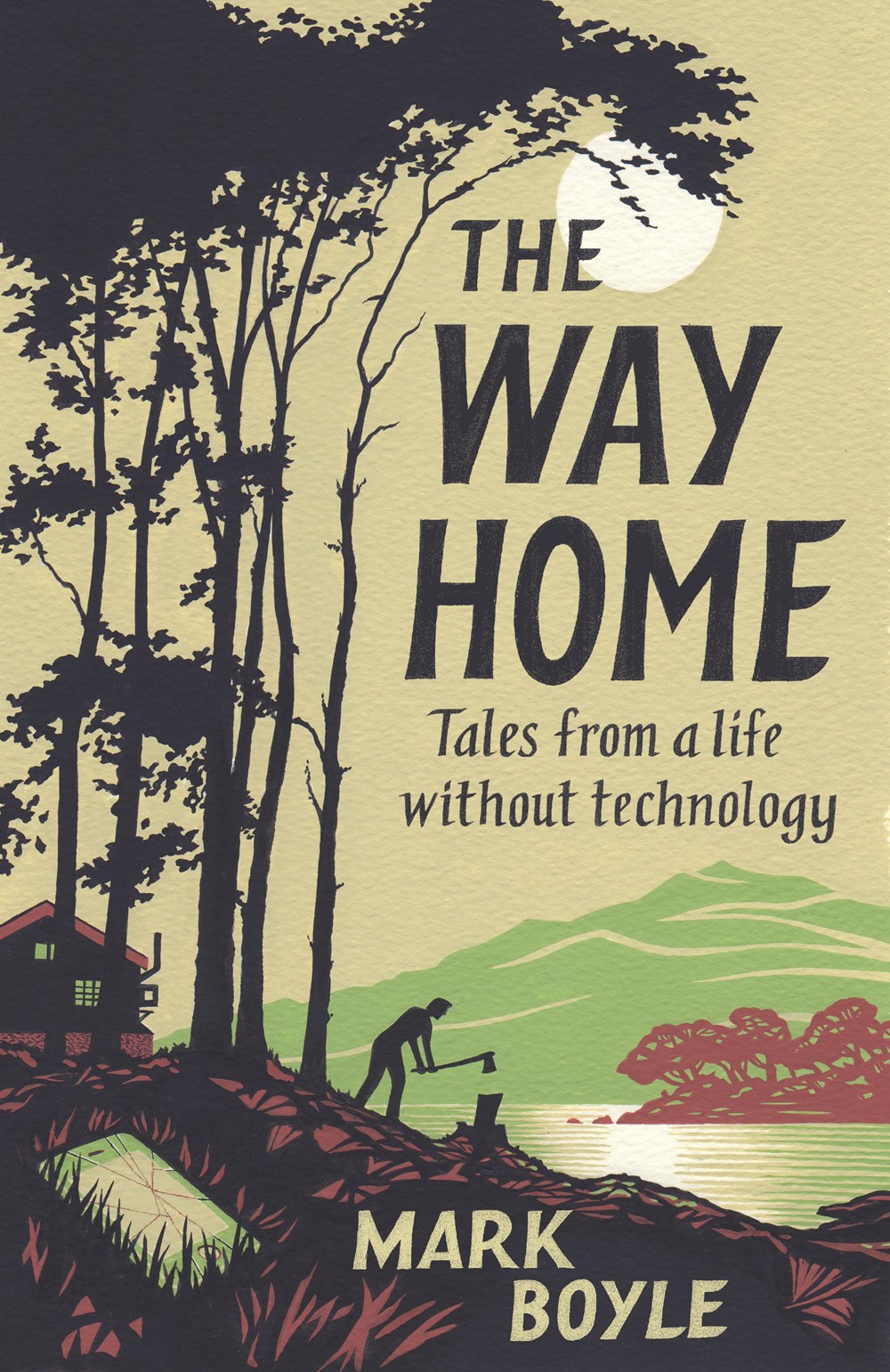
summary of The Way Home by Mark BoyleThe Way Home by Mark Boyle (June 11, Oneworld): This modern-day Walden story, set in Ireland, is written by a former businessman. Most off-the-grid memoirs have an element of wacky about them, but Boyle's experience of living without electricity (and thus without the internet) in a house he build himself follows in the footsteps of Thoreau. He's no isolationist, either, and his story is as much about life in rural Ireland as it is about reconnecting with self and nature. It's my understanding that is also an account of living without money (or very little of it), which has both benefits and risks (though healthcare is less of a worry in Ireland than it is in the United States, though I digress). Why I want to read this: I realize it wouldn't be the life for everyone, but when I was younger, I was drawn to the homesteading idea The Way Home describes a similar experience. I also like the fact that Boyle is not a cultist; he's just a guy who found a way to live with less in a world that always seems to want more, whether that's money, things, or connectedness.

Summary of One Giant Leap by Charles FishmanOne Giant Leap by Charles Fishman (Simon & Schuster; June 11): This history of how we went from a president's speech to a moon landing in less than decade is written by a journalist. Perhaps in this day and age of technology, the idea that United States successfully landed two men on the moon isn't all that shocking, but at time when color television was definitely not in every household, it was a pretty amazing accomplishment. Fishman gives us the backdoor look at the people, technology, and politics behind the moon landing. We visit the research laboratories, learn about how space suits where made, and discover the engineering behind the Apollo program. It's a story of invention and bravery and everyday acts of devotion to the project. Why I want to read this: I grew up with the manned space program and still remember watching the moon landing on our family's (black-and-white) television. I'll never stop being fascinated with space. This is the 50th anniversary of the first human to have walked on the moon and this book is just of many that tell the story.

Click for more

19 April 2019

8 April Books That Should Be on Your Radar

Today’s round-up comes in two parts: general fiction and books in translation. All the April books featured here deserve some extra buzz in the blogging world, some because of the issues they address and others because they offer insight into worlds that may be very different from our own.

The descriptions of the plots are primarily based on the publishers’ summaries, and I’ve included the first sentence of each book as well. I hope at least one of the featured titles catches your attention and sends you off to your local bookstore or library. I’m currently reading, and really enjoying, two of them (Bakhita and Feast Your Eyes), and hope to get to the others fairly soon.

Literary Fiction

summary of Feast Your Eyes by Myla GoldbergFeast Your Eyes by Myla Goldberg (Scribner, April 16). This novel is told through a variety of media: catalog notes from a photography show, interviews, journal entries, and so forth. It’s the story of photographer Lillian Preston who is arrested on an obscenity charge after exhibiting partially nude photographs of herself and her daughter. The time period is the mid-1900s, and public and legal questions of art vs. pornography affect Lillian’s career and future. The book is told through the eyes of Lillian’s daughter, Samantha. Reviews: a 4.6 rating on Goodreads; star from Kirkus. Themes: women professionals, art, artists, mothers and daughters. First line: “I was ten when I saw it, Pops sitting across the breakfast table with his Daily News and his cigarette.”

summary of The Dream Peddler by Martine Fournier WatsonThe Dream Peddler by Martine Fournier Watson (April 9, Penguin). Robert Owens, a traveling salesman, offers potions that will allow his customers to control their dreams. When he arrives in a small town at the turn of the last century, many folks want to dream about love and their future spouse, but some dream of revenge. When Robert is caught up in town scandals and gossip, secrets are exposed and the bonds of the community begin to crumble. Quirky characters and a rural-America setting add charm. Reviews: a 4.1 rating on Goodreads. Themes: marriage, love, grief, finding one’s way in life. First line: “The dream peddler came to town at the white end of winter, before the thaw.”

summary of Paul Takes the Form of a Mortal Girl by Andrea LawlorPaul Takes the Form of a Mortal Girl by Andrea Lawlor (Vintage, April 23). Set in the 1990s, this is a kind of retelling of Orlando set in the queer world of university towns and pop culture. From Riot Grrrl music to women’s studies classes and gay bars, Paul is able to gender-shift his way through a variety of alternative communities across late-20th-century America. But how does his fluid gender affect his relationships, and can he/she find (or even want) intimacy? Reviews: a 4.2 rating on Goodreads; star from Kirkus. Themes: LGBTQ+, self-realization. First line: “Like a shark, Paul had to keep moving.”

summary of My Coney Island Baby by Billy O’CallaghanMy Coney Island Baby by Billy O’Callaghan (Harper, April 9). A kind of Irish twist on Same Time Next Year. A man and a woman, married to others, have had a 25-year affair, meeting at a run-down hotel on Coney Island on the first Tuesday of every month, savoring a few hours of peace and joy. When their home lives begin to intrude on their intimacy, they are forced to face the realities of their secret relationship and their futures, either together or separate. Reviews: a 3.8 rating on Goodreads; star from Kirkus. Themes: marriage, love, relationships, honesty. First line: “The air out here is mean with cold.”

Books in Translation

summary of Lie with Me by Philippe BessonLie with Me by Philippe Besson, translated from the French by Molly Ringwald (yes, the actor) (Scribner, April 30). While in Bordeaux as an adult, a novelist sees a face in the crowd that reminds him of a boy he loved when they were teens. Told as a memoir, this novel explores a secret relationship between two ill-matched boys who held on to each other at time when being gay in France was not part of the accepted social norm. Reviews: a 4.3 on Goodreads; Kirkus praised Ringwald’s translation. Themes: young love, LGBTQ+, self-acceptance. First line: “One day—I can say precisely when, I know the date—I find myself in the lobby bar of a hotel in a provincial city, sitting in an armchair across from a journalist, a low round table between us, being interviewed for my latest novel, which recently came out.”

summary of Acts of Infidelity by Lena AnderssonActs of Infidelity by Lena Andersson, translated from the Swedish by Saskia Vogel (Other Press, April 23). When Ester fell madly in love with Olof, she knew the actor was married. She heard him speak the words when he said he wasn’t going to leave his wife, but she was sure he’d eventually change his mind. As the years pass, however, Ester finally faces the truth: she is a permanent “other woman”—but what will this revelation lead to? Reviews: a 3.7 rating on Goodreads. Themes: marriage, affairs, self-reflection, relationships. First line: “Ester Nilsson had arrived at that point in her life when each birthday leaves its mark.”

summary of Bakhita by VĂ©ronique OlmiBakhita by VĂ©ronique Olmi, translated from the French by Adriana Hunter (Other Press, April 16). This novel is based on the life of  Mother Josephine Bakhita, a Catholic nun, born in the mid-1800s, who devoted her life to serving the poor. When only 7 years old, she was kidnapped from her Sudanese village to be sold into slavery and a life of abuse, until she was bought by an Italian consul, who took her with him to Italy, where Bakhita’s spiritual transformation began. She survived unimaginable horrors before her salvation and was canonized by the Catholic Church in 2000. Reviews: a 4.2 rating on Goodreads. Themes: family, slavery, religion, redemption. First line: “She does not know her name.”

summary of City of Jasmine by Olga GrjasnowaCity of Jasmine by Olga Grjasnowa, translated from the German by Katy Derbyshire (Oneworld, April 9). Set against the backdrop of war-torn Syria, this novel focuses on the fates of an ex-pat surgeon who is detained when he tries to leave after a short visit to renew his passport and an actress and her boyfriend who conspire to escape to the safety of Europe. The surgeon is caught in a web of resistance politics and the young couple finds that life as refugees falls far short of the future they had imagined. Reviews: a 4.2 rating on Goodreads. Themes: politics, war, survival, hope. First line: “The first fields are already visible through the plane window, followed by an ocean of houses that vanishes again; then the wing slews upwards and the window reveals nothing but sky blue.”

Click for more

08 March 2019

6 Books to Celebrate Women's History Month

The other day I was in one of those rare states of being in between both print/digital and audiobooks. When I was thinking about what to read next, I remembered March is Women's History Month. This prompted me to sort through my new releases to see which titles would fit the theme. I found books geared to young adult readers and to adults. My mix includes fiction and nonfiction, and one is written in verse.

Although not all the books I feature today are technically women's history, I think they all nicely celebrate the spirit of Women's History Month.

review American Princess by Stephanie Marie ThorntonAmerican Princess by Stephanie Marie Thornton (Berkley, March 12): Alice Roosevelt, daughter of President Teddy Roosevelt, was a no-nonsense, you-can't-stop-me kind of woman. She grew up in the public eye and knew how to use that platform to its best advantage, without stifling her wild side. Yes, she smoked cigarettes in public, but she also understood Washington, DC. Even so, she was less savvy when it came to friendships and love, and her flamboyant personality veiled some deep sorrows. This well-researched novelized version of Alice's life begins in 1901 with her father's unexpected presidency (after McKinley was assassinated) and ends in late 1970s, just before her death. Alice witnessed two world wars, women's suffrage, two presidential assassinations and one resignation, and great changes in technology and society. Audiobook: Penguin Audio; 15 hr, 27 min; read by Elizabeth Wiley.

review The Real Wallis Simpson: A New History of the American Divorcée Who Became the Duchess of Windsor by Anna PasternakThe Real Wallis Simpson: A New History of the American Divorcée Who Became the Duchess of Windsor by Anna Pasternak (Atria; March 5): You know who Wallis Simpson was: the woman who caused a king to give up his throne. Simpson's disruption of the monarchy is often thought of as the least of her sins. She was supposed to have been a Nazi sympathizer and spy and self-promoting schemer. Pasternak's new biography provides an alternate perspective of what lay behind the gossip and public perceptions and paints a different picture of the woman who was shunned by Britain, suggesting that the royal family took advantage of the situation to dethrone Edward, whom they thought unfit to rule. In this account, Simpson is less concerned with becoming a queen than she is with the welfare of her husband, being the only one who knows how to placate his whims and moods. Pasternak also suggests a fairly innocent reason for the Windsors' interest in Hitler. Did Simpson get a raw deal from the royals and the media or did she deserve her bad press? This biography helps round out Simpson's story. Audiobook: Simon & Schuster Audio; 11 hr, 37 min; read by Laura Kirman.

review Salt on Your Tongue by Charlotte RuncieSalt on Your Tongue by Charlotte Runcie (Canongate, March 5): It's a little hard to describe this book of personal essays because Runcie covers so much territory within its covers. As the subtitle--"Women and the Sea"--suggests, the unifying thread of her pieces is the ocean. Some of the essays are clearly nature writing; some are about motherhood; and others take a literary, mythology, or history bent. Women have always had a mixed relationship to the sea. The ocean took their husbands and sons but also provided food, beauty, and recreation. Runcie explores the shoreline and tidal pools, recalls songs and poems celebrating the sea, and turns to the waves when life is overwhelming. Shakespeare, folk tales, Greek mythology, and science all make appearances, but Runcie's Scotland and its rugged coast is the star. This is a book for those who love the beach. Audiobook: Cannongate; 8 hr, 48 min; read by Jessica Hardwick.

review Voices: The Final Hours of Joan of Arc by David ElliottVoices: The Final Hours of Joan of Arc by David Elliott (HMH Books for Young Readers, March 26): This novel in verse geared to young adult readers imagines Joan of Arc's last day through multiple perspectives, some living, some not. Elliott uses a variety of poetic forms, which are signaled by typeface, placement of the words on the page, and ornamented initial capital letters. We hear from Joan's mother and Catholic saints; from the king and from her childhood friends. We also hear from inanimate objects, like a church's altar; from animals, including a stag; and from emotions and states of being, such as lust. Elliott bases at least some of his work on the historic records of Joan's two trials. The first trial includes Joan's own words and resulted in her being burned at the stake. The second trial, held years after her death, documents the voices of the people who knew her well. The book includes a map, a guide to pronunciations, and an index of poetry forms used. Forget the "young readers" label; this is for you too. Audiobook: no information.

Review of Women Who Dared to Break All the Rules by Jeremy ScottWomen Who Dared to Break All the Rules by Jeremy Scott (Oneworld, March 12): This collection of short biographies focuses on six women who defied their gender stereotypes and/or societal expectations to follow their own advice. Some are well-known women, such as Mary Wollstonecraft whose equal rights document has inspired women for centuries. Others are more obscure, such as Margaret Argyll, who was often the subject of a hostile press as she pursued her passions (and divorces). The other women are Victoria Woodhull (women's suffrage), Aimee Semple McPherson (a preacher), Edwina Mountbatten (last vicereine of India), and Coco Chanel (fashion icon). This collection provides a good introduction to interesting women who were a force to be reckoned with during their lifetimes; some of them are still making waves today. The book is illustrated with black-and-white photos and ends with a bibliography of the sources used. Audiobook: no information.

Review of Yes She Can compiled by Molly DillionYes She Can compiled by Molly Dillion (Schwartz & Wade, March 5): This book collects the stories of 10 young women who served in the White House during the Obama administration. Now a few years older and in a different America, these women give us an inside look at the everyday workings of the White House, share their thoughts on being part of a historic presidency, and inspire women and girls to find their own place in American government. Although these women helped shaped their country and the world, they aren't afraid to share their blunders and mistakes, and it's exactly this personal and down-to-earth viewpoint that makes these essays so accessible. You too, no matter your age, can make a difference: get out the vote, become an activist, volunteer, find a new job--just do what you can to make the world a better place for everyone. The book includes a glossy photo insert and ends with a guide for how young people can become involved in the day-to-day business of running the government. The target audience is young adult, but these smart, capable women are speaking to all American citizens. Audiobook: no information.

Click for more

22 February 2019

5 Thrillers for Late Winter Nights

February's blue skies can't fool me; I know there are plenty of cold and snowy days ahead. I'm not complaining (too much) though, because indoor living means more time for reading. A blustery late-winter night provides just the right atmosphere for a spine-chilling thriller or mystery. Here are five of this month's thrillers that might have escaped your attention. It's never too late to give them try.

all about The Winter Sister by Megan CollinsThe Winter Sister by Megan Collins (Atria, Feb. 5): When Sylvie moves back home to tend to her sick mother, she is confronted with the past she's tried to forget. About 16 years earlier her sister went out on a forbidden date and was never seen alive again. The killer remains identified, but as Sylvie settles back into her childhood house, she discovers secrets and unearths new information. Among the suspects is the male nurse who is currently working at the cancer center where Sylvie's mother is being treated. Opening line: When they found my sister's body, the flyers we'd hung around town were still crisp against the telephone poles.

all about In the Dark by Cara HunterIn the Dark by Cara Hunter (Penguin Books, Feb. 19): Detective Inspector Adam Fawley is called to an Oxford house where a woman and child are found locked in the basement and near death. The woman is too traumatized to offer any help. Fawley must figure out if the bad-tempered owner of the house, suffering from dementia, is responsible or if there was another way the victims could have been imprisoned. The case reopens an older missing persons investigation, a body is found buried in the back garden, and Fawley is dealing with his own family issues. Opening line: She opens her eyes to a darkness as close as a blindfold.

all about Blood Orange by Harriet TyceBlood Orange by Harriet Tyce (Grand Central, Feb. 19): Allison, a lawyer on the rise, is finally given a murder case. She is to defend a woman who is accused of killing her husband. One problem: the woman says she did it. Allison, though, thinks there's more the case than meets the eye. Another problem or two: Allison is drinking too much, is unfaithful to her husband, and is neglecting her young daughter. What's worse, someone is threatening to reveal all her secrets, which would dismantle her family and her career. Which of these women will be saved, and who will do the saving? Opening line: The October sky lies gray above me and my wheelie bag's heavy but I wait for the bus and count my blessings.

all about The Hunting Party by Lucy FoleyThe Hunting Party by Lucy Foley (William Morrow, Feb. 19): A group of nine college friends, now in their 30s, continue their tradition of getting together and staying close. This year, they agree to a New Year's Eve trip to a cabin in the Scottish Highlands. After all have arrived, winter descends with a vengeance, snowing them in for the duration. With plenty of food and drink, they're unconcerned, until one of the friends goes missing. This is a classic closed-room mystery in which all the suspects claim to like each other. But, wait! What about the gamekeeper and other locals, who may be very comfortable wandering outside despite the storm? Opening line: I see a man coming through the falling snow.

all about The Syndicate by Guy BoltonThe Syndicate by Guy Bolton (Oneworld, Feb. 7): Erstwhile Hollywood fixer Jonathan Craine has given up big-city life, living peacefully with his son in rural California until he's given an offer he can't refuse from the LA mafia. In the summer of 1947, mob leader Bugsy Siegel is found murdered in his Beverly Hills home. Craine has five days to identify the killer or both he and his son will be swimming with the fishes. Without access to police records or crime scene data, Craine scrounges to find help, coming up with an elderly hit man and a dubious female reporter. Period details and the Mafia vibe add flavor to this thriller. Opening line: He parked the car half-way down Linden Drive and went the rest of the way on foot.

Click for more

18 January 2019

6 Books in Translation to Read in January

Several years ago (and probably more years ago than I realize), I started not just reading books in translation but seeking them out. I don’t know how or why I developed my interest, but if I had to guess, I’d blame Scandinavian crime fiction for turning my attention away from the English-speaking world. I love the perspective and the themes of translated fiction and nonfiction, and by stepping outside my own cultural sphere, I’m broadening my horizons. Here are six books in translation that are my January reading list.

  • 6 Books in Translation to Read in JanuaryThe End of Loneliness by Benedict Wells; translated from the German by Charlotte Collins (Penguin Books; January 29). Set Europe, this prize-winning novel follows the fate of three siblings who are suddenly orphaned and sent away to boarding school, where they drift apart. The youngest, Jules, finds friendship in a shy girl, but they too lose touch after school. When a family crises reunites the siblings, Jules reaches out to his childhood friend. In a world of loss and grief, is it possible to find hope?
  • Last Night in Nuuk by Niviaq Korneliussen; translated by Anna Halager (Grove Press; January 15). (Note: I’m not sure if this was originally written in Greenlandic or Danish.) Set in the capital city of Nuuk, this is the story of five young people trying to find both themselves and their place as they head off into adulthood. Contemporary themes include too much partying, sexual identity, facing responsibilities, and political activism.
  • Mala Vida by Marc Fernandez; translated from the French by Molly Grogan (Arcade; January 15). Set in contemporary Madrid, this novel explores a country in transition, including economic woes and a populist movement (sound familiar? ugh). Against this atmosphere, a radio crime reporter begins to investigate a series of seemingly unrelated murders only to uncover a major scandal from the Franco years, involving what was essentially the kidnapping of babies for the rich and powerful.
  • 6 Books in Translation to Read in JanuaryThe Plotters by Un-su Kim; translated from the Korean by Sora Kim-Russell (Doubleday, January 29). I’ve already written about this futuristic or alternative-world crime novel about a young man who was raised in Seoul’s underworld to be an assassin. In this universe, killers belong to guilds (or families) and are trained to do their jobs, without asking questions. After bungling a hit, our protagonist decides to step out on his own—but at what cost?
  • Wanderer by Sarah LĂ©on; translated from the French by John Cullen (Other Press; January 8). Set in the French mountains, this is the story of a composer and music teacher who has long worked in isolation, until one winter day a former male student—now a famous pianist—appears on his doorstep. Against a background of music and a snow-covered landscape, this is the story of the pair’s complicated relationship, and whether time and maturity will allow them a second chance.
  • What Hell Is Not by Alessandro D’Avenia; translated from the Italian by Jeremy Parzen (Oneworld; January 24). Set in 1990s Palermo, home of the mafia, this novel is based on a true story. When an upper-class teen is asked by his teacher and priest to work at a youth club for underprivileged youth, he gets a firsthand view of the city’s poverty. When the priest is murdered, the teen must decide whether to continue to help the boys at the club or return to his safe and comfortable life.

Click for more

02 November 2018

4 Fall Collections: Truth and Fiction in Short

I can already hear you clicking on by, saying, "But I don't like short stories." I used to think the same thing until I started approaching collections in a new (for me) way. I no longer sit down with a book of short stories or a collection of short biographies with the intention of reading it cover to cover over the course of a few days.

Instead I read my collections one story or essay or article at a time, taking time to let the words or message or facts sink in. When I read a collection straight through, I remained at a distance from the author's work, jumping from one group of characters to the next, never developing a connection. Now I find myself savoring the stories, filling in the gaps, appreciating the depth that the short form offers.

Here are four collections on my night stand right now. I'm looking forward to taking my time, reading a piece at a time, before bed, at lunch, or whenever I have just the right amount of free time.

Just the Facts, Ma'am

Review of Jenni Murray's A History of the World in 21 WomenJenni Murray's A History of the World in 21 Women (Oneworld, October 9) sets out to prove Thomas Carlyle wrong: The history of the world is only half told by the biographies of great men. The rest of it is revealed by the great women who ruled kingdoms, made scientific discoveries, wrote beautiful stories, headed global businesses, and otherwise changed people's lives. The short biographies in this collection start with ancient Egypt, take us through the middle ages, detour to China, head back to the New World, and end in Australia. Some of the women are household names, like Catherine the Great, and others are less well known, like Wangari Maathai. I'm looking forward to meeting each one, and because I love biography, I plan to seek out the longer works in Murray's suggested reading lists for the women I want to know better. For more information about  about Jenni Murray, check out her profile on the BBC Radio 4 The Woman's Hour website.

Review of Titan's of History by Simon Sebag MontefioreTitan's of History by Simon Sebag Montefiore (Vintage, October 16) takes a slightly different tack, by widening the net to include men and individuals who are not on our most-admired lists, like Caligula, Jack the Ripper, and Hilter. Every person profiled, however, made an impact on the world, whether through politics, murder, music, or philosophy. The 170 short biographies are male heavy, but not male exclusive and the mix is fascinating. Again starting in ancient Egypt, this collection ends in China with an unnamed but famous titan of history: the brave man who stopped the tanks in Tienanmen Square, showing the world that one person can indeed make a difference. Sharpen your trivia skills, learn something about world history, and meet fascinating people who changed the course of history through their acts, discoveries, or art.

Tell Me a Story

Review of Shelf Life of Happiness by Virginia PyeThe stories in Virginia Pye's Shelf Life of Happiness (Press 53, October 23) focus on family and making connections and gaining self-awareness. A teenager tries to bridge the generation gap with his father, and a painter finally achieves recognition only to find himself in a dangerous situation. We meet a librarian who in the process of mourning finds a wider world, and in another story about loss, a husband and wife find their own styles of comforting their child. Other stories include LBGTQ+ themes. If you need more encouragement, Pye has won several awards for her fiction and much praise from writers as diverse as Gish Jen and Annie Dillard.

Review of Nocola Barker's The Three Button Trick and Other StoriesNocola Barker's The Three Button Trick and Other Stories (Ecco, November 13) gathers 19 stories that embrace the strange and stretch reality to get at the truth of the human condition. For example, in one story a pregnant woman is scolded by her fetus when she indulges in a bit of shoplifting; in another a man purposely buttons his shirts wrong in hope of snagging a sympathetic girlfriend--what happens if it works? Other stories focus on relationships: new and broken. The stories were previously published in the UK and by a small press, but thanks to Ecco, Barker's work can reach a wider audience. In an older Kirkus review, we're told that the quirky nature of these stories might toe the line of too weird for some readers. I, however, trust Ecco and am willing to give them a go.

Click for more

Copyright

All content and photos (except where noted) copyright © cbl for Beth Fish Reads 2008-2020. All rights reserved.

Quantcast

Thanks!

To The Blogger Guide, Blogger Buster, Tips Blogger, Our Blogger Templates, BlogU, and Exploding Boy for the code for customizing my blog. To Old Book Illustrations for my ID photo. To SEO for meta-tag analysis. To Blogger Widgets for the avatars in my comments and sidebar gadgets. To Review of the Web for more gadgets. To SuziQ from Whimpulsive for help with my comments section. To Cool Tricks N Tips for my Google +1 button.

Quick Linker

Services

SEO

  © Blogger template Coozie by Ourblogtemplates.com 2008

Back to TOP