Showing posts with label Science. Show all posts

07 August 2020

12 True Stories to Read This Month

Although I seem to be lost in a sea of speculative fiction and mysteries/thrillers during these trying times, I haven’t forgotten that I normally love nonfiction. In fact, I’ve already finished one of the books on this list and have another one in my queue.

If you can’t quite face true stories right now, jot down the titles that call to you and save them for brighter days.

Most of the following books are coming out this month, but please double-check because publishing dates are unreliable this year. Summaries are cobbled from the publishers; audiobook information is included.

Olive the Lionheart, Being Lolita, The Book of Atlantis Black, The Fixed Stars
Life Stories
  • Olive the Lionheart by Brad Ricca (St. Martin’s Press): In 1910, Olive MacLeod, a thirty-year-old, redheaded Scottish aristocrat, received word that her fiancĂ©e, the famous naturalist Boyd Alexander, was missing in Africa. So she went to find him. This is the thrilling true story of her astonishing journey. Based on firsthand sources (letters and diaries). Audiobook: Read by Billie Fulford-Brown; 11 hr 31 min; Macmillan Audio
  • Being Lolita by Alisson Wood (Flatiron): The true story of how the author came under the thrall of her high school English teacher, and it all began when Mr. North gave Allison a copy of Lolita. This is a stunning coming-of-age memoir that shines a bright light on our shifting perceptions of consent, vulnerability, and power. Audiobook: Read by Alisson Wood; 6 hr, 46 min; Macmillan Audio.
  • The Book of Atlantis Black by Betsy Bonner (Tin House): A young woman is found dead on the floor of a Tijuana hotel room. An ID in a nearby purse reads “Atlantis Black.” The police report states that the body does not seem to match the identification, yet the body is quickly cremated and the case is considered closed. So begins Betsy Bonner’s search for her sister, Atlantis, and the unraveling of the mysterious final months before Atlantis’s disappearance, alleged overdose, and death. Using her sister’s online history, the author sets out to find out what happened. This is a haunting memoir and piercing true crime account. Audiobook: Read by Laura Jennings; 5 hr, 15 min; Blackstone.
  • The Fixed Stars by Molly Wizenberg (Abrams): This is the story of how a straight wife and mother discovered that her self-identified sexuality and images of family changed irrevocably after a chance meeting with a woman lawyer. This memoir explores timely and timeless questions about desire, identity, and the limits and possibilities of family. It’s a frank and moving story about letting go of rigid definitions and ideals that no longer fit and of learning instead who we really are. Audiobook: Read by Erin Mallon; 6 hr, 21 min; Dreamscape.
End of Everything, Vesper Flights, Gods of the Upper Air, Leave It as It Is
Science and Nature
  • The End of Everything by Katie Mack (Scribner): An accessible and eye-opening look at five ways the universe could end, and the mind-blowing lessons each scenario reveals about the most important concepts in cosmology. Told with lively wit and humor, this is a wildly fun, surprisingly upbeat ride to the farthest reaches of all that we know. Audiobook: Read by Gabra Zackman; 6 hr, 21 min; Simon & Schuster Audio.
  • Vesper Flights by Helen Macdonald (Grove): A transcendent collection of essays about the human relationship to the natural world “Animals don’t exist in order to teach us things, but that is what they have always done, and most of what they teach us is what we think we know about ourselves.” This is a captivating and foundational book about observation, fascination, time, memory, love and loss and how we make sense of the world around us. Audiobook: Read by Helen Macdonald; 10 hr, 22 min; Recorded Books.
  • Gods of the Upper Air by Charles King (Doubleday): A dazzling history of the birth of cultural anthropology and the adventurous scientists who pioneered it—a sweeping chronicle of discovery and the fascinating origin story of our multicultural world. A century ago, everyone knew that people were fated by their race, sex, and nationality to be more or less intelligent, nurturing, or warlike. But Columbia University professor Franz Boas looked at the data and decided everyone was wrong. Racial categories, he insisted, were biological fictions. His students were some of the century’s most colorful figures and unsung visionaries whose revolutionary findings would go on to inspire the fluid conceptions of identity we know today. Audiobook: Read by January LaVoy; 13 hr, 32 min; Random House Audio.
  • Leave It as It Is by David Gessner (Simon & Schuster): From Theodore Roosevelt’s rallying cry of “Leave it as it is” (referring to the Grand Canyon) to today’s continued environmental fight to save our wild areas, conservation has never gone out of style. This is an account of a nature writer’s retracing of Roosevelt’s steps through the grandeur of our public lands, telling the story of the president’s life as a pioneering conservationist and offering an arresting history, a powerful call to arms, and a profound meditation on our environmental future. Audiobook: Read by Fred Sanders; 12 hr, 24 min; Simon & Schuster Audio.
Berlin 1936, The Craft, Children of Ash and Elm, Iron Empires
History
  • Berlin 1936 by Oliver Hilmes (Other Press; paperback): A lively account of the 1936 Olympics told through the voices and stories of those who witnessed it, from an award-winning historian and biographer. The book takes the reader through the sixteen days of the Olympiad, from the activities in the stadium to the lives of ordinary Berliners, offering a last glimpse of Germany’s vibrant and diverse life, before the Nazis tried to destroy it. Audiobook: no information
  • The Craft: John Dickie (Hachette): The history of the Freemasons and how it influenced history, society, and government around the globe. Yet the Masons were as feared as they were influential. This is an enthralling exploration of a the world's most famous and misunderstood secret brotherhood, a movement that not only helped forge modern society but has substantial contemporary influence, with around six million members across the world. Audiobook: Read by Simon Slater; 16 hr, 35 min; Hachette Audio.
  • Children of Ash and Elm by Neil Price (Basic Books): Written by an archaeologist, this is billed as the definite history of the Vikings told on their own terms: their politics, their cosmology and religion, their material world. Known today for a stereotype of maritime violence, the Vikings exported new ideas, technologies, beliefs, and practices to the lands they discovered and the peoples they encountered and, in the process, were themselves changed. Audiobook: Read by Samuel Roukin; 17 hr, 25 min; Recorded Books.
  • Iron Empires by Michael Hiltzik (HMH): After the completion of the Transcontinental Railroad, America’s railways soon exploded into a titanic industry helmed by a pageant of speculators, crooks, and visionaries. This is an account of the vicious competition between empire builders and how the iconic figures of the Gilded Age, the robber barons, drove the country into the twentieth century—and almost sent it off the rails. Audiobook: Narrator and publisher not yet available; 15 hr, 57 min

Click for more

08 May 2020

4 True Stories: Nonfiction for Young Readers and the Whole Family

As you know, I’m a huge fan of serious nonfiction written for younger readers, but you might not know why. First, I don’t think kids need to be talked down to. When children have a true interest in a subject—history, science, art, music—they want to know everything, not just a watered-down version. If a concept is confusing or difficult, they’ll ask questions, try to figure it out, or have faith they’ll find the answers eventually.

Second, serious nonfiction written for middle grade readers is a perfect first stop for curious teens and adults. I always learn something (actually lots of somethings) when I read science, nature, or history written for children. Finally, I like the idea that these books are perfect for family involvement. When my nieces and nephews were young, nonfiction was often a bridge between the generations.

So, take note: even if you don’t have any youngsters in your life, don’t turn your back on nonfiction written for middle grade readers. Here are four 2020 releases I can recommend to you, your family, and your children.

Nonfiction recommendations for young readersExtreme Ocean: Amazing Animals, High-Tech Gear, Record-Breaking Depths, and More by Sylvia Earle with Glen Phalen (National Geographic Children’s Books; March 3). This beautiful book is written by a well-known, well-respected marine biologist and National Geographic explorer-in-residence. Earle tells the story of her beloved oceans in accessible and fun, yet fact-filled language. She takes us on a watery adventure, introducing us to the power and awe-inspiring characteristics of our oceans: the after effects of a tsunami, the life of whales, and what we’d see in the deepest ocean trenches. We learn about icebergs, tidal pools, coral reefs, and kelp forests. Peppered throughout the text are all kinds of interesting facts and trivia. I think my favorite parts were learning about the technology that allows scientists to explore life underwater: sonar, scuba, diving suits, Sealab, and underwater robotic cameras. Earle tells us about the wonders of the ocean, but she also helps us understand how and why our oceans are in peril from pollution, over fishing, and climate change. She doesn’t end on a down note, however; she offers promise and practical advice on how we—and I mean you and I and our children—can save our oceans. The books is overflowing with National Geographic’s signature gorgeous photographs and graphics. I can’t say enough good things about Extreme Ocean.

Nonfiction recommendations for young readersCharles Darwin and the Voyage of the Beagle by Ruth Ashby (Peachtree, Feb. 1). This short biography introduces readers to Darwin’s voyage around the world and his observations and discoveries that eventually changed our views of the interplay between living organisms and their environment. Ashby includes Darwin’s own words, taken from his letters and his journals: we learn that the intrepid biologist suffered from seasickness and other illnesses but was awestruck by much of what he saw. He was a careful observer of nature—cataloging numerous species of insects, birds, fish, and mammals—and also had opinions (not always favorable) about the behavior and customs of the people and cultures he was exposed to over the five-year journey. The book ends with his return home, the publication of On the Origin of Species, his death, a chronology, and a short bibliography. Ashby’s biography is a well-written first step for readers interested in Darwin, 19th-century exploration and science, and the foundation of our current knowledge of evolution.

Nonfiction recommendations for young readersThe Story of Seeds: Our Food Is in Crisis. What Will You Do to Protect It? by Nancy Castaldo (HMH BYR, Jan. 14): This gem of a book is all about preserving our food supply by saving the very seeds that grow it. We all love seedless oranges, cucumbers, and watermelons, but did you realize there was an ecological risk to having that luxury? We start our exploration of seeds by learning about Mendel, Burbank, and the first seed collector (Vavilov) and then read about the importance of variety, the effects of hybridization, the dangers of blights and wilts, and why we need seed banks (and whether they’re enough to protect our food supply). I particularly liked the sections on heirloom varieties and farmer’s markets and the differences between hybridization and GMO; I learned about biopiracy and seed warriors, and—most important—how to help, what actions I can take right now, and where to find more information. The book is richly illustrated with full-color photographs, and graphic elements help point out important facts and definitions. This year it’s more important than ever to support your local farmers and to preserve biodiversity in our food supply.

Nonfiction recommendations for young readersSpaceman: The True Story of a Young Boy’s Journey to Becoming an Astronaut by Mike Massimino (Delacorte BYR, Apr. 7). Although I’m a big advocate of directing your young readers to the adult sections of the bookstore or library, I also appreciate good, solid autobiography specifically directed to middle graders. Massimino was just seven years old when humans first walked on the moon, and from that time on, he dreamed of becoming an astronaut. His story is not all roses and glitter, though; Massimino tells us about his difficulties in school, not having money to go to college, being turned down by NASA (more than once!), and how nervous he was when undergoing physical exams. On the other side of the coin, he shares his excitement when he finally got the call and describes his wonder and awe at watching Earth from the darkness of space, his experiences as a spacewalker, and how he became the first person to tweet from space. This edition of Massimino’s story is not dumbed down or written in childish language and is appropriate for anyone wishing to know more about a modern-day hero and for those of us who need to be reminded that hard work and determination often really do make our dreams come true.

Click for more

14 February 2020

6 True Stories to Read in February

It's no secret, I love nonfiction. Give me biography, history, nature and travel writing, science and space, and everything else. The true stories that caught my eye this month cover a variety of topics, from the past to the present. Let's take a look.

Troubled History

REview of 1774: The Long Year of Revolution by Mary Beth Norton1774: The Long Year of Revolution by Mary Beth Norton (Knopf, Feb. 11): Written by a respected historian, this is a focused look the critical months of the birth of new nation: "from the Boston Tea Party and the first Continental Congress to the Battles of Lexington and Concord." Norton relies on much firsthand sources and introduces us to figures who don't often appear in school history texts to show that American colonists felt their independence long before the formal declaration was finally signed. First lines:

During the stormy early morning hours of December 11, 1773, a vessel carrying tea and other cargo to Boston wrecked about two miles southeast of Race Point, the northern tip of Cape Cod. On board the William were fifty-eight chests of East India Company tea, fifty-five of which were successfully salvaged. The three damaged chests, each containing about 350 pounds of Bohea (black) tea, remained on the Cape when the other chests were transported later in the month to the safety of the British headquarters at Castle William, an island in Boston harbor. Responding to the sudden arrival of approximately 1,000 pounds of tea on their shores, Cape residents worked to earn it, bought and sold it, argued and fought over it, and destroyed some of it.
Audiobook: Read by Kimberly Farr (Random House Audio; 16 hr, 26 min)

review of Dressed for a Dance in the Snow: Women's Voices from the Gulag by Monika ZgustovaDressed for a Dance in the Snow: Women's Voices from the Gulag by Monika Zgustova, translated by Julie Jones (Other Press; Feb. 4): This volume collects the memories of nine women who were sent to the Soviet labor camps (one to a psych ward) because they or their families were accused of anti-government crimes. The stories are moving, provide eye-witness accounts, and fill some of the gaps in a history that could easily be lost to time. Among the women interviewed is the daughter of Olga Ivinskaya, the woman behind the character of Lara in Doctor Zhivago. The book includes an insert with black-and-white photos. First lines (from introduction):
When the liberation movement known as the Prague Spring ended in August 1968, suppressed by Soviet tanks, and Czechoslovakia was once again under the aegis of the Soviet Union, Soviet authorities began to persecute by father, an eminent linguist, for having participated in the protests in his native Prague. It was then that my parents started to think about fleeing and settling in the US. It wasn't an easy task, because under communism it was illegal to leave the country.
Audiobook: no information

Forensics

review of 18 Tiny Deaths: The Untold Story of Frances Glessner Lee and the Invention of Modern Forensics, by Bruce Goldfarb18 Tiny Deaths: The Untold Story of Frances Glessner Lee and the Invention of Modern Forensics, by Bruce Goldfarb (Sourcebooks, Feb. 4). Written by an investigative journalist who currently works for the chief medical examiner of the state of Maryland, this book introduces us to the woman who, though born in the decade after the Civil War, developed a revolutionary method for investigating crime scenes. Lee, a daughter of Chicago's high society, discovered her passion late in life when she met a medical examiner who told her stories of criminal deaths and bemoaned the fact that most men in his profession were political appointees instead of trained scientists. The book includes photographs. First lines:
Seventeen pathologists and medical examiners, all dressed in dark suits and neckties, sat around a long table in a wood-paneled conference room on the third floor of Building E-1 of Harvard Medical School. It was the autumn of 1944. Thousands of miles away, war ravaged Europe and the Pacific islands. The men had gathered at Harvard to attend a seminar on legal medicine, a field that would later be known as forensic science—the application of medicine to matters of law and justice.
Audiobook: Read by Nan McNamara (Recorded Books, 8 hr, 35 min)

review of American Sherlock: Murder, Forensics, and the Birth of American CSI, by Kate Winkler DawsonAmerican Sherlock: Murder, Forensics, and the Birth of American CSI, by Kate Winkler Dawson (Putnam, Feb. 11): Written by a producer of documentaries, this biography-history mashup tells the story of Edward Oscar Heinrich, who earned the moniker of "the American Sherlock" from his reputation for solving thousand of crimes in the first half of the last century. Based on primary sources, Dawson describes Heinrich's inventions, attention to detail, and "uncanny knack for finding clues." First lines:
His upper jawbone was massive—a long, curved bone with nine tiny holes meant to hold his teeth. The remainder of his skeleton was blackened by a fairly large fire ignited by an anonymous killer. Lifting up the jawbone, I examined the small blades of grass that adhered to its exterior—organic evidence from his hillside grave in El Cerrito in Northern California.
Audiobook: Read by the author (Penguin Audio; 10 hr, 43 min)

Our Feathered Friends

review of The Falcon Thief: A True Tale of Adventure, Treachery, and the Hunt for the Perfect Bird by Joshua HammerThe Falcon Thief: A True Tale of Adventure, Treachery, and the Hunt for the Perfect Bird by Joshua Hammer (Simon & Schuster, Feb. 11): Who knew that the illegal practice of stealing birds' eggs was a thing? This is the true story of Jeffrey Lendrum, who devoted his life to smuggling falcons and falcon eggs from all over the world to sell to the rich, especially in the Mideast. It's also the story of Andy McWilliam from the UK National Wildlife Crime Unit, who was determined to put an end to Lendrum's career. First lines:
The man had been in there far too long, John Struczynski thought. Twenty minutes had elapsed since he had entered the shower facility in the Emirates Lounge for business and first class passengers at Birmingham International Airport, in the West Midlands region of England, 113 miles north of London. Now Struczynski stood in the corridor outside the shower room, a stack of fresh towels in the cart beside him, a mop, a pail, and a pair of caution wet floor signs at his feet. The janitor was impatient to clean the place.
Audiobook: Read by Matthew Lloyd Davies (Simon & Schuster Audio, 8 hr, 23 min)

review of White Feathers: The Nesting Lives of Tree Swallows by Bernd HeinrichWhite Feathers: The Nesting Lives of Tree Swallows by Bernd Heinrich (Houghton Mifflin Harcourt, Feb. 18): Written by a naturalist, this book starts with a simple question: Why do the  tree swallows in the author's yard line their nests exclusively with white feathers, even though they're not abundant near his New England home? This led to years of observations and non-intrusive experiments into tree swallow nesting behavior. The book contains photos and drawings and looks perfect for those of us who are curious about birds, animal behavior, and nature. First lines:
There is arguably no bird in the world that combines graceful flight, beauty of feathers, pleasing song, and accessibility, plus tameness and abundance, more than the tree swallows (Tachycineta bicolor). And just by putting up a nest-box made in minutes from some scrap board and placed on a pole, I had a pair nesting by my door. In early May 2008, I happened to peek into the nest-box and saw five snow-white eggs in a bed of long white feathers. I had peeked into nest-boxes before and seen nest linings of various commonly available materials, but never anything like this. It was no fluke—such white feathers are rare, and it had cost the swallows deliberate effort to search for and acquire them.
Audiobook: Ready by Rick Adamson (Houghton Mifflin Harcourt, 7 hr, 10 min)

*All books (digital, print, and/or audio) provided by the publishers. Descriptive quotes taken from the publisher's summaries; descriptions derived from the publishers, skimming the books, and reading reviews. Some first lines taken from advanced reader copies.

Click for more

07 November 2019

11 Picks for Nonfiction November

November brings us a lot of things, from cooler weather to pumpkin pies and turkeys. In the book-reading world, it’s also popularly known as nonfiction month. Whether you’re official participating in Nonfiction November or are just interested in what’s new, here are my choices from this month’s releases. (all copies—print, digital, and/or audio—provided by the publisher)

Science and Animals

review of My Penguin Year by Lindsay McCraeMy Penguin Year: Life among the Emperors by Lindsay McCrae (William Morrow; Nov. 12). Written by a BBC award-winning photographer and documentary filmmaker, this memoir recounts the year McCrae spent in Antarctica in the company of 4,000 emperor penguins. Illustrated by gorgeous photographs (see the cover) and drawings, this memoir gives us a rare look at these large penguins and their Antarctica home, not only describing the behavior of the birds throughout the seasons but also giving us insight in how climate change is affecting the penguins’ future. “An unforgettable narrative account that is poised to become a classic of nature writing.” Audiobook: Read by the author (HarperAudio; 7 hr, 28 min).

review of Beyond the Known by Andrew RaderBeyond the Known: How Exploration Created the Modern World and Will Take Us to the Stars by Andrew Rader (Scribner; Nov. 12): Written by a mission manager at SpaceX who knows as much about history as he does about the possibilities of the future, this book looks at the various ages of discovery, including the exploration of the physical world we live in, discoveries made through scientific inquiry, and—of course—our fascination with space. “Told with an infectious zeal for traveling beyond the known, [this book] illuminates how very human it is to emerge from the cave and walk toward an infinitely expanding horizon.” Audiobook: Read by the author (Simon & Schuster Audio; 11 hr, 14 min).

review of Snow by Giles WhittellSnow: A Scientific and Cultural Exploration by Giles Whittell (Atria; Nov. 19): Written by the chief leader writer of the London Times, this book is about all things snow: how it forms, why each snowflake is unique, how many snowflakes fall each second across the globe, and our relationship with it—both fun (skiing) and deadly (avalanches). Scientific snowy facts and figures are balanced with fun trivia and Whittell’s evident passion for and curiosity about the white stuff. “An eye-opening and charming book that illuminates one of the most magnificent wonders of nature.” Audiobook: no information.

Women’s Stories

review of The Girl in the Photograph by Byron L. DorganThe Girl in the Photograph: The True Story of a Native American Child, Lost and Found in America by Byron L. Dorgan (Thomas Dunne; Nov. 26): Written by a former U.S. senator, this is at once the story a single American Indian woman as well as a look at hundreds of years of neglect and lies from the U.S. government. American Indian youth have slipped through the safety nets—for example, 33 percent live in poverty and the teen suicide rate is more than double the national rate. When Dorgan met young Tamara in 1990 at Standing Rock Indian Reservation, he became more resolved than ever to make a difference. “Readers will fall in love with this heartbreaking story, but end the book knowing what can be done and what they can do.” Audiobook Read by Peter Berkrot (Dreamscape; 6 hr, 3 min).

Carrie Fisher: A Life on the Edge by Sheila Weller (Sarah Crichton; Nov. 12): Written by an award-winning journalist and best-selling author, this biography gives us insight into Fisher’s life both on and off the screen. Weller relies on firsthand accounts to tease out the truths of Fisher’s roots, her acting career, her relationship with her mother and daughter, her short marriage to Paul Simon, her successful writing career, and her tough battles with bipolar disease and drug addiction. The biography “is an affectionate and even-handed portrayal of a woman whose unsurpassed honesty is a reminder of how things should be.” AudiobookRead by Saskia Maarleveld (Macmillan Audio; 13 hr, 19 min).

review by Conversations with RBG by Jeffrey RosenConversations with RBG: Ruth Bader Ginsburg on Life, Love, Liberty, and Law by Jeffrey Rosen (Henry Holt; Nov. 5): Written by a law professor and legal journalist, this book reveals almost thirty years of conversations with the long-time Supreme Court justice. Rosen reveals Ginsburg’s thoughts on constitutional law (abortion, cases she disagrees with), contemporary cultural issues, personal life philosophy, and the Supreme Court. “These frank exchanges illuminate the steely determination, self-mastery, and wit that have inspired Americans of all ages to embrace the woman known to all as ‘Notorious RBG.’ ” Audiobook: Read by Peter Ganim and Suzanne Toren (Macmillan Audio; 6 hr, 55 min).

review of Wild Life by Keena RobertsWild Life: Dispatches from a Childhood of Baboons and Button-Downs by Keena Roberts (Grand Central; Nov. 12): Written by a woman who grew up sometimes in Botswana and sometimes in the affluent Philadelphia suburbs, this is a memoir of Africa, private school, and trying to use African bush skills to fit in with American teen culture. Blending descriptions of life in Africa (adventure, danger, oppressive heat) with memories of negotiating mean girls and field hockey games in Philly, Roberts paints a realistic picture of both her selves and recognizes how each informed the other and led her to pursue a public health career. “By turns heartbreaking and hilarious,” this is “the story of a daring but sensitive young girl.” Audiobook: Read by the author (Hachette Audio; 9 hr, 42 min).

review of Highway of Tears by Jessica McDiarmidHighway of Tears: A True Story of Racism, Indifference, and the Pursuit of Justice for Missing and Murdered Indigenous Women and Girls by Jessica McDiarmid (Atria; Nov. 12): Written by a Canadian journalist, this book looks into a series of murders of Indigenous women and girls that took place along a remote section of highway in British Columbia. McDiarmid interviewed the victims’ families and friends, providing an insider’s look at the effects of racist violence while connecting these murders to thousands of similar cases throughout Canada, This book explores “how systemic racism and indifference have created a climate in which Indigenous women . . . are overpoliced yet underprotected.” Audiobook: Read by Emily Nixon (Simon & Schuster Audio; 9 hr, 58 min).

History

review of The Ship of Dreams by Gareth RussellThe Ship of Dreams: The Sinking of the Titanic and the End of the Edwardian Era by Gareth Russell (Atria, Nov. 19): Written by a historian and novelist, this book places the tragedy of the Titanic into the wider context of a rapidly changing and modernizing world. “Using previously unpublished sources, deck plans, journal entries, and surviving artifacts,” Russell focuses on six very different first-class passengers—including a countess, an actress, and a business tycoon—detailing their fates and showing how their lives signaled a turning point in history, technology, commerce, and politics. The book includes many black-and-white and color photographs. Audiobook: Read by Jenny Funnell (Simon & Schuster Audio; 15 hr).

review of The Golden Thread by Kassia St. ClairThe Golden Thread: How Fabric Changed History by Kassia St. Clair (Liveright; Nov. 12): Written by a journalist, this book looks at the history of fabric from the very earliest fibers made by cave dwellers to the fabrics that protect astronauts and clothe today's elite athletes. St. Clair takes a deep historical look at fabric, connecting it to early human migrations out of temperate climates as well as later trade routes (The Silk Road), which connected East and West. The book offers “insights into the economic and social dimensions of clothmaking” and dispels “the enduring, often demeaning, association of textiles as ‘merely women’s work.’ ” Audiobook: Read by Helen Johns (John Murray; 11 hr, 26 min).

review of Family Papers by Sarah Abrevaya SteinFamily Papers: A Sephardic Journey through the Twentieth Century by Sarah Abrevaya Stein (Farrar Straus & Giroux; Nov. 19): Written by an award-winning historian, this is the story of a large Sephardic family and how they were affected and scattered by the fall of the Ottoman Empire and later almost wiped out by the Holocaust. Basing her research on the family’s abundant correspondence and papers, including various documents and photographs, Stein recounts the joys and sorrows of a family struggling to keep their connections intact while surviving political unrest and forced immigration. Through these papers, Stein tells “not only [the family’s] history, but the history of Sephardic Jews in the twentieth century.” Audiobook: no information.

Click for more

28 October 2019

Stacked-Up Book Thoughts: 5 Short Book Reviews

5 short book reviews from Beth Fish ReadsI'm going to start this post with the obligatory question/exclamation: How can we be just days away from November? I haven't yet cleaned off my deck, I never did finish weeding the garden . . . Sigh.

I don't have a lot of chitchat this week because I'm still catching up from being away. My hope is that by Friday, life will have settled back down, just in time for me to get ready for my annual fall lace-making getaway. You'll hear more about that later.

This week's reviews are extra short because that's all the energy I have. Here's what I read and listened to over the last couple of weeks.

review of Virga & Bone: Essays from Dry Places by Craig ChildsVirga & Bone: Essays from Dry Places by Craig Childs (Torrey House Press, Oct. 1): If you like essays about nature and our connections to it, you'll like this slim volume of a half dozen essays of observations about various places in the American Southwest. Childs writes about all kinds of desert things: temperature variations in Death Valley, the juxtaposition of bleached bones (the end of life) with the occasional rain (the beginning of life), and the layers of seashells found on the dry side of the Colorado Rockies. He talks about the people he meets and his observations on animals and insects. He also discusses the way people have changed the desert, from ancient indigenous populations all the way to the atomic bomb tests and on to twenty-first-century hunters and scientists. Childs gives you a lot to think about. (digital copy provided by the publisher)

Review of The Sweetest Fruits by Monique TruongThe Sweetest Fruits by Monique Truong (Viking, Sept. 3): This is a fictionalized account of the life of the journalist, author, and teacher Lafcadio Hearn (also known as Koizumi Yakumo), as told through the eyes of the four significant women in his life. I have very mixed feelings about this book, primarily because I didn't realize until I finished it that the novel was based on a real person. Thus I was kind of in the dark and didn't connect at all to the story or to Hearn's extensive travels and relationships. Truong's writing was fine, but without the context, I felt lost. I listened to the unabridged audiobook (Penguin Audio; 9 hr, 25 min), read by Cassandra Campbell, Lisa Flanagan, Adenrele Ojo, and Emily Woo Zeller, for a freelance assignment. I enjoyed all four performances. Note that the book has won wide critical acclaim, presumably by people who knew who Hearn was. (audio copy provided for a freelance assignment)

Review of Royal Flush by Rhys BowenRoyal Flush by Rhys Bowen (Audible Studios; 2010; 8 hr, 31 min), narrated by Katherine Kellgren. After that last book I needed something light and fun so I turned to the third installment in the Royal Spyness cozy mystery series, which takes place in England in the 1930s. Our hero is Lady Georgiana, who is 34th in line to the throne and a cousin to the royal family. As with all good cozies, Georgie never seems to be too far away from a murder or two. In this outing, it appears that someone is targeting the royal family, and Scotland Yard hopes Georgie will help them find the bad guy. Meanwhile, in Scotland, Georgie's brother and sister-in-law find themselves with unexpected American house guests, including that Simpson woman who has caught the eye of Edward, the king to be. Lots of madness and mayhem, good humor, great characters, a touch of romance, and a fun look at the royal family. Kellgren does a marvelous job with the various accents and characterizations. (personal collection)

Review of What I Lick before Your Face by Jamie Coleman What I Lick before Your Face: And Other Haikus by Dogs by Jamie Coleman (Atria, Oct. 8): Attention all dog lovers: Here's the perfect stocking stuffer, hostess/host gift, conversation starter, and feel-good book for you. Coleman presents life from a dog's perspective as told through haiku. I loved pretty much every single one of Coleman's poems. I was laughing and smiling my through this delightful collection. The poems cover such things as taking walks, curling up on the furniture, begging for food, drinking out of the toilet, and fetching slippers.

Your Things
You keep throwing it
I keep on bringing it back
Look. After. Your. Things.
Each poem is accompanied by a photograph of a dog that perfectly complements the sentiment. This book is so much fun to look through and read. You'll be tempted to recite all the haiku out loud to your family and friends. Put this on your gift list! (digital copy provided by the publisher)

Review of In Oceans Deep by Bill StreeverIn Oceans Deep: Courage, Innovation, and Adventure beneath the Waves by Bill Streever (Little, Brown, July 2): Streever, a lifelong diver, examines the history, science, and technology of humankind's journey to explore the depths of the ocean. Streever takes a personal approach to this book, telling the story of underwater exploration by introducing us to the people involved. We learn about the various types of submersibles, the discovery of what causes the bends and how to prevent them, the effects of being under pressure, and the different kinds of diving (with and without tanks). I never thought about why space exploration seemed to capture the attention of the government and of people's imaginations more than the exploration of the ocean bottom--even with Jacques Cousteau and the later discovery of The Titanic. Streever has thoughts about this. He not only looks at history but also discusses the future, such as the development of underwater robots. Humans are drawn to the ocean depths for a lot of reasons beyond recreation, and Streever explores many questions, including these: Could we someday have underwater colonies? How can we make it safer for underwater work (for example for building bridges)? What are the consequences of underwater drilling? What's the status of underwater robots or drones? All in all this is an interesting and entertaining book. I listened to the unabridged audiobook (Hachette Audio; 9 hr, 3 min) read by Jay Snyder, who is quickly becoming one of my go-to narrators for nonfiction. He totally blurs that line between performer and author, drawing me solidly into the book. (audio copy provided by the publisher)

Click for more

21 June 2019

5 Books about Ourselves and Our World: June Nonfiction

A few days ago I was involved with an email conversation with a blogger friend of mine about the path our reading lives have taken in the last couple of a years. We were in agreement: we find ourselves turning more and more to escape reading (with some nonfiction thrown into the mix) and less and less to heavy, deep books. Coincidentally, I saw a similar conversation between two other blogger friends on Twitter just yesterday.

Perhaps it's the political climate or perhaps it's 11 years of blogging. I don't have the answer, but I'm happy to know that I'm not alone. Today's post is all about June's nonfiction that I still plan to read. I've made some headway on some of these, and hope to have fuller thoughts soon.

summary of Childfree by Choice by Amy BlackstoneChildfree by Choice by Amy Blackstone (Dutton, June 11): This look at "redefining family" is written by a research sociologist and professor who is herself, child free by choice. Blackstone's book (and her research) explores why choosing not to be a parent is still controversial, how that choice affects a couple's relationship to their extended families and friends, and what it all might mean for our world at large. Spoiler: she sees many positives. Granted, you might dismiss her as defending her own lifestyle choice, but Blackstone backs up her conclusions. You can get a sense of her work and her humor on her popular blog, We're {Not} Having a Baby. Why I want to read this: I'm drawn to Childfree by Choice for a couple of reasons. First, I too am child free, mostly by choice and somewhat by failing to choose. Second, I'm interested in the author's academic viewpoint, which I suspect will differ from some of the more popular (trade) reporting on what it means to opt out of parenthood.

summary of Giants of the Monsoon Forest by Jacob ShellGiants of the Monsoon Forest by Jacob Shell (Norton, June 11): This is a kind of ethnography written by a geology professor about the relationship between humans and elephants in Burma and India. Most of us have two visions of elephants: wild and roaming the African savanna or serving the tourist industry in southeast Asia or perhaps doing tricks in a circus. In fact, elephants of the southern Asian rain forests have had a long relationship with humans, similar to the Western idea of humans and horses. They work with and for people, and develop lifelong attachments to their riders. In this book Shell introduces to the forests, the elephants, and the people who bond with them and we learn how even though the Asian elephant is not bred to be domesticated, these intelligent animals nonetheless help humans and at the same time may save an ecosystem. Why I want to read this: I jumped at the chance to read Giants of the Monsoon Forest first and foremost because I have a lifelong interest in animal behavior. In fact, my undergraduate thesis was on nonhuman primate behavior. I also have a love of elephants that I inherited from one of my grandfathers, who liked all things elephant.

summary of The Ice at the End of the World by Jon GertnerThe Ice at the End of the World by Jon Gertner (Random House, June 11): This book, written by a journalist, focuses on Greeland's melting ice sheet and its implications for our future. Did you know there were entire branches of science devoted to studying ice cores and that Greenland is one of the places to go if ice is your thing? Ice cores reveal not just Earth's history--climate, creatures, polutants--but they also hold keys to our future. Gertner talks about the island's transformation from hostile wilderness to major scientific  laboratory and then introduces us to contemporary scientists who are racing the climate-change clock to recover as much data as possible before Greeland's trillions and trillions of tons of ice melt into the sea. In addition, he gives us perspective on what it means now and what it will mean for younger generations when Greenland at last turns primarily green. Scary and fascinating stuff. Why I want to read this: If you follow my blog then you know I love nonfiction about the cold regions of our world, so The Ice at the End of the World seems a good fit for me. I'm of course interested in climate change and the fate of our planet, And, finally, I've met one of the leading ice core scientists (he's the husband of a woman I know through fiber arts), and I've been curious about his and his colleagues' work for years.

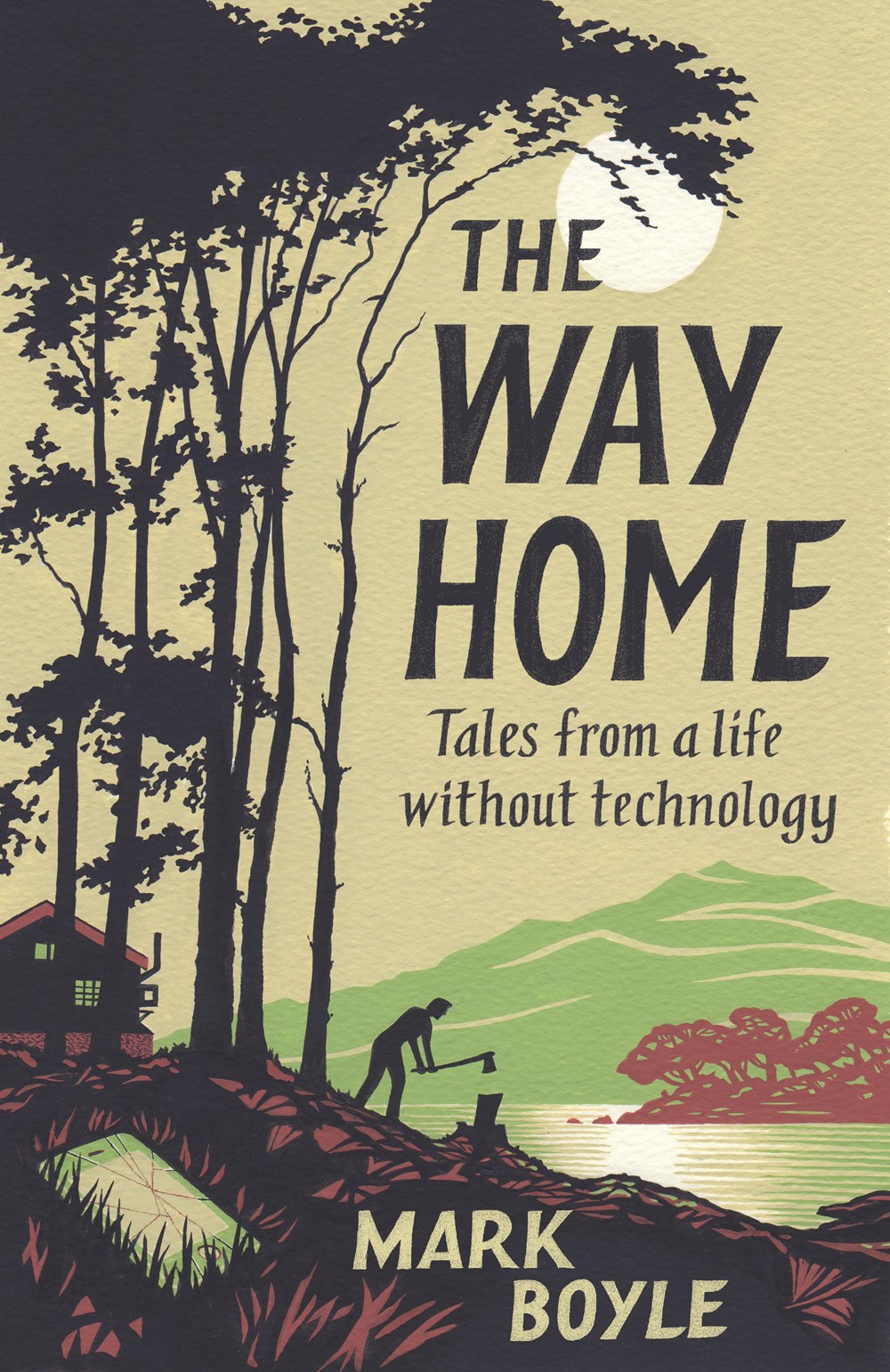
summary of The Way Home by Mark BoyleThe Way Home by Mark Boyle (June 11, Oneworld): This modern-day Walden story, set in Ireland, is written by a former businessman. Most off-the-grid memoirs have an element of wacky about them, but Boyle's experience of living without electricity (and thus without the internet) in a house he build himself follows in the footsteps of Thoreau. He's no isolationist, either, and his story is as much about life in rural Ireland as it is about reconnecting with self and nature. It's my understanding that is also an account of living without money (or very little of it), which has both benefits and risks (though healthcare is less of a worry in Ireland than it is in the United States, though I digress). Why I want to read this: I realize it wouldn't be the life for everyone, but when I was younger, I was drawn to the homesteading idea The Way Home describes a similar experience. I also like the fact that Boyle is not a cultist; he's just a guy who found a way to live with less in a world that always seems to want more, whether that's money, things, or connectedness.

Summary of One Giant Leap by Charles FishmanOne Giant Leap by Charles Fishman (Simon & Schuster; June 11): This history of how we went from a president's speech to a moon landing in less than decade is written by a journalist. Perhaps in this day and age of technology, the idea that United States successfully landed two men on the moon isn't all that shocking, but at time when color television was definitely not in every household, it was a pretty amazing accomplishment. Fishman gives us the backdoor look at the people, technology, and politics behind the moon landing. We visit the research laboratories, learn about how space suits where made, and discover the engineering behind the Apollo program. It's a story of invention and bravery and everyday acts of devotion to the project. Why I want to read this: I grew up with the manned space program and still remember watching the moon landing on our family's (black-and-white) television. I'll never stop being fascinated with space. This is the 50th anniversary of the first human to have walked on the moon and this book is just of many that tell the story.

Click for more

05 April 2019

10 Books About Ourselves and Our World

I'm an eclectic reader. My shelves contain a healthy mix of literary fiction, fantasy, mystery, and even middle grade novels. Sitting right next to all of that escape reading are a good number of true stories, science, history, essays, and biography. These days, I doubt I could name just one genre or subject as my favorite, but when I was in elementary school, I used to tell people that biography was my go-to.

Today's roundup highlights the nonfiction titles I've added to my April reading list. I know I won't get to all of these, but the following 10 books are the ones that caught my attention. The list contains biography, history, science, personal essays, and memoir, so I hope something here will find its way to your own bookshelves. Note that I'm not including food writing/memoir, which I'll save for my Weekend Cooking posts.

Science

  • 10 nonfiction books to read in April 2019The Accidental Homo Sapiens: Genetics, Behavior, and Free Will by Ian Tattersall and Robert DeSalle (Pegasus Books; April 2). This book examines human evolution from a contemporary theoretical context, looking at the interplay of genetics and behavior, the way humans solve problems and change their environment, and the biological future of our species. Why I want to read this: Tattersall was youngish paleontologist, already making a name for himself, when I was in graduate school. He and DeSalle are both associated with the American Museum of Natural History and are well respected in the fields of physical anthropology and evolution. This topic is closely related to my own academic interests.
  • American Moonshot: John F. Kennedy and the Great Space Race by Douglas Brinkley (Harper, April 2). I can't summarize this better than the following sentence from the publisher: "A vivid and enthralling chronicle of one of the most thrilling, hopeful, and turbulent eras in the nation’s history, [this book] is an homage to scientific ingenuity, human curiosity, and the boundless American spirit." Why I want to read this: First--gawk!--it cannot possibly be 50 years since we first landed on the moon; it was 20 years ago tops, right? I'm particularly interested in this account because it includes new interviews and firsthand accounts of the politics, people, and technology that allowed JFK's challenge to be met ahead of schedule.
  • Science Comics: Wild Weather: Storms, Meteorology, and Climate by M. K. Reed and illustrated by Jonathan Hill (First Second, April 16). This book helps us learn to distinguish between weather and climate and tells us all about new weather technology and how major storm systems develop. This fun nonfiction comic answers all our questions about storms throughout the seasons. Why I want to read this: I'm curious about the world around me and love the idea of learning more about weather through a nonfiction comic. This may be geared to middle grade readers, but I'm sure I'll discover something new about meterology.
Essays
  • 10 nonfiction books to read in April 2019Greek to Me: Adventures of the Comma Queen by Mary Norris (Norton, April 2). Norris is widely known as the chief copyeditor of The New Yorker magazine and in this collection of essays she talks about English, words, and her love affair with all things Greek. Why I want to read this: As an avid reader, full-time copyeditor, and part-time book reviewer how could I say no to this? Norris is not only an impeccable editor but an entertaining and thoughtful writer. This is (as you might have guessed) on my must-read list for this month.
  • Here Is Where I Walk: Episodes From a Life in the Forest by Leslie Carol Roberts (University of Nevada Press, April 3). In the essays collected here, Roberts muses about travel, nature, motherhood, and the environment, all linked by the time she has spent in America's only residential national park, the Presidio in San Francisco. Why I want to read this: I'm a big walker and love to spend as much time as possible in my local parks and state forests. I wonder if Roberts and I think about the same kinds of things when we're in the woods.
Humor
  • 10 nonfiction books to read in April 2019The Field Guide to Dumb Birds of North America by Matt Kracht (Chronicle Books, April 2). Do you think you can you identify the common birds that hop around your yard and build nests in your hanging plants? Kracht bets you don't know their real names: how about the black-capped prickadee and goddamned Canada goose? Why I want to read this: I love watching the birds in my yard and tending to my bird feeders, but I also have a good sense of humor. This guide offers solid information about our feathered friends but it's served with an irreverent attitude. The illustrations (see the cover) are nicely done.
  • Fifty Things That Aren't My Fault by Cathy Guisewite (Putnam, April 2). In this collection, Guisewite steps away from her beloved comic strip (Cathy) to talk about life and family in the sandwich years and her complex perspectives on grown children, aging parents, and retirement. Why I want to read this: I've always been a huge Cathy fan and, hey, Guisewite and I are about the same age, so I can relate. I love her viewpoint.
  • Southern Lady Code: Essays by Helen Ellis (Doubleday, April 16). In her newest collection of essays, Ellis talks about, as the publisher says, "marriage and manners, thank-you notes and three-ways, ghosts, gunshots, gynecology, and the . . . art of living as a Southern Lady." Why I want to read this: Even though I'm a Yankee through and through, I'm a fan of Ellis's outlook on life. In her new book, she offers a fresh angle on being a displaced southern belle in the modern world. I'm ready to laugh.
History
  • 10 nonfiction books to read in April 2019The Five: The Untold Lives of the Women Killed by Jack the Ripper by Hallie Rubenhold (Houghton Mifflin Harcourt, April 9). Much has been written about Jack the Ripper, a murderer who has never been definitively identified. But who were the women he killed? What were their stories? Why I want to read this: I like true crime and want to know more about the victims whose names and lives have been overshadowed by the man who killed them. A snapshot of the dark side of the Victorian era by a historian.
  • The Regency Years: During Which Jane Austen Writes, Napoleon Fights, Byron Makes Love, and Britain Becomes Modern by Robert Morrison (Norton, April 30). The Regency period provides an endless source of interest and is pretty much summed up by the book's subtitle. Ocean battles, global trade, the arts, new technology, and changing politics; it was a vibrant and not always pretty era. Why I want to read this: Some of my favorite authors published during this time and some of my favorite novels were set during this time. Plus I love history and always appreciate an accessible and easy-to-read account of the past.

Click for more

01 April 2019

Stacked-Up Book Thoughts: 6 Books to Read Right Now

Recommended books for spring 2019Gawk! How can it be April already??? And it's an April without the signs of spring. Here in Pennsylvania, we're just getting crocus and haven't yet seen daffodils or forsythia. Soon, soon--I know.

If you're wondering where I've been the last couple weeks, here's my sad (not really) story. March is a really busy editing month, which means I'm less inclined to read for pleasure. What's more, I read a long book and listened to a long book, which cuts down on the number of titles finished (though both were well worth the time investment).

One casualty has been my short story a week project. I had to let something slip, and that was it. Oh well, April gives me a fresh start, right? Or am I just fooling myself (ha, couldn't resist).

Review of The Sun Is a Compass by Caroline Van HemertThe Sun Is a Compass: A 4,000-Mile Journey into the Alaskan Wilds by Caroline Van Hemert (Little, Brown Spark, March 19). In this memoir, Van Hemert, a field biologist who studies birds, tells us about the incredible human-powered trek she and her husband made from Washington State to the far north of Alaska. Although they occasionally slept indoors and accepted hospitality, each inch of their journey was taken under their own power, sometimes rowing or kayaking, sometimes skiing, and quite often walking. Neither were new to Alaska or to living in the wilds. They planned their trip carefully, arranging food drops and delivery (and pickup) of various kinds of transport (boats and skis). They carried no guns or rifles but had a satellite phone, just in case. This isn't a dramatic survival story (though they had a couple scary moments); instead it gives us a glimpse of wilderness most of us will never experience: massive migrations, the changing tundra, biting flies, and close encounters with sea mammals. Van Hemert's keen eye and clear writing made me feel as if I were right there with her on this once in a lifetime trip. I listened to the unabridged audiobook (Hachette Audio; 9 hr, 2 min) wonderfully read by Xe Sands. Sands infused her performance with just the right amount of emotion, awe, and drama, matching Van Hemert's intent, without crossing the line into movie-of-the-week theatrical. If you like the outdoors or are curious about Alaska or wild places, try this in print or audio. For photos of this trip and others, visit Van Hemert's website. (audiobook copy provided by the publisher)

Review of Mama's Last Hug by Frans de WallMama's Last Hug: Animal Emotions and What They Tell Us about Ourselves by Frans de Waal (Norton, March 12). In a previous life, I was a physical anthropologist, and my undergraduate thesis was all about nonhuman primate behavior. Thus when I had the chance to review this book for AudioFile Magazine, I said yes without hesitation. De Waal is well known and well respected in the field of primate behavior, and in this book, he talks the monkeys and apes he's known and observed and what (as the subtitle says) his (and others') research can tell us about ourselves and about the other mammals around us. Are we humans the only ones who feel shame? How about empathy? Why is it that people are the only animals who blush? Are we altruistic or competitive? This is a fascinating book and I could barely stop listening. De Waal writes in a casual style that is easy to follow and understand. He makes his points by telling stories and giving us much to ponder. Besides apes and monkeys, we also learn a little bit about other animals, including rats, elephants, dogs, and cats. If you're an animal lover, you might want to give this a try. The unabridged audiobook (Recorded Books; 10 hr, 38 min) was read by L. J. Ganser, whose expressive delivery seemed to capture de Waal's intentions perfectly. De Waal himself reads the afterword. For more, see my review on AudioFile magazine.

Review of Bookshop of the Broken Hearted by Robert HillmanBookshop of the Broken Hearted by Robert Hillman (Putnam, April 9). Sometimes you just need to escape, and Hillman's novel hit the spot. Set in two time periods--eastern Europe during World War II and rural Australia during the Vietnam War era--this is a story of three very different people trying to find stability and love in a wold that seems out to get them. Hannah is a Hungarian Jew who survived the war, a concentration camp, the Russian army, and two husbands. The hows and whys of how she ended up in Hometown, Australia, teaching music and dead-set on opening a bookstore in a community that isn't known for reading are told through flashbacks. Tom owns a spread and does okay for himself, despite his loneliness. His wife abandoned him, returning pregnant by another man. After her son was born she left again, returning only briefly four years later to reclaim the boy. Peter hates living with his mother, who is a member of a Jesus cult, and once he's old enough to figure how to pull it off, he runs away in hopes of being reunited with Tom. Can these three broken people find in each other the hope of healing and trust? The book contains some tough scenes and difficult issues, but I was totally taken in by the three main characters and their personal struggles. I especially rooted for Tom, who is a good man and deserves a good life. I liked the way Hillman ended the book, which seemed realistic and believable. The unabridged audiobook (Penguin Audio; 9 hr, 26 min), was read by Daniel Lapaine, who did a good job with the accents and characterizations. I bet you'll zip through this in either print or audio. (digital and audiobook copies provided by the publisher)

Review of Outpost by W. Michael GearOutpost by W. Michael Gear (Daw; Feb. 5--paperback). This is the first in the Donovan trilogy by anthropologist / novelist Gear, and the good news is that all three books are available now. Watch this space because I can't wait to start book two. If you aren't a science fiction fan, I hope you take the time to read the following paragraph, because you might be swayed to give this a try.

In the future, a colony of Earthlings are attempting to establish an outpost on the planet Donovan, which is rich in minerals and elements that people back home covet and need. Human life is ruled by the Corporation, which is supposed to free people from all worries about health, education, and housing. Donovan, however, seems to have been forgotten, and it's been years since a resupply ship has arrived. As a consequence, the colonists have developed their own rules for keeping order and for staying alive on a very, very dangerous planet. When a Corporate ship finally does arrive, the settlement is disrupted on a number of fronts, and the three people who keep the peace--especially security officer Talina Perez--are faced with dealing with newbies, colonists who hope to return home, and a ship's captain who clearly doesn't understand what she's up against. Although absolutely science fiction in the sense that we are dealing with extraterrestrial life, this novel really finds its foundation in Gear's professional background. The story focuses on how humans behave in a new environment. The feel is a little bit Wild West mixed with early European colonization of "new" worlds on earth. People have different motivations for immigration and different dreams for how they'll be in their new home. The book gives you things to think about and is very anthropological. The characters are well drawn and there's a ton of action. The planet Donovan is filled with unique creatures and poses a number of environmental problems. I don't really consider myself to be much of a sci-fi reader but I loved this book. (finished copy provided by the publisher).

Short Takes and a DNF

  • Short reviews of Figuring by Maria Popova / All That Remains by Sue BlackFiguring by Maria Popova (Pantheon, Feb. 5). If you like science, art, music, writing, or women's history you'll love this book as much as I did. Popova finds the sometimes surprising connections among music, science, writing, and art--across time and space--via the lives of women who faced the limits of cultural (men's) expectations. Among women she introduces us to are Maria Mitchell, Margret Fuller, Emily Dickinson, and Rachel Carson. Besides issues with pursuing careers, many of these women also struggled with unconventional sexual lives (including LGBTQ+ identities). This is perfect for fans of Ali Smith. I reviewed this book for AudioFile magazine, where you can find more of my thoughts. The audiobook was brilliantly read by Natascha McElhone (Random House Audio; 21 hr, 27 min)
  • All That Remains: A Renowned Forensic Scientist on Death, Mortality, and Solving Crimes by Sue Black (Arcade, March 5). This is another book that I reached for because I was once a physical anthropologist. Black is a forensic anthropologist, and in her book she talks about all kinds of fascinating things, such as our relationship with death (through time and across cultures) and her own journey to her profession. We also learn about the process of identifying human remains for research, solving crimes, during war, and after disasters. She also writes about her thoughts about what she hopes her own death will be like. Black is informative, respectful, easily accessible, and funny. This is perfect for anatomy nerds and CSI fans. (digital copy provided by the publisher).
  • Dark Blossom by Neel Mullick (Rupa, Dec. 10, 2018). This was a DNF for me. First let me say that the book has an average rating of 4.05 on GoodReads. Totally my fault for not checking out the publication details before accepting the book. I DNF'd because my copyeditor's brain couldn't handle the style decisions, but clearly I was in the minority, since almost 100 people at GoodReads really liked this thriller.

Click for more

08 February 2019

7 True Stories to Add to Your Reading Wish List

Each month I look forward to seeing the variety of true stories that come to my attention. While I love nonfiction, I don't read everything. At the top of my list are biography, history, and food and cooking. I also read across a broad range of science books as well as true crime. I'm much pickier when it comes to memoirs and autobiography, though both can be found on my bookshelves.What's your favorite nonfiction?

Here are 7 nonfiction titles that are on my February reading list. They span the genres, so I hope you'll be tempted to add a few to your own wish list. (I've provided audiobook information when I could find it.)

From Cold to Hot

all about The Polar Bear Expedition: The Heroes of America’s Forgotten Invasion of Russia, 1918-1919 by James Carl Nelson The Polar Bear Expedition: The Heroes of America’s Forgotten Invasion of Russia, 1918-1919 by James Carl Nelson (William Morrow, Feb. 19). Did you know that United States sent troops to northern Russia during World War I? I didn't. This is the the story of the 5,000 soldiers who were sent to the subarctic to fight the Russians in hopes of obtaining an eastern entry into Germany. Many of the soldiers were from Michigan, but the harsh winters of the Great Lakes region didn't prepare them for the ungodly cold and snow. Hundreds of men in the American North Russian Expeditionary Force (the Polar Bear Expedition) died from environmental conditions as well as from war and the Spanish flu. The book ends about a decade after the war, when a contingent returned to recover the bodies of the fallen, bringing them home for a hero's burial. (The audiobook is read by Johnny Heller and comes with a PDF. Harper Audio: 8 hr, 7 min.)

all about No Beast So Fierce: The Terrifying True Story of the Champawat Tiger, the Deadliest Animal in History by Dane HuckelbridgeNo Beast So Fierce: The Terrifying True Story of the Champawat Tiger, the Deadliest Animal in History by Dane Huckelbridge (William Morrow, Feb. 5). If I had been alive at the turn of the 20th century, I would not have wanted to live in the Indian foothills of the Himalayas. Why? Because the area was terrorized by a man-eating tiger, who killed more than 400 people over the course of about 7 years. Even the Nepalese army failed to bring the big cat down, as locals abandoned their homes in fear. No time was safe, because this tiger hunted day and night. James Corbett, who grew up hunting the Indian forests, was brought in to track the Champawat tiger and bring an end to its reign. Corbett combined his outdoor skills with some detective work to track the cat across its territory, all the while well aware of his own danger. This is a heart-thumping story of how an Indian-born British railroad worker pitted himself against the most fearsome animal of the time. Later, Corbett went on to become a conservationist. The book includes a section of black-and-white photos. (The audiobook is read by Corey Snow. Harper Audio: 8 hr, 8 min.)

Women's Stories

all about Devices and Desires: Bess of Hardwick and the Building of Elizabethan England by Kate HubbardDevices and Desires: Bess of Hardwick and the Building of Elizabethan England by Kate Hubbard (Harper; Feb. 26). I mostly know Bess because she and her then-husband the Earl of Shrewsbury were charged by Elizabeth I to house Mary, Queen of Scots--essentially keeping Mary under house arrest. What I didn't know was that Bess was married four times and was a sharp observer and manipulator of the British gentry and the court. Through marriage and social contacts, she created a dynasty of sorts, building a great fortune and a mixed reputation. Some thought her a hard schemer; others saw her as too emotional. The truth, as you might imagine, is somewhere in between. Bess was in and out of Elizabeth's good graces, had husband troubles, and failed (but not for lack of trying) to place one of her own children on the throne. In the end, though, she died a wealthy and powerful woman. Hubbard's account is based on a variety of firsthand accounts, including more than 200 pieces of Bess's personal correspondence. (The audiobook is read by Heather Wilds and includes a PDF. Harper Audio; 11 hr, 58 min.)

all about Renegade Women in Film and TV: 50 Trailblazers in Film and TV by Elizabeth Weitzman and illustrated by Austen Claire Clements Renegade Women in Film and TV: 50 Trailblazers in Film and TV by Elizabeth Weitzman and illustrated by Austen Claire Clements (Clarkson Potter, Feb. 5). I love books that provide short biographies of pioneering spirits, and this gorgeous collection focuses on (as the title says) women who made a mark on the screen: big and small. While you'll recognize many of these of these women, such as Oprah and Mae West, many others may be new to you (they were to me). We meet the first professional female stuntwoman, award-winning documentary filmmakers, film critics, producers, and others. Gorgeous illustrations accompany each bio (see the cover for a hint), and some of the women were interviewed for this book. Note that Weitzman features women with a diversity of accomplishments and also diversity in terms of ethnic background. This collection is a tribute to some of the women who found footing in an industry that has not been kind to them. (The audiobook is read by Mozhan Marnò. Random House Audio; 3 hr, 12 min. As much as I love audiobooks, I would hate to miss the stunning illustrations.)

True Crime

all about Say Nothing: A True Story of Murder and Memory in Northern Ireland by Patrick Radden Keefe Say Nothing: A True Story of Murder and Memory in Northern Ireland by Patrick Radden Keefe (Doubleday; Feb. 26). Written by an award-winning journalist, this book recounts the 1972 murder of a middle-age mother of 10 and uses that single event as a springboard for looking into the guerrilla warfare that is known as The Troubles and the eventual uneasy peace that brought the bombings and killings to an end a couple of decades later. Keefe explores the workings of the IRA and wonders whether their acts were justified in the name of war or whether IRA supporters were murderers or terrorists. Even today, more than 15 years after peace, the repercussions are felt on a personal level. From children to the elderly, none of Ireland's citizens--on both sides of the border--came away unscathed. Some are still harboring rebellion and anger. The principal violence of The Troubles may be over (for now?), but many personal stories have yet to be told. Keefe's depiction of a torn people is at the top of my list. (The audiobook is read by Matthew Blaney. Random House Audio; 14 hr, 40 min.)

Entertaining Science

all about Earth-Shattering: Violent Supernovas, Galactic Explosions, Biological Mayhem, Nuclear Meltdowns, and Other Hazards to Life in Our Universe by Bob BermanEarth-Shattering: Violent Supernovas, Galactic Explosions, Biological Mayhem, Nuclear Meltdowns, and Other Hazards to Life in Our Universe by Bob Berman (Little, Brown; Feb. 19). The universe was born in violence and continues be a dangerous place. In this entertaining (if a bit scary) book, Berman (a well-known astronomy journalist) details the collisions and explosions, storms and radiation in outer space and the long-reaching effects of such mega-events on the very fabric of our reality. From the birth of stars and solar systems to crashing landings of asteroids, the universe is far from static. Don't think Earth exists in some save-haven bubble: catastrophes have plagued our planet from the beginning: from the formation of the Moon to mass extinctions and wildly fluctuating weather patterns. Earth has survived every imaginable disaster and will probably survive many, many more. Whatever species are around to witness these future upheavals, only time will tell. (The audiobook is read by Peter Ganim and includes a PDF. Hachette Audio; 9 hr, 43 min.)

all about Liquid Rules: The Delightful and Dangerous Substances That Flow Through Our Lives by Mark MiodownikLiquid Rules: The Delightful and Dangerous Substances That Flow Through Our Lives by Mark Miodownik (Houghton Mifflin Harcourt, Feb. 19). I'm intrigued by the setup of Miodownik's latest look into the world around us. On a nonstop flight from London to San Francisco, the author (a material scientist and an award-winning writer) contemplates the many liquids surrounding him and his fellow passengers. He starts with the fluids of the plane: the fuel, the drink in his cup, the liquids that make up the human body, and even the liquid crystal display screen. From there, he talks about the ice and ocean and volcanoes he sees out his window and how all those liquids--burning and flowing and frozen--have shaped our planet's physical landscape. A little history plus a little look into the future rounds out the story of the many liquids that are part of our everyday life, whether we're consciously aware of them or not. (The audiobook is read by Michael Page. This is coming out from Recorded Books, but I couldn't find a time, so I don't know how long it is or whether listeners can download a PDF.)

Click for more

Copyright

All content and photos (except where noted) copyright © cbl for Beth Fish Reads 2008-2020. All rights reserved.

Quantcast

Thanks!

To The Blogger Guide, Blogger Buster, Tips Blogger, Our Blogger Templates, BlogU, and Exploding Boy for the code for customizing my blog. To Old Book Illustrations for my ID photo. To SEO for meta-tag analysis. To Blogger Widgets for the avatars in my comments and sidebar gadgets. To Review of the Web for more gadgets. To SuziQ from Whimpulsive for help with my comments section. To Cool Tricks N Tips for my Google +1 button.

Quick Linker

Services

SEO

  © Blogger template Coozie by Ourblogtemplates.com 2008

Back to TOP