Showing posts with label Pantheon Books. Show all posts

26 July 2021

22 Mysteries, Thrillers, & Suspense Novels for July

July is a good month for fans of suspense, with the publication of all kinds of genre books from dark psychological thrillers to fun cozy mysteries. The titles listed here are just a handful that caught my attention. I find it hard to resist a good crime novel, and it was difficult to limit this post to just 22.

Note that I have read only a few of these books, and most of the short descriptions have been taken from the publishers’ summaries. Audiobook information is provided when available. Thanks to the publishers for the review copies (print, digital, and/or audio).

Amateur Sleuthing

What to read in July 2021

The Grandmother Plot by Caroline B. Cooney
(Poisoned Pen Press): Freddy may be unambitious and somewhat lost, but he loves his grandmother, whose memory is fading. When a resident in her assisted living home is murdered, Freddy must protect his grandmother and figure out what happened, while facing the consequences of his own dubious life choices. The audiobook is read by Caroline B. Cooney (Random House Audio).

The Moonshine Shack Murder by Diane Kelly (Berkley): The start of a cozy mystery series set in Tennessee featuring a 21st-century moonshiner. When one of her customers is found dead supposedly after drinking her whiskey, Hattie gets involved in the case in order to save her name and business. The audiobook is read by Tyla Collier (Penguin Audio).

Much Ado About Nauticaling by Gabby Allan (Kensington): The first in a cozy mystery series set in Southern California featuring a boat tour guide. When taking out tourists in her glass-bottomed boat, Whitney spots the dead body of a wealthy local businessman; after her bother becomes suspect number one, she gets involved in the investigation. The audiobook is read by Marnye Young (Tantor Audio).

Beware of Your Friends and Family

What to read in July 2021

Fierce Little Thing by Miranda Beverly-Whittemore
(Flatiron): Five estranged friends, who met while in a cult, are blackmailed into returning to the Maine compound they left almost 20 years earlier. The past is never fully buried, and as secrets are exposed they must find a way to survive. The audiobook is read by Saskia Maarleveld (Macmillan Audio).

Look What You Made Me Do by Elaine Murphy (Grand Central): This is a Dexter-like story in which a woman ends up helping her serial-killer sister hide the bodies of her victims. When a second killer seems to be targeting the sisters, they need to continue to hide their own crimes while trying to stop and expose the other person’s crimes. The audiobook is read by Elaine Murphy (Grand Central).

Not a Happy Family by Shari Lapena (Pamela Dorman): This domestic thriller focuses on the three adult children of a wealthy couple that was murdered soon after a family Easter dinner. Who would have wanted the Merton’s dead--stranger, friend, or relative? The audiobook is read by Ellen Archer (Penguin Audio).

Step back in Time

What to read in July 2021

M, King’s Bodyguard by Niall Leonard
(Pantheon): Set in Edwardian London and based on a true story. A Scotland Yard detective uncovers a possible assassination attempt that is supposed to happen at Queen Victoria’s funeral, when many heads of state will be gathered in the same space. The audiobook is read by Marcus Lamb (Random House Audio).

The Silver Blonde by Elizabeth Ross (Delacorte): In 1946, Clara works as a vault girl for a major Hollywood studio, awaiting her chance to become a film editor. When she almost literally stumbles across the body of a famous actress, she becomes involved in the investigation and takes a walk on the darker side of the industry. The audiobook is read by Lisa Flanagan and Elizabeth Ross (Listening Library).

A Study in Crimson by Robert J. Harris (Pegasus): Imagine that Sherlock Holmes lived during the 1940s. In the dark days after the Blitzkrieg, a copycat Jack the Ripper killer murders women on the blacked-out streets of London; can Holmes and Watson solve the case?

Neighborhoods Can Be Tough

What to read in July 2021

The Sinful Lives of Trophy Wives by Kristin Miller
(Ballantine): When tragedy strikes an exclusive gated community in the San Francisco Bay Area, rumor has it a wealthy widow is somehow to blame. Enlisting the help of two married neighbors, the widow attempts to learn the truth about the accident; all three have secrets to protect. The audiobook is read by Dorothy Dillingham Blue, Catherine Taber, and Cassandra Campbell (Random House).

Such a Quiet Place by Megan Miranda (Simon & Schuster): A gated community in Virginia is double rocked: first with the murder of their neighbors and second when the woman who was initially convicted is freed to return home to that same community. Old wounds are reopened, paranoia runs high, and the true killer is, apparently, still on the loose. The audiobook is read by Rebekkah Ross (Simon & Schuster Audio).

The Therapist by B. A. Paris (St. Martin’s Press): Soon after Alice and Leo decide to live together, moving into a gated community in London, they learn their house was the site of a murder-suicide that was never fully solved. Alice’s obsessive search to learn what really happened threatens to unearth her new neighbors’ secrets. The audiobook is read by Olivia Dowd and Thomas Judd (Macmillan Audio).

School Is a Killer

What to read in July 2021

Kill All Your Darlings by David Bell
(Berkley): An English professor passes off a missing student’s manuscript as his own. Its publication, however, triggers a series of events that may implicate him in a murder he didn’t commit. Can he find the student or the true killer before he loses everything? The audiobook is read by Jon Lindstrom (Penguin Audio).

Safe in My Arms by Sara Shepard (Dutton): Three young mothers, each hiding something from her past, meet at the back-to-school event for their children’s first day at an upscale California preschool. Soon after, the principal is violently attacked and all eyes turn to the newcomers; together the women try to protect their secrets while uncovering the darker underbelly of the school. The audiobook is read by Eileen Stevens (Penguin Audio).

The Temple House Vanishing by Rachel Donohue (Algonquin): This modern Gothic story is set in a prestigious Irish girls boarding school, where a scholarship student is first bullied, then meets the dashing male art teacher, and then disappears with him, never to be seen again. Twenty-five years after the couple went missing, an investigative journalist is determined to find out what happened. The audiobook is read by Jennifer Fitzgerald and Clodagh Duggan (Workman).

Travel Gone Wrong

What to read in July 2021

Falling by T. J. Newman
(Simon & Schuster): Don’t read this thriller if you’re planning to fly. A pilot’s family has been kidnapped; to free them, he is told he must crash the plane, killing everyone on board. The audiobook is read by Steven Weber (Simon & Schuster Audio).

The Other Passenger by Louise Candlish (Atria): When his neighbor and commuting partner disappears, Jamie is accused of his murder after someone tells the police the two men had been arguing while riding the ferry across the Thames. Jealousies, secrets, deceptions, and a few twists will keep you guessing. The audiobook is read by Steven Mackintosh (Simon & Schuster Audio).

Sleeping Bear by Connor Sullivan (Atria): Grieving after her husband’s unexpected death, Cassie, an army veteran, takes her dog on a weekend camping trip in Alaska but fails to return home. Kidnapped with no clear way of escape, Cassie draws on all her skills and training to survive, while back home her father will stop at nothing to find out what happened. The audiobook is read by Hillary Huber (Simon & Schuster).

Are You Ever Really Safe?

What to read in July 2021

Final Girl Support Group by Grady Hendrix
(Berkley): Five women who were the sole survivors of separate bouts of murder and mayhem meet during group therapy. When one of them fails to show up for an appointment, the other four are pulled back into danger, fighting for their lives. The audiobook is read by Adrienne King (Penguin Audio)

Just One Look by Lindsay Cameron (Ballantine): When Cassie, a lonely temp worker, mistakenly discovers the intimate email correspondence between one of her bosses and his wife, she can’t stop reading. Eventually, curiosity turns to obsession, and Cassie plans a way to be part of the couple’s life. The audiobook is read by Annie Q (Random House Audio).

The Lost Girls by Jessica Chiarella (Putnam): A true-crime podcaster lucks out on finding a lead that may help her learn what happened to her sister, who disappeared 20 years earlier. She and one of her subscribers start down a dangerous path, each looking for her own answers. The audiobook is read by Stacey Glemboski (Penguin Audio).

Sixteen Horses by Greg Buchanan (Flatiron): Part Gothic, part police procedural, this thriller, set in England, starts with the discovery of 16 horses’ heads, buried in a seemingly ritualistic manner. Detective Alec and veterinary forensic specialist Cooper together investigate this crime and several other criminal incidents that threaten to panic the seaside town. The audiobook is read by Louise Brealey (Macmillan Audio).

Click for more

05 March 2021

14 Nonfiction Books to Read in March

March is a big book month, which means I’ve spotted many, many more great books than I can possibly read in a timely manner. Just because I can’t get to everything, doesn’t mean you can’t.

Here are 14 nonfiction titles that made it to my wish list. So far, I’ve read only one, but I hope to get to most of them—if not this month, then certainly before too long.

Notes: All the following books are coming out this month, according to Edelweiss+. I’ve provided audiobook information when possible. All books were provided to me in one or more formats (print, digital, audio) by the publishers. The descriptions are adapted or taken from the publishers’ summaries.

Nonfiction books to read in MarchCelebrate Women’s History Month

  • Women in White Coats: How the First Women Doctors Changed the World of Medicine by Olivia Campbell (Park Row): The true story of how, in the Victorian Era, Elizabeth Blackwell, Elizabeth Garrett Anderson, and Sophia Jex-Blake became the first women to earn medical degrees. Not only did they break the glass ceiling, they transformed the nature of women’s healthcare. Audiobook read by Jean Ann Douglass (~11.5 hr).
  • The Code Breaker: Jennifer Doudna, Gene Editing, and the Future of the Human Race by Walter Isaacson (Simon & Schuster): You don’t have to be a geneticist to get caught up in and understand this well-researched account of how Doudna and colleagues discovered a way to use CRISPR technology to alter genes, eventually leading to the development of the COVID vaccine. For my thoughts on the audiobook, see AudioFile Magazine. Audiobook read by Kathe Mazur (~16 hr).
  • The Agitators: Three Friends Who Fought for Abolition and Women’s Rights by Dorothy Wickenden (Scribner): This an account of how Harriet Tubman, Frances Seward, and Martha Wright formed an unlikely alliance in their fight for abolition and women’s rights in the mid-1800s. Relying on firsthand accounts, including the women’s letters, Wickenden reveals the work of these women starting before the Civil War and ending in the 1880s. Audiobook read by Heather Alicia Simms, Anne Twomey, and Gabra Zackman (11 hr).
  • Eleanor in the Village: Eleanor Roosevelt’s Search for Freedom and Identity in New York’s Greenwich Village by Jan Jarboe Russell (Scribner): In 1920, Eleanor Roosevelt left her husband and children, relocating to the Village, where she connected with forward-thinking women of all ilks. This book explores why she took the break, how it changed her, and how it influenced the rest of her life. Audiobook read by Samantha Desz (~6.75 hr).
  • Come Fly the World: The Jet-Age Story of the Women of Pan Am by Julia Cooke (Houghton Mifflin Harcourt): This is the story of the women who met the surprisingly stringent requirements to become stewardess for Pan Am in the 1960s and 1970s. We learn more than what it was like to manage disgruntled vacationers; these women were intimately caught up in the effects of the Vietnam War, the civil rights movement, and feminist causes. Audiobook read by Andi Arndt (~7.5 hr).
Nonfiction books to read in MarchLearn about Science and Medicine
  • Gut Feelings: The Microbiome and Our Health by Alessio Fasano and Susie Flaherty (MIT Press): Many of us are now aware that our gut and the many and varied microorganisms that live there play key roles in our health. This book was written to help us better understand the connection between our microbiome and our current and future physical well-being. This is not a self-help book; it’s an easy-to-understand explanation of how the bacteria that live within us offer numerous benefits. Audiobook: N/A
  • Ageless: The New Science of Getting Older without Getting Old by Andrew Steele (Doubleday): Researchers have long been asking whether it’s possible to grow old without getting frail, without weakening immune systems, and without dementia. In this book, Steele presents the current science, medicine, and research concerned with aging and provides commonsense actions we take right now to up our chances of having a vigorous life right up to the end. Audiobook read by the author (10 hr).
  • Mr. Humble and Dr. Butcher: A Monkey’s Head, the Pope’s Neuroscientist, and the Quest to Transplant the Soul by Brandy Schillace (Simon & Schuster): This is the biography of Dr. Robert White, who had two identities. On the one hand, the renowned surgeon was a Nobel Prize nominee, developing advances in neurosurgery. But he also hoped to find a way to conduct brain transplantation, thereby allowing “the soul to live on after the human body had died.” His story will make you thankful for today’s ethics committees. Audiobook read by Jean Ann Douglass (~10.75 hr).
Nonfiction books to read in MarchLook at the World around You
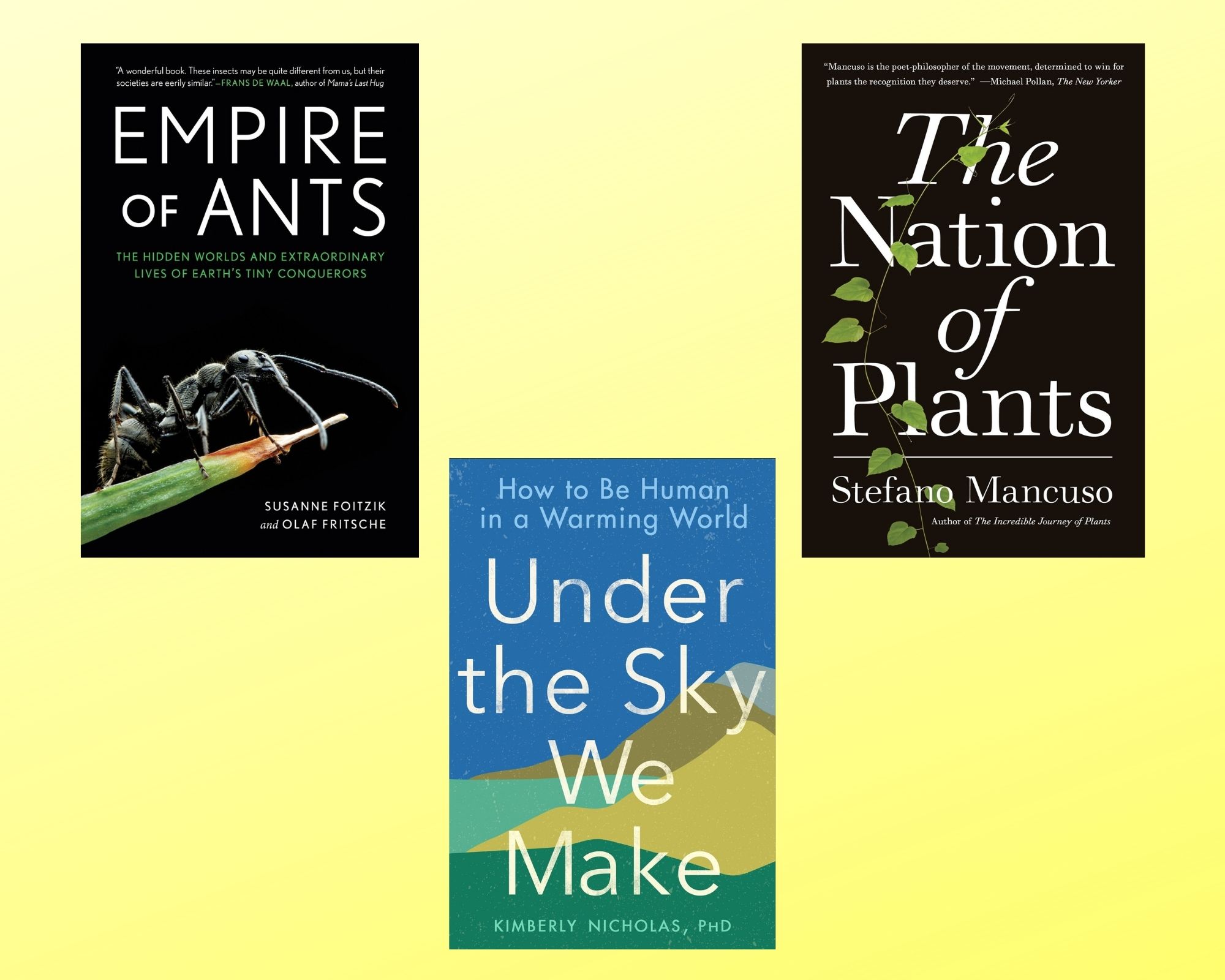
  • Empire of Ants: The Hidden Worlds and Extraordinary Lives of Earth’s Tiny Conquerors by Susane Foizik and Olf Fritshe (The Experiment): Think about this: “Ants number in the ten quadrillions and they have been here since the Jurassic era.” This book introduces us to the quintessential picnic pest, revealing their complex social structure, childrearing practices, and political actions. Audiobook: N/A
  • The Nation of Plants by Stefano Mancuso (trans. Gregory Conti; Other Press): This is an easy-to-read treatise about the importance of plants to our own lives and to the planet. Mancuso outlines the foundational tenets on which plant life depends and reminds us that if we don’t treat plants well, we’ll soon lose their protective and nourishing benefits. Audiobook read by Nigel Patterson (3 hr).
  • Under the Sky We Make: How to Be Human in a Warming World by Kimberly Nicholas (Putnam): If you haven’t noticed that the climate is changing, then you haven’t been outside your house in 10 years or more. In this down-to-earth book you’ll learn that climate change is real, but you’ll also learn that you—yes, you—can make a difference. Nicholas, a climate scientist, tells us just how important it is for each of us to change our behavior: every small change makes a huge difference. Audiobook read by the author (~9 hr).
Nonfiction books to read in MarchMurder through History
  • A Fatal Thing Happened on the Way to the Forum: Murder in Ancient Rome by Emma Southon (Abrams): On the surface, it appears that Ancient Rome had a different relationship with life and death than we do; after all people came out in droves to watch gladiators fight to the death and they murdered their emperors in public view. Employing her sense of humor and an easygoing style, Southon tells all about Roman murder and culture and notes their relevance to modern times. Audiobook read by Sophie Ward (~11 hr).
  • Terror to the Wicked: America’s First Trial by Jury That Ended a War and Helped Form a Nation by Tobey Pearl (Pantheon): In 1638 near Plymouth Colony, a Nipmuc tribesman was robbed and murdered by a white indentured servant. Before he dies, the man reveals the details of the crime and names his killer. This is the story of the ensuing manhunt and the first jury trial by colonizers in the Americas. The case involved famous figures like Myles Standish and everyday citizens who testified before the court and served on the jury. The outcome of this trial had far-reaching consequences for the colonies and the new country to come. Audiobook read by Barrett Leddy (~7 hr).
  • The Babysitter: My Summers with a Serial Killer by Liza Rodman with Jennifer Jordan (Atria): In the 1960s, when her mother worked during the day and danced in Provincetown bars at night, Liza and her sister were in the care of a babysitter: a good-looking, nice man who worked as a hotel handyman. When Liza learned that Tony Costa was arrested for brutal murders, she couldn’t reconcile the nice guy who took her for ice cream with the Cape Cod killer. This is her story of the man, how the knowledge of the murders affected her, and how she ultimately coped. Audiobook read by Andi Arndt and Alda Reluzco (~9 hr).

Click for more

01 April 2019

Stacked-Up Book Thoughts: 6 Books to Read Right Now

Recommended books for spring 2019Gawk! How can it be April already??? And it's an April without the signs of spring. Here in Pennsylvania, we're just getting crocus and haven't yet seen daffodils or forsythia. Soon, soon--I know.

If you're wondering where I've been the last couple weeks, here's my sad (not really) story. March is a really busy editing month, which means I'm less inclined to read for pleasure. What's more, I read a long book and listened to a long book, which cuts down on the number of titles finished (though both were well worth the time investment).

One casualty has been my short story a week project. I had to let something slip, and that was it. Oh well, April gives me a fresh start, right? Or am I just fooling myself (ha, couldn't resist).

Review of The Sun Is a Compass by Caroline Van HemertThe Sun Is a Compass: A 4,000-Mile Journey into the Alaskan Wilds by Caroline Van Hemert (Little, Brown Spark, March 19). In this memoir, Van Hemert, a field biologist who studies birds, tells us about the incredible human-powered trek she and her husband made from Washington State to the far north of Alaska. Although they occasionally slept indoors and accepted hospitality, each inch of their journey was taken under their own power, sometimes rowing or kayaking, sometimes skiing, and quite often walking. Neither were new to Alaska or to living in the wilds. They planned their trip carefully, arranging food drops and delivery (and pickup) of various kinds of transport (boats and skis). They carried no guns or rifles but had a satellite phone, just in case. This isn't a dramatic survival story (though they had a couple scary moments); instead it gives us a glimpse of wilderness most of us will never experience: massive migrations, the changing tundra, biting flies, and close encounters with sea mammals. Van Hemert's keen eye and clear writing made me feel as if I were right there with her on this once in a lifetime trip. I listened to the unabridged audiobook (Hachette Audio; 9 hr, 2 min) wonderfully read by Xe Sands. Sands infused her performance with just the right amount of emotion, awe, and drama, matching Van Hemert's intent, without crossing the line into movie-of-the-week theatrical. If you like the outdoors or are curious about Alaska or wild places, try this in print or audio. For photos of this trip and others, visit Van Hemert's website. (audiobook copy provided by the publisher)

Review of Mama's Last Hug by Frans de WallMama's Last Hug: Animal Emotions and What They Tell Us about Ourselves by Frans de Waal (Norton, March 12). In a previous life, I was a physical anthropologist, and my undergraduate thesis was all about nonhuman primate behavior. Thus when I had the chance to review this book for AudioFile Magazine, I said yes without hesitation. De Waal is well known and well respected in the field of primate behavior, and in this book, he talks the monkeys and apes he's known and observed and what (as the subtitle says) his (and others') research can tell us about ourselves and about the other mammals around us. Are we humans the only ones who feel shame? How about empathy? Why is it that people are the only animals who blush? Are we altruistic or competitive? This is a fascinating book and I could barely stop listening. De Waal writes in a casual style that is easy to follow and understand. He makes his points by telling stories and giving us much to ponder. Besides apes and monkeys, we also learn a little bit about other animals, including rats, elephants, dogs, and cats. If you're an animal lover, you might want to give this a try. The unabridged audiobook (Recorded Books; 10 hr, 38 min) was read by L. J. Ganser, whose expressive delivery seemed to capture de Waal's intentions perfectly. De Waal himself reads the afterword. For more, see my review on AudioFile magazine.

Review of Bookshop of the Broken Hearted by Robert HillmanBookshop of the Broken Hearted by Robert Hillman (Putnam, April 9). Sometimes you just need to escape, and Hillman's novel hit the spot. Set in two time periods--eastern Europe during World War II and rural Australia during the Vietnam War era--this is a story of three very different people trying to find stability and love in a wold that seems out to get them. Hannah is a Hungarian Jew who survived the war, a concentration camp, the Russian army, and two husbands. The hows and whys of how she ended up in Hometown, Australia, teaching music and dead-set on opening a bookstore in a community that isn't known for reading are told through flashbacks. Tom owns a spread and does okay for himself, despite his loneliness. His wife abandoned him, returning pregnant by another man. After her son was born she left again, returning only briefly four years later to reclaim the boy. Peter hates living with his mother, who is a member of a Jesus cult, and once he's old enough to figure how to pull it off, he runs away in hopes of being reunited with Tom. Can these three broken people find in each other the hope of healing and trust? The book contains some tough scenes and difficult issues, but I was totally taken in by the three main characters and their personal struggles. I especially rooted for Tom, who is a good man and deserves a good life. I liked the way Hillman ended the book, which seemed realistic and believable. The unabridged audiobook (Penguin Audio; 9 hr, 26 min), was read by Daniel Lapaine, who did a good job with the accents and characterizations. I bet you'll zip through this in either print or audio. (digital and audiobook copies provided by the publisher)

Review of Outpost by W. Michael GearOutpost by W. Michael Gear (Daw; Feb. 5--paperback). This is the first in the Donovan trilogy by anthropologist / novelist Gear, and the good news is that all three books are available now. Watch this space because I can't wait to start book two. If you aren't a science fiction fan, I hope you take the time to read the following paragraph, because you might be swayed to give this a try.

In the future, a colony of Earthlings are attempting to establish an outpost on the planet Donovan, which is rich in minerals and elements that people back home covet and need. Human life is ruled by the Corporation, which is supposed to free people from all worries about health, education, and housing. Donovan, however, seems to have been forgotten, and it's been years since a resupply ship has arrived. As a consequence, the colonists have developed their own rules for keeping order and for staying alive on a very, very dangerous planet. When a Corporate ship finally does arrive, the settlement is disrupted on a number of fronts, and the three people who keep the peace--especially security officer Talina Perez--are faced with dealing with newbies, colonists who hope to return home, and a ship's captain who clearly doesn't understand what she's up against. Although absolutely science fiction in the sense that we are dealing with extraterrestrial life, this novel really finds its foundation in Gear's professional background. The story focuses on how humans behave in a new environment. The feel is a little bit Wild West mixed with early European colonization of "new" worlds on earth. People have different motivations for immigration and different dreams for how they'll be in their new home. The book gives you things to think about and is very anthropological. The characters are well drawn and there's a ton of action. The planet Donovan is filled with unique creatures and poses a number of environmental problems. I don't really consider myself to be much of a sci-fi reader but I loved this book. (finished copy provided by the publisher).

Short Takes and a DNF

  • Short reviews of Figuring by Maria Popova / All That Remains by Sue BlackFiguring by Maria Popova (Pantheon, Feb. 5). If you like science, art, music, writing, or women's history you'll love this book as much as I did. Popova finds the sometimes surprising connections among music, science, writing, and art--across time and space--via the lives of women who faced the limits of cultural (men's) expectations. Among women she introduces us to are Maria Mitchell, Margret Fuller, Emily Dickinson, and Rachel Carson. Besides issues with pursuing careers, many of these women also struggled with unconventional sexual lives (including LGBTQ+ identities). This is perfect for fans of Ali Smith. I reviewed this book for AudioFile magazine, where you can find more of my thoughts. The audiobook was brilliantly read by Natascha McElhone (Random House Audio; 21 hr, 27 min)
  • All That Remains: A Renowned Forensic Scientist on Death, Mortality, and Solving Crimes by Sue Black (Arcade, March 5). This is another book that I reached for because I was once a physical anthropologist. Black is a forensic anthropologist, and in her book she talks about all kinds of fascinating things, such as our relationship with death (through time and across cultures) and her own journey to her profession. We also learn about the process of identifying human remains for research, solving crimes, during war, and after disasters. She also writes about her thoughts about what she hopes her own death will be like. Black is informative, respectful, easily accessible, and funny. This is perfect for anatomy nerds and CSI fans. (digital copy provided by the publisher).
  • Dark Blossom by Neel Mullick (Rupa, Dec. 10, 2018). This was a DNF for me. First let me say that the book has an average rating of 4.05 on GoodReads. Totally my fault for not checking out the publication details before accepting the book. I DNF'd because my copyeditor's brain couldn't handle the style decisions, but clearly I was in the minority, since almost 100 people at GoodReads really liked this thriller.

Click for more

15 March 2019

6 Books in Translation to Read in March

It's the ides of March, and the only thing I have to beware is letting time get away from me and missing some of this month's books in translation. As you well know, I make an effort to read authors who are outside the English-speaking world. It's a great way to gain a different perspective and to learn about life around the globe.

Here are six books in translation on my March reading list. They cover a range of genres, and I hope at least one catches your eye.

review of All Happy Families: A Memoir by Hervé Le TellierAll Happy Families: A Memoir by Hervé Le Tellier, translated from the French by Adriana Hunter (Other Press, March 26). In this moving memoir, Le Tellier recalls his childhood, spent mostly with his grandparents or troubled mother, and the years in which he seemed unable to feel normal human emotions, such as grief and love. Although he wasn't abused, his relationships with the people who were meant to protect him were often beyond dysfunctional. His mother in fact suffered from a disconnection to reality and often lied to him. Other people he was close to died early, including a girlfriend, which is another form of abandonment. In this memoir, Le Tellier comes to terms with these difficult relationships as he views them through the lens of maturity and success as a writer. A testament to the fact that children can indeed survive messed-up families.

review of Auntie Poldi and the Vineyards of Etna by Mario GiordanoAuntie Poldi and the Vineyards of Etna by Mario Giordano, translated from the German by John Brownjohn (Houghton Mifflin Harcourt, March 5). I don't know how I missed the first book in this series, but I'm happy to jump on the Auntie Poldi bandwagon with the second book. When Isolde Oberreiter, better known as Poldi, left Germany to spend her retirement in Sicily, she had no idea that there'd be more to life than walks on the beach, copious glasses of wine, occasional sex, and new friends. Poldi can't help but get involved when it's a matter of dead body or two. In this outing, the unstoppable Poldi is determined to figure out who poisoned her neighbor's dog. After a little pillow talk with her current lover (a police inspector), she's onto bigger things--like linking the murder of a man to the demise of the dog. An adult cozy mystery brimming with the flavors and colors of Sicily.

review of Homeland: A Novel by Fernando Aramburu,Homeland: A Novel by Fernando Aramburu, translated from the Spanish by Alfred Macadam (Pantheon, March 5). This timely novel is set in Basque country, and although a murder is at its center, this is not crime fiction. Instead, it's an examination of how ordinary people can get caught up in the wider political events of their country and how it isn't always easy to figure out who is hero and who is villain. When a businessman is killed by separatists, the repercussions are felt by more than just the grieving family. Friendships and everyday life in the town are forever changed. Who is brave enough or sure enough to take a stand on the future of Basque? Is it easier just to leave your home and start over? Set after the ETA separatists declare an end to their fight for independence, this story looks at the violent past and uneasy present. The novel has won multiple international honors.

review of The Little Girl on the Ice Floe by Adélaïde BonThe Little Girl on the Ice Floe by Adélaïde Bon, translated from the French by Tina Kover (Europa, March 19). This is a tough memoir about surviving a childhood rape. When she was just nine years old, Bon was raped by a stranger, and though she was unable to provide many details, her parents reported it to the authorities. As a way to cope, Bon compartmentalized her life--seemingly stable and friendly on the outside, while dealing with guilt, shame, fear, and more on the inside. Despite years of therapy and various self-soothing activities (such as eating and drinking too much), there were parts of her that remained numb and details of her attack that she could not remember. Two decades later, the Paris police inform her that they've caught a serial sexual offender, who is charged with dozens of assaults on minors. Only nineteen now-grown women confront the man in court, Bon among them. The aftermath of the trial brings some unexpected reactions. Can there ever be true healing after rape? Especially in a society that still blames the victim.

review of The Secret Wisdom of Nature by Peter WohllebenThe Secret Wisdom of Nature by Peter Wohlleben, translated from the German by Jane Billinghurst (Greystone Books, March 5). I loved Wohlleben's The Hidden Life of Trees (though I can't believe I never wrote about it on my blog), and in his latest, the German forester returns to tell us (as the subtitle says) about "Trees, Animals, and the Extraordinary Balance of All Living Things" through "Stories from Science and Observation." Wohlleben has spent most of his life in the woods, both professionally and privately, observing nature up close and in a way few of us have an opportunity to do. Here he takes a big-picture view of the environment, from the largest forest fires to the smallest insects and discusses in everyday language and using a personable style how the ecosystem works. There are many sides to every problem in a system as complex as Earth's natural world, and Wohlleben takes some surprising stands on conservation and preservation. If you haven't yet read any of his work, you should.

review of Waiting for Bojangles by Olivier BourdeautWaiting for Bojangles by Olivier Bourdeaut, translated from the French by Regan Kramer (Simon & Schuster, March 19). This debut novel, which has already won much critical acclaim, tells the story of an unnamed boy and his unconventional parents who live in happy chaos in Paris. Told mostly from the boy's point of view, with sections from his father's diary, the book follows the mother's journey from quirky to the can-no-longer-deny-it mentally unstable. After the pesky business of taxes and the outside world invade their space, the family removes to a vacation home in Spain, where son and husband hope to protect the ailing woman, showering her with love. Mental illness, however, cannot always be cured with the peace of the countryside, fancy cocktails, and dancing to the record player. The ministrations of well-intentioned family are often not the answer. This coming-of-age story is told partly in verse.

Click for more

23 December 2010

Review: The Rabbi's Cat 2 by Joann Sfar

Last month I reviewed Joann Sfar's The Rabbi's Cat and liked it so much I immediately went out and bought The Rabbi's Cat 2. The second cat book contains two stories.

In the first tale, the often sarcastic, usually cocky talking cat spends time with the rabbi's older cousin Malka, whom we met in the first book. Malka and his lion are nomads, always looking for a new audience for their con game. Times, however, are changing for Jews in the 1930s, even in North Africa, and the aging pair are not always greeted by friendly faces.

In the second story, the rabbi has returned home, where all is not peaceful for his daughter and her new husband. When a young Jewish painter ends up in Algiers after escaping Communist Russia, he tells them the legend of an African Jerusalem, where he hopes to find safety from the ever-growing feelings of anti-Semitism. The rabbi and the cat decide to help the painter find the fabled city, and so starts their exciting cross-continent adventure.

In The Rabbi's Cat 2, the cat sees what happens when people of different cultures, languages, and religions come in contact. Sometimes it's an enriching experience, but other times the cat observes only trouble. Through humor and art, Sfar explores a changing Africa, the passing of a generation and its traditions, and the rabbi and his students' struggle to remain true to their beliefs.

In the scan at the right, the rabbi (with the beard), a Russian (not the painter), and a Catholic priest are sharing a meal and conversation. This scene takes place in Algiers before the rabbi goes on his trip. The bubble at the top of some panels is the cat speaking. (Click to see full size.)

Either of the Rabbi's cat books would make a great book club selection because of the broad range of topics Sfar incorporates in his stories.


Published by Pantheon Books, 2008
ISBN-13: 9780375425073
YTD: 111
Source: Bought (see review policy)
Rating: B+

Copyright © cbl for Beth Fish Reads, all rights reserved (see review policy)

Click for more

22 November 2010

Review: The Rabbi's Cat by Joann Sfar

In 1930s Algeria there lives a widowed rabbi, his beautiful daughter, and a cat. The cat is well loved but is constantly annoyed by the family parrot, who never shuts up. Out of frustration, he eats the bird, thereby gaining the gift of speech.

The cat has a biting sense of humor and is more worldly than the rabbi. Together they discuss Jewish law and customs, learn the truth about the rabbi's students, and help each other through rough times. Later, they travel to Paris and discover the world of secular Jews, which leaves them questioning their life at home.

Joann Sfar's The Rabbi's Cat will have you laughing out loud at the snarky cat and the kindly rabbi. The cat's sharp intellect and discussions with the rabbi raise respectful questions about Jewish life in North Africa and in Paris before the war. Smart, funny, and surprisingly tender, The Rabbi's Cat is not a religious testament but the story of one family faced with a changing world.

The drawings are gorgeous, richly colored, and wonderfully expressive. Here are two scans (click to enlarge and then enlarge again to read). The first one is soon after the cat has gained the power of speech. The second is a story three Jewish girls are telling about a local Jewish hero. Note that the humor is for adults.


The Rabbi's Cat was the winner of the Jury Prize at Angouleme. For more on Joann Sfar, visit his website (which is in both French and English).

The Rabbi's Cat at Powell's
The Rabbi's Cat at Book Depository
These links lead to affiliate programs

Published by Pantheon Books, 2005
ISBN-13: 9780375422812
YTD: 104
Source: Bought (see review policy)
Rating: B+

Copyright © cbl for Beth Fish Reads, all rights reserved (see review policy)

Click for more

29 April 2010

Review: Embroideries by Marjane Satrapi

When I decided to read Marjane Satrapi's Embroideries, I had no idea what it was about. I chose it simply because I am a fan of the author's Persepolis books.

Satrapi invites us to share an afternoon with several Iranian women as they drink tea and talk about their sexual experiences with lovers and husbands. Although there are many laugh-out-loud moments, the humor is underlain with the realities of what it's like for women who do not have true freedom and independence.

Some were able to escape their arranged marriages to men who were thirty or forty years their senior. Some had the hope of life in West, only to be left with no choice but to return to Iran. One woman managed to have four daughters with her husband but has never seen a man or boy naked. Others discuss the joys and heartache of having a lover who is married.

As three generations of women share their laughter and tears, they also share their love and support for each other. They show that no matter how repressive a culture, women find a means to have at least some control over their destinies. The inherent strength of these women and their ability to cope give hope that changes will continue to be made in Iran and throughout the world for women who are still at the mercies of the men in their lives.

Embroideries at Powell's
These links lead to affiliate programs.

Published by Pantheon Books, 2005
ISBN-13: 9780375714672
Challenges: Graphic Novels, Graphic Novel Mini-Challenge, Women Unbound, Buy One and Read, 100+
YTD: 37
Source: Bought (see review policy)
Rating: A

Click for more

Copyright

All content and photos (except where noted) copyright © cbl for Beth Fish Reads 2008-2020. All rights reserved.

Quantcast

Thanks!

To The Blogger Guide, Blogger Buster, Tips Blogger, Our Blogger Templates, BlogU, and Exploding Boy for the code for customizing my blog. To Old Book Illustrations for my ID photo. To SEO for meta-tag analysis. To Blogger Widgets for the avatars in my comments and sidebar gadgets. To Review of the Web for more gadgets. To SuziQ from Whimpulsive for help with my comments section. To Cool Tricks N Tips for my Google +1 button.

Quick Linker

Services

SEO

  © Blogger template Coozie by Ourblogtemplates.com 2008

Back to TOP