Showing posts with label Voracious. Show all posts

18 February 2023

Mostly Veggies by Brittany Mullins (Weekend Cooking)

book cover showing a white woman holding a meal-prepped saladHi all. Look who's back! I have no excuses for why I'm on the struggle bus with blogging and with social media in general. *shrug* I'll get out of my slump one of these days.

Today I'm talking about a cookbook that has a lot of good information and solid recipes, especially for those of you who may be looking for help with meal planning, meal prepping, and vegetable-heavy dishes. Thanks to Voracious and the Voracious Ambassador program for sending me a review copy of Brittany Mullins's Mostly Veggies (publishing soon).

As you might expect, Mullin begins Mostly Veggies by sharing her thoughts on the meaning of "healthy eating" and why she's interested in vegetable-forward meals. The early chapters provide a four-step method for meal prepping and planning, including tips on batch cooking, descriptions of helpful tools and small appliances, lists of pantry items, and the all-important instructions for storing and reheating your food.

One super feature is the meal plan chapter. Mullins provides four week-long meal plans (one for each season) along with prep timelines and shopping lists for each one.

photo of 4 salads in rectangular meal-prep containersAs you page through Mostly Veggies, you'll be able to target the dishes that are right for you and your family because each recipe is accompanied by nutrition data and dietary data (gluten-, dairy-, and/or egg-free). Many cooks will be grateful that, when appropriate, Mullin highlights which ingredients can be prepped ahead. No more guessing.

The recipes in Mostly Veggies are grouped by both meal (such as breakfast and smoothies) and by technique or type of dish (for example sheet pan meals, one-pan dishes, and main-dish salads). The recipe directions are easy to follow and include storage, prep, serving, and reheating instructions as needed. For the most part, Mullins avoids vegetarian meat substitutes and uses commonly found ingredients. Her focus is on real, unprocessed foods, though she doesn't shy from canned beans, frozen cauliflower rice, and the like.

To give you an idea of what's in Mostly Veggies, here's one recipe from each chapter:

  • Veggie Quiche with Sweet Potato Crust (Breakfast)
  • Coffee Date Smoothie (Smoothies)
  • Lentil Taco Salad Bowls (Meal-Size Salads)
  • 20-Minute Veggie Lo Mein Bowl (Bowl Meals)
  • Lemony Fall Harvest Sheet Pan Meal (Sheet Pan Meals)
  • Italian-Style Stuffed Bell Peppers (One Pan Meals)
  • Tamari Roasted Almonds (Smacks + Treats)
  • Spinach Muffins (Meal Prep for Littles)
Mullins's recipes are sure to have wide appeal, making it easy to incorporate them into almost any household's meal rotation.

Platter with stuffed zucchinisRecommendation: Brittany Mullin's Mostly Veggies is geared to less-experienced cooks and those who are looking for help transitioning to the idea of meal planning and prepping. Mostly Veggies is also a good fit for anyone who is making the switch to a more plant-based diet that puts fresh vegetables and complex carbs at the forefront.

Note that experienced cooks and meal preppers will surely pick up a few tips and tricks and will likely add a recipe or two to their repertoire. However, if you're in this category, I suggest taking a look at the cookbook before buying.

While waiting out the few weeks until Mostly Veggies is available to buy, visit Brittany Mullins's website Eating Bird Food. There, you'll find a link for pre-ordering the cookbook and you also have a chance to learn more about Mullins and to try some of her recipes. Or you can give the following main-dish salad a try.

Greek Couscous Salad
Serving bowl with coucous saladServes 4
Dairy Free (with modification); Egg Free

  • 1 cup whole-wheat couscous
  • 2 cups baby arugula or spinach, chopped
  • 1/2 cup dry-packed sun-dried tomatoes, chopped
  • 1 cup diced cucumber
  • 10 Kalamata olives, pitted and chopped
  • 1/2 cup canned cannellini beans
  • 1/2 cup crumbled feta cheese or plant-based feta cheese
  • Cracked black pepper to taste (optional)
White Balsamic Dressing

  • 1/4 cup white balsamic vinegar
  • 3 tablespoons extra-virgin olive oil
  • 1-1/2 tablespoons pure maple syrup
  • 1 teaspoon Dijon mustard
  • 1 garlic clove, minced
  • 3/4 teaspoon dried oregano
  • 1/2 teaspoon fine sea salt

Cook the couscous according to package instructions. Fluff with a fork (or drain, if using pearl couscous) and transfer to a large bowl to cool.

While the couscous cools, make the dressing by whisking together all the ingredients in a small bowl or jar.

To the bowl with the couscous, add the arugula, sun-dried tomatoes, cucumber, olives, beans, and feta. Add the dressing and toss again. Taste and season with pepper, if desired

Serve immediately: Divide the salad into 4 bowls and enjoy, or chill before serving.

Meal Prep: Divide the salad into 4 meal prep containers and enjoy cold.

Store: in the refrigerator for up to 5 days.

Note: The recipe and scans are used in the context of a review; all rights remain with the original copyright holders.

Shared with Weekend Cooking, hosted by Marg at The Intrepid Reader (and Baker)

Click for more

09 July 2022

Milk Street: The World in a Skillet by Christopher Kimball (Weekend Cooking)

Book cover of Milk Street: The World in a Skillet by Christopher KimballI've gushed written about Milk Street cookbooks several times here, so you can imagine how happy I was to receive their newest release, The World in a Skillet by Christopher Kimball, from Voracious Books as part of their Voracious Ambassadors review program.

This cookbook is an especially good match for me because I love one-pot meals. When you don't own a dishwasher, anything that saves on cleanup is always welcome. The recipes in The World in a Skillet are based on a general everyday 12-inch pan. Though some dishes require the skillet to go from stovetop to oven, your pan can be stainless, no-stick, or cast iron.

The Milk Street team gathered skillet recipes and inspiration from more than 30 countries, so you can indeed travel the world via your cooking. Some of the countries represented are Lebanon, Japan, Ethiopia, Jamaica, Spain, Korea, Italy, and Peru. The World in a Skillet is a bit meat and fish heavy, but vegetarians and vegans will find some recipes to suit, like Braised Potatoes and Mushrooms with Garlic and Parsley, Hot-and-Sour Stir-Fried Cabbage, and Skillet-Baked Eggplant with Tomatoes and Mozzarella.

The cookbook is arranged first by time (60-, 45-, and 30-minutes meals) and then by other categories, such as "One-Pan Pastas," "Skillet Sides," and "Hearty Grains." Every recipe, in typical Milk Street style, includes extensive tips and notes, which expand your knowledge, offer possible ingredient substitutions, provide serving ideas, and lead to a great final dish.

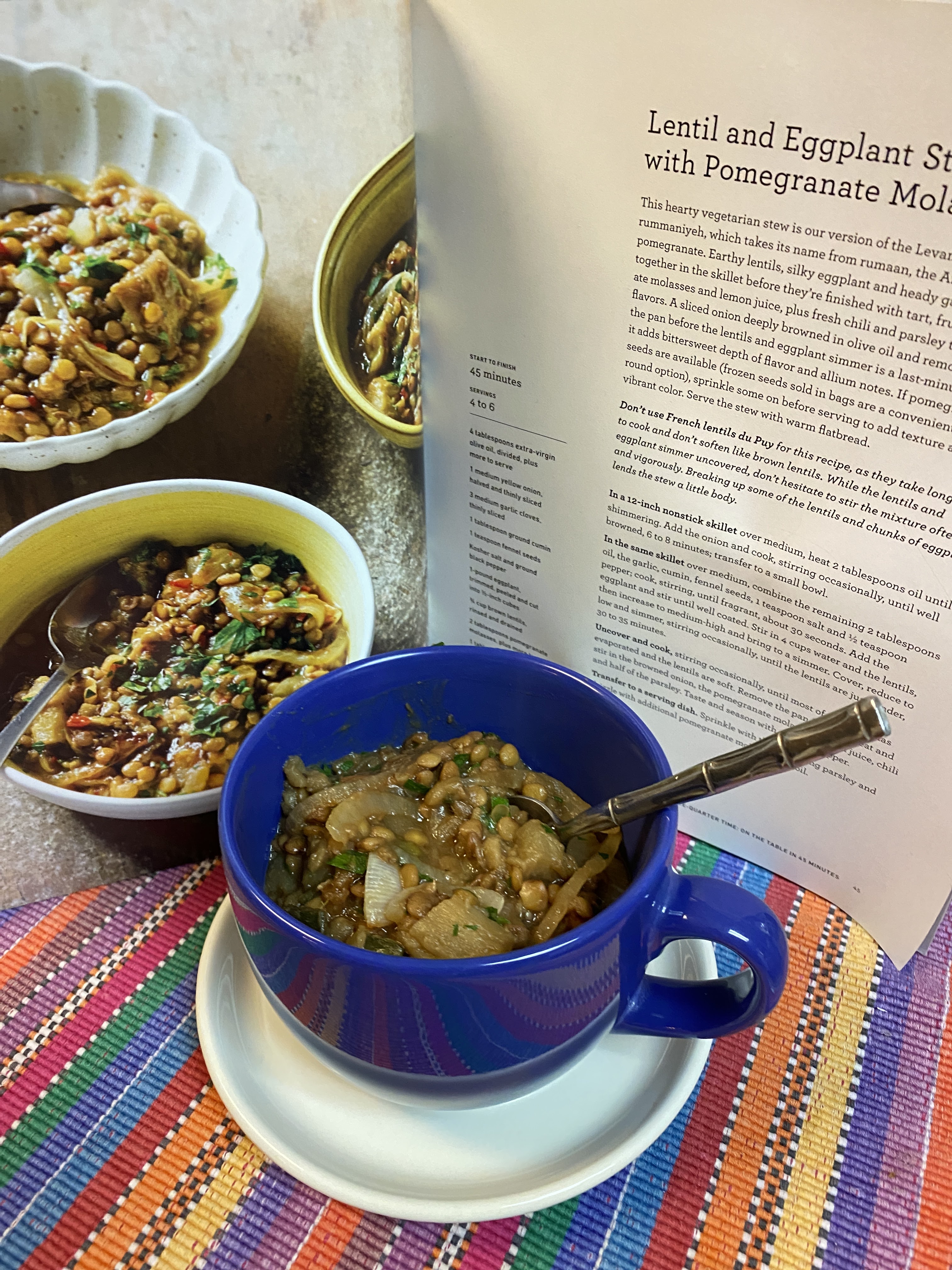
Photo of a blue bowl with lentil stew in itI have so many recipes marked to try that I don't think The World in a Skillet is going to leave my kitchen for months. Here a few things I've made: Chicken Curry with Tomatoes and Bell Peppers, Lentil and Eggplant Stew with Pomegranate Molasses (see photo), Toasted Pearl Couscous with Zucchini and Herbs, and Georgian-Style Braised Chicken with Tomatoes and Herbs. Everything was delicious. The recipes are easy enough for everyday dinners and tasty and impressive enough for company.

I have only one minor complaint. I had a hard time meeting the "start to finish" times provided for each recipe I tried. It took me 15 or so extra minutes to complete the dishes. This isn't at all a problem for me, but some cooks are pressed for time and need a 30-minute dinner to take no longer than that half hour. The issue may be that it takes me longer than it does Kimball to prep the ingredients. Or maybe my home stovetop and oven aren't as powerful as his professional or high-end appliances. Whatever the case, I thought I should point this out.

Note too that some of the recipes call for less common ingredients, like specialty spice mixes or sauces. I had no trouble buying what I needed at my local grocery stores, even here in a small town. So don't be thrown off by the berbere spice mix or the lemongrass: either you'll be able to find it at a store near you or you can use one of the suggested substitutions.

Broccoli and tofu on a white platterRecommendation: Most cooks will find a number of appealing dishes to try from The World in a Skillet by Christopher Kimball. The cookbook is a good match for those who like learn about new dishes, try new flavors and ingredients, and like to expand their culinary horizons. Vegans and vegetarians will need to look before buying.

The recipe I'm sharing today is one I haven't tried yet, but I hope to soon. The dish is inspired by Mexican tinga poblana, but can be completed (according to Kimball) in 30 minutes start to finish.

From the headnote: (1) Mexican oregano is often found with the other Mexican ingredients rather than in the spice aisle. Use equal amounts of dried marjoram if you can't find it. (2) Serve the meat in tacos or on tostadas. (3) Don't add the pork to the pan until the sauce is at a full boil to ensure quick cooking. Remove the pan from the heat as soon as the pork is no longer pink, to avoid overcooking and toughness.

Pork Tenderloin in Tomato-Chipotle Sauce
30 minutes
Pork and Tomato dish in a skilletServes 4

  • 1¼-pound pork tenderloin, trimmed of silver skin, halved lengthwise and thinly sliced crosswise
  • Kosher salt and ground black pepper
  • 2 tablespoons grapeseed or other neutral oil
  • ½ medium white onion, thinly sliced
  • 3 medium garlic cloves, minced
  • 1 teaspoon dried Mexican oregano
  • ½ teaspoon ground cumin
  • 1 bunch cilantro, stems minced, leaved chopped, reserved separately
  • 2 chipotle chilies in adobo sauce, chopped, plus 2 teaspoons adobo sauce
  • 1 pound ripe tomatoes, cored and roughly chopped
  • ¼ cup low-sodium chicken broth
  • ½ teaspoon packed light brown sugar
In a medium bowl, toss the pork with salt and pepper. In a 12-inch skillet over medium, heat the oil until shimmering. Add the onion, garlic, and 1 teaspoon salt, then cook, stirring occasionally until the onion is softened, 2 to 4 minutes. Add the oregano, cumin, and cilantro stems; cook, stirring, until fragrant, 30 to 60 seconds.

Stir in the chipotle chilies and adobo sauce, the tomatoes, broth, and sugar. Bring to a boil over medium-high, then cover, reduce to medium and cook, stirring occasionally, until the vegetables are fully softened and the mixture is saucy, about 8 minutes.

Uncover, increase to medium-high and stir in the pork. Cook, uncovered and stirring often, until the pork is no longer pink, 3 to 5 minutes. Remove the pan from the heat. Taste and season with salt and pepper, then stir in the cilantro leaves.

Note: The recipe and scans are used in the context of a review; all rights remain with the original copyright holders. The photo is my own.

Shared with Weekend Cooking, hosted by Marg at The Intrepid Reader (and Baker)

Click for more

02 July 2022

The Simple Comforts Step-by-Step Instant Pot Cookbook by Jeffrey Eisner

book cover of Simple Comforts Step-by-Step Instant Pot Cookbook by Jeffrey EisnerHappy holiday weekend to my Canadian and U.S. readers. Hope you did something fun or have something fun planned, preferably with good friends and good food.

Today I want to talk about a new(ish) pressure cooker cookbook by one of the most experienced Instant Pot cooks out there: The Simple Comforts Step-by-Step Instant Pot Cookbook by Jeffrey Eisner. Thanks so much to Voracious and the Voracious Ambassador program for giving me a chance to cook from and review this book.

There a few things you have to know about this cookbook right from the get-go. First, though the recipes will work in any pressure cooker, they were developed specifically for the Instant Pot (IP). Eisner wisely recognizes that there are several IP models and sizes, so he provides instructions that will work in just about any model you have, sometimes with size or volume adjustments.

Second, each and every recipe is clearly marked for a variety of dietary concerns. If you're keto, paleo, gluten-free, dairy-free, vegetarian, or vegan, you will find many recipes to suit your needs. Eisner also notes which recipes can easily be adapted from, say from vegetarian to vegan or from gluten to gluten-free, and provides guidelines for how to make those adjustments. Third, just about every recipe includes helpful tips. Some of these suggest ways to lower the fat content of a recipe; others suggest variations or provide advice.

Photo of chicken and rice in a dishFinally, the recipes in Simple Comforts totally meet the expectations of the title. The dishes included here are indeed comfort food. You'll find recipes for risotto, mac and cheese, pot roast, and fettuccine alfredo. But you'll also find IP versions of Asian, Mexican, and Mediterranean classics, like pozole verde, Thai chicken satay, Korean beef bulgogi, and osso buco.

As you probably already guessed, the majority of the ingredients called for in Simple Comforts will be easy to find for most people. Eisner's directions are exceptionally simple to follow. The ingredient lists include tips and notes, and each recipe step is illustrated with a photograph, so cooks who are new to the Instant Pot or new to the kitchen should have no problem understanding the process for making each dish. Oh, and unlike so many pressure cooker cookbooks, Eisner's time estimations for each recipe includes "pressure building time." This is so important when trying to plan your meals.

I made several recipes from Simple Comforts, all with excellent outcomes. The Sloppy Joes were easy and delicious. The serving size was for 4-6, but instead of cutting the recipe in half, I opted to make the whole thing and freeze the leftovers for another night. The Risotto Ranchero is, as Eisner states, "a taco-inspired risotto." Salsa, green chiles, and Mexican cheeses replace the more traditional Italian ingredients. Yum! I also made a tortellini soup, a beef stew, and chicken teriyaki (see scan). I can say without reservation that the recipes work and the final dishes are tasty.

Photo of pasta and pastrami on a plateWhen I was thinking about the negatives of Simple Comforts, I could think of only one. This cookbook takes the stance that if it can be made in the Instant Pot, then it should be made in the Instant Pot. I'm not really in that camp. Some dishes come together just as quickly (sometimes quicker) on the stove top. But then I thought about the cooks who don't really like to hover around the stove, keeping on eye on dinner as it cooks.

And then I thought about people who have RVs or campers and how convenient it would be to simply use the Instant Pot. How about when you rent a shore house or a cabin the woods for a couple of weeks? You wouldn't have to worry about an under-equipped kitchen. How about people like me who don't have central air-conditioning? The IP in the summer is a godsend. Oh and then there are those who live in tiny city apartments.

Recommendation: In the end, I decided that The Simple Comforts Step-by-Step Instant Pot Cookbook by Jeffrey Eisner is, in fact, a good cookbook for anyone who likes using their IP or would like to learn how to use the one they stashed on that high shelf in the pantry. No matter your dietary concerns, you'll find a number of everyday, comfort dishes in this cookbook.

I couldn't find a video for a recipe from Simple Comforts, but the following video is only a couple of weeks old and shows Eisner making Linguine La Parma. His personality and style of cooking come through on the page as easily as it does on camera.


You can find more Instant Pot recipes by Jeffrey Eisner on his website: Pressure Luck Cooking.

Note: The scans are used in the context of a review; all rights remain with the original copyright holders.

Shared with Weekend Cooking, hosted by Marg at The Intrepid Reader (and Baker)

Click for more

22 January 2022

Weekend Cooking: Milk Street Vegetables by Christopher Kimball

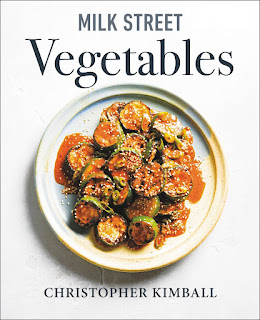
Cover of the cookbook Milk Street Vegetables by Christopher KimballDo you ever get tired of cooking your vegetables in the same old way? After all, what's easier and more reliable than roasting veggies in the oven or air fryer?

I can't say I'm tired of roasting my vegetables, but I love learning new methods and trying new recipes. When Voracious Books offered me a copy of Milk Street: Vegetables as part of their Voracious Ambassadors program, I jumped at the chance to explore the cookbook. First, I have all the faith in Christopher Kimball and Milk Street recipes. Second, I don't think I've ever met a vegetable I didn't like when cooked properly. Finally, I was ready to learn some new tricks.

Now that the holidays are well behind us and the temperatures are plummeting (the wind chill this morning was -6F), I'm all about spending time in the kitchen, and Milk Street: Vegetables has been keeping me company. The recipes are arranged loosely by course (appetizers, soups, mains) or technique (stir-fries, oven-baked), but the principal way I've navigated the cookbook is via the indexes, especially the one that lists recipes by the main vegetable. I think the best way to talk about this hefty cookbook is go through the pros and cons.

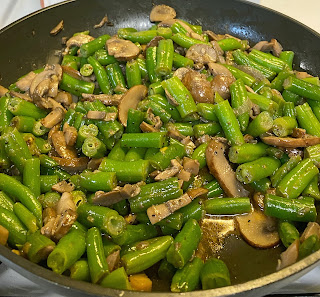
Photo of a green bean dish from Milk Street Vegetables by Christopher KimballHere's what I really like about Milk Street: Vegetables. I can't say enough about the variety of flavors found throughout the book. The dishes are truly global. Besides the the familiar Western cuisines, we find Asian-, African-, and Mideast-inspired recipes. I also appreciate the tips and advice that accompany almost every recipe. Cooks learn why a particular technique is called for, how to avoid overcooking the main vegetable, when to taste for seasoning, and how to choose and prepare less-common ingredients. What's more, each recipe introduction tells us the inspiration behind the dish, serving tips, acceptable substitutions, and other good information.

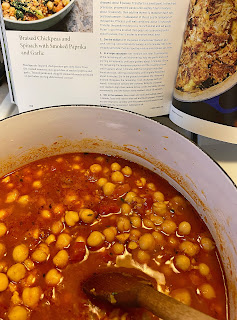
The photos here show the Green Beans with Mushrooms and Sherry Vinaigrette and Braised Chickpeas and Spinach with Smoked Paprika and Garlic. Both photos were taken in progress and not just before serving. I also made Hoisin Broccoli and Tofu Traybake, Soy-Glazed Braised Brussels Spouts, and several of the salads. Tonight I'm making Roasted Acorn Squash with Orange-Herb Salad. All the recipes were easy to follow and the dishes were delicious, especially those chickpeas (you can check out the recipe over at Edible Communities).

A chickpea dish from Milk Street Vegetables by Christopher KimballThroughout Milk Street: Vegetables, you'll find features that spotlight a single vegetable. Here we learn more information about the ingredient as well as how each vegetable is usually served around the world. For example, the eggplant feature tells us how the vegetable (really a fruit) is cooked in Cairo, Ho Chi Minh City, Naples, and India. If the cookbook includes a recipe for any of these dishes, you'll find a cross-reference to Milk Street's version.

Now for the cons. First, some of the recipes have appeared in other Milk Street cookbooks. For example, that chickpea recipe was also in their Tuesday Nights cookbook. My second issue is that some of the recipes are fairly involved or require attention, which means it can be difficult for a single cook to juggle the vegetable side while also making the main dish. The results (at least in my experience) are worth the trouble, but it's something to keep in mind. Sometimes that 30-minute estimated cooking time is hands off, but other times, you're stirring, prepping the next step, or are otherwise involved.

Recommendation: With Milk Street: Vegetables by Christopher Kimball in your kitchen, you'll be serving up all kinds of tasty vegetarian dishes that pack a ton of flavor. You can't go wrong with this cookbook, whether you buy it or borrow it from the library. If you're eating vegan or gluten free, you'll find many recipes to suit your diet; just be sure to read through the list of ingredients first.

Here's a recipe I haven't tried yet, but it's on my list.

Broccoli with Scallions, Miso and Orange
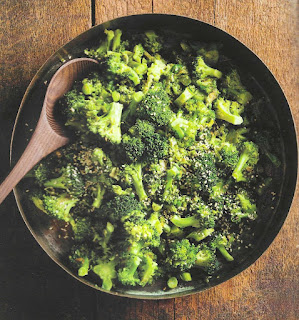
A broccoli dish from Milk Street: Vegetarian by Christopher Kimball4 servings
Time: 25 minutes total

  • 3 tablespoons extra-virgin olive oil or salted butter
  • 1 bunch scallions, thinly sliced, whites and greens reserved separately
  • 1 1/2 tablespoons white miso or red miso
  • 1 tablespoon toasted sesame oil, plus more to serve
  • kosher salt and ground black pepper
  • 2 pounds broccoli, stems sliced 1/2 inch thick and florets cut into 1-inch pieces
  • 1 tablespoon grated orange zest, plus 2 tablespoons orange juice
Don't forget to reserve the scallion whites and greens separately, as they're added at different times. The whites are sauteed before the broccoli is added to the pot; the greens go in at the end.

In a large Dutch oven, combine the olive oil and scallion whites. Cook over medium-high heat, stirring, until lightly browned, about 5 minutes. Add 1 1/4 cups water, the miso, sesame oil, 1/4 teaspoon salt and 1/2 teaspoon pepper. Bring to a boil, stirring to dissolve the miso, then stir in the broccoli. Cover and cook, stirring occasionally, until tender-crisp, about 7 minutes.

Uncover and cook, stirring occasionally, until the moisture evaporates and the broccoli begins to sizzle, about 4 minutes. Off heat, stir in the orange zest and juice along with the scallion greens, then taste and season with salt and pepper. Transfer to a serving dish and drizzle with additional sesame oil.

Optional garnish: toasted sesame seeds or Siraracha or both.

Note: The scan of the broccoli dish and the recipe are used in the context of a review; all rights remain with the original copyright holders. Two photos are my own.

Shared with Weekend Cooking, hosted by Marg at The Intrepid Reader (and Baker)

Click for more

15 January 2022

Weekend Cooking: Good Reading, Good Food--4 Books

I doubt I’m the only one among us who enjoys reading cookbooks almost as much as I like cooking from them. Today’s post is about two cookbooks that fit this description and two novels that I picked up because they have a food element in the plot. Some worked better for me than others, and I hope at least one will be a good match for you.

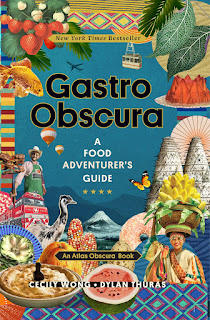
Book cover of Gastro Obscura by Cecily Wong and Dylan ThurasFirst up is Gastro Obscura: A Food Adventurer’s Guide by Cecily Wong and Dylan Thuras (Workman). Like our Weekend Cooking host, Marg, I was gifted a copy of this for Christmas. I haven’t had time to really get into it, but I thought I’d share my initial thoughts. I know Marg will be talking about this book too.

The best way to describe Gastro Obscura is to quote the introduction:

This book is more than a menu of food worth tasting—it’s a collection of forgotten histories and endangered traditions, obscure experiences, culinary ingenuity, and edible wonders.
The entries cover the entire globe, allowing us to virtually visit more than 120 countries and to learn about all kinds of obscure, traditional, trendy, and famous food traditions and dishes. For example, one entry takes us into the ancient Persian ice houses in Yakhchals, Iran. Another is all about how to try an Australian Tim Tam Slam (a subject Marg wrote about a while back).

The book is well illustrated with drawings, maps, and photos and includes quite a number of recipes. Gastro Obscura is a book to dip into when the mood hits or as you’re planning your next travel adventure.

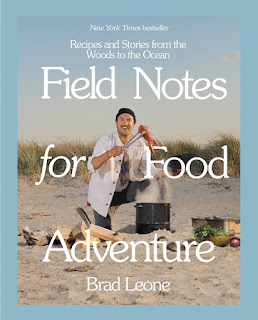
Book Cover for Field Notes for Food Adventures by Brad LeoneI received Field Notes for Food Adventure by Brad Leone from Voracious Books as part of their Ambassador Program. The subtitle is “Recipes and Stories from the Woods to the Ocean.” Leone takes us along on a year of outdoor and food adventures set mostly in the U.S. Northeast woods and along the waterways and coast.

The thirteen chapters are arranged by principal ingredient and largely follow the seasons, starting in late winter and spring with maple and wild ramps; moving into the summer with a pool party, shellfish, and trout; and heading back into the cooler months with mushrooms, venison, and hearty meat-forward dinners. Vegetarians should note that most of the recipes and chapters are centered on seafood or meat.

The book is illustrated with family photos, and each section includes a personal story and each recipe is accompanied by Leone’s notes and tips. Many of the fish and seafood recipes aren’t quite doable for me, because of where I live, but the meat and vegetable dishes look really good, like maple pork tenderloin and tomato and bean salad.

I haven’t cooked out of Field Notes for Food Adventure yet, but I have a handful of recipes marked to try. Leone also has me dreaming of our next shore vacation.

Book cover of Much Ado About a Latte by Kathleen FullerI picked up Kathleen Fuller’s Much Ado About a Latte, which I received from the publisher (Thomas Nelson), based on the title. I’m not much of a romance reader but a good foodie story makes for great escape reading. This is a clean, fun story about Anita and Tanner who have been attracted to each other since high school, although they each think their feelings are not returned.

Tanner is the cook at the local diner, and Anita is a waitress. They are on friendly terms, but besides not sharing their deeper feelings, neither has revealed their long-term ambitions. So Tanner is surprised and shocked to find out Anita is planning to open a coffee shop next door to the diner he just secretly bought! Will being business rivals put an end to any romantic dreams?

Of course the plot is completely predictable, but the food references and the deeper themes of loyalty, friendship, family, and overcoming adversity make for an enjoyable read. Although this is the second entry in the Maple Falls series, Much Ado About a Latte reads like a standalone. No recipes are included in the book.

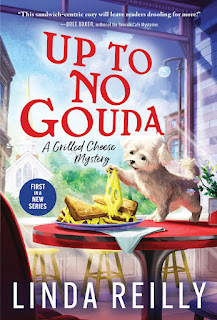
Book cover of Up to No Gouda by Linda ReillyI’ve often written about culinary cozy mysteries, and my latest read is Up to No Gouda by Linda Reilly, which I received from the publisher (Poisoned Pen Press). I’m not quite finished (a couple of chapters to go as of this writing), but I’ve really enjoyed this first in a new series.

Carly uses her late-husband’s life insurance money to open her dream restaurant in her small, quaint Vermont hometown. Open from lunch through dinner, the Grilled Cheese Eatery serves down-home and fancy variations of the iconic grilled cheese sandwich. The day after Carly learns her lease won’t be renewed, a dead body is discovered in the alley behind the restaurant.

Though Carly herself is not really considered to be a suspect, several people she knows, including one of her employees, are tagged by the local police. Of course, Carly gets involved in the investigation and doesn’t give up, even when she may be putting herself in danger.

This book has all the good elements of fun cozy series: quirky town characters, a well-plotted mystery, a likeable main character, a cute dog, and a budding romance. The book ends with several grilled cheese recipes and tips. By the time this post goes live, I will have learned if I was able to ID the killer before Carly did. If you’re into cozy culinary mysteries, give Up to No Gouda a try.

Shared with Weekend Cooking, hosted by Marg at The Intrepid Reader (and Baker)

Click for more

30 October 2021

Weekend Cooking: 2 Cookbooks for Your Kitchen Library

I've been fortunate enough to be part of the Voracious Ambassadors program for a couple of years now, which means I receive review copies of many of the cookbooks published by the Voracious imprint of Little, Brown. Their cookbooks are always as informative as they are useful and pretty to look at. Today I talk about two cookbooks that came out this fall.

Cover of Zoe's Ghana Kitchen by Zoe AdjohyohFirst up is Zoe Adjonyoh's Zoe's Ghana Kitchen, which is subtitled "An Introduction to New African Cuisine--from Ghana with Love." I didn't know much about Ghanaian cooking or food flavors, so I was excited to get a chance to learn. One of the big takeaways for me is that most of the dishes include a healthy dose of heat from a variety of chilies. I also spotted quite a few ingredients that were introduced into everyday Ghanaian dishes after contact and trade with Europe, Asia, and the Americas. In addition, many of the indigenous spices are used both in cooking and for medicinal purposes.

Adjonyoh provides a guide to all of the major spices, herbs, grains, fruits, vegetables, and so on used in the recipes in the cookbook, including information about responsible sourcing and a map of regional dishes and flavorings. Because I live in a small town, I would have to buy at least some of the spices and herbs via mail order and wonder if I could find all of the fresh ingredients.

For me, Zoe's Ghana Kitchen is more of a book to read through than cook from, not only because I don't live in an area with a lot of specialty stores but also because a number of the recipes include one to three subrecipes, which always brings out my lazy side. On the other hand, I was drawn to several of the spice mixes (Jollof Dry Spice Mix, for example, to make grilled or broiled chicken) and sauces. I've also marked Pineapple and Ginger chutney to try over the winter. In the beverage and snack chapter, I flagged a mango smoothie and have already made the Spiced Cashews (recipe to follow), which we ate in record time, they were so good. Other recipes are a beef stew, spicy beans (delicious), roasted stuffed sweet potatoes, and a variety of salads.

Photo of a cod dish from Zoe's Ghana Kitchen by Zoe AdjohyohAdjonyoh rounds out her book with personal stories and other features (including a playlist!), information about each recipe, cooking tips, and photographs. All of the recipes are doable in a non-Ghanaian kitchen and would brighten up anyone's menu.

Recommendation: Zoe Adjonyoh's Zoe's Ghana Kitchen is for cooks who want to learn about new flavors and new ingredients and for those of us who want to support the African food revolution. Anyone looking for a starting point for sub-Saharan cooking could start here. If you're feeling less than ambitious, then check this book out from the library to broaden your culinary knowledge. Vegetarian, vegan, and gluten-free cooks will find recipes and ideas for new dishes.

==================

Photo of The Joy of Pizza by Dan RicherIf you've been around for any amount of time, you already know how much I love to make homemade pizza. So when I saw that Voracious had a new pizza cookbook coming out, I knew I had to take a look. The Joy of Pizza by Dan Richer is an all-in-one resource for, as the subtitle says, "Everything You Need to Know" about making pizza.

The book starts out with all kinds of solid information, starting with preparation advice and ending with cutting and eating the baked pie. There are detailed checklists for evaluating your finished pizza and choosing your toppings. You'll also find informative guides to everything associated with the dough (flours, glutens, fermentation, sourdough) and toppings (sauce, oil, cheese, meats). Richer even provides a useful graphic for successfully combining pizza toppings based on each ingredient's characteristics, like heat, crisp, rich, and acid.

At the heart of The Joy of Pizza is the chapter on techniques. For example, Richer explains every step of creating the crust, from making sourdough starter through to shaping of the dough before baking. Then comes tips on how to build a pizza and, of course, bake it. If your pizza didn't come out quite the way you were envisioning, then check out the troubleshooting and evaluation guides (many come with QR codes for more information).

Photo of pizza and wine from The Joy of Pizza by Dan RicherI'm particularly interested in the section about the masonry ovens, because over the years Mr. BFR has considered building us a wood-fired pizza and bread oven. And just in case he's changed his mind, I'm glad to see the section on using a variety of other kinds of high-temperature ovens (electric, gas, wood).

The recipe chapter contains useful graphics (flow charts, formulas, and so on) plus delicious ideas for all kinds of pizzas, from simple tomato and basil to the more unusual (corn pizza, hazelnut pizza) to a variety of common combos (mushrooms, pepperoni, bianca). At the end of The Joy of Pizza are lists of resources: where to buy ingredients, equipment, and ovens and QR codes that take you to a library of instructional videos and PDFs.

Recommendation: The Joy of Pizza by Dan Richer is perfect for anyone who wants to truly understand every step of making a high-quality pizza at home. Though the recipes look fantastic, the draw for this cookbook is that it's an encyclopedia of techniques, equipment, basics, and ingredients. If you're a pizza lover, you'll want to take a look at this cookbook.

Spiced Cashews
Photo of spiced cashews from Zoe's Ghana Kitchen by Zoe AdjonyohFrom Zoe's Ghana Kitchen
  • 400g (14oz) raw or roasted cashew nuts
  • 2 teaspoons peanut oil
  • 2 teaspoons smoked paprika
  • 2 teaspoons ground cumin
  • Sea salt, for sprinkling
Preheat the oven to 375F.

Mix all the ingredients except the salt together in a bowl, then spread out on a baking tray and roast for 12-15 minutes until the nuts are crisp and lightly browned, giving the tray a shake halfway through the cooking time. Remove from the oven and sprinkle with sea salt. Leave to cool, then store in an airtight container. Use within a month. [BFR's comment: they won't last that long!]

Note: The scans and recipe are used in the context of a review; all rights remain with the original copyright holders. Note too that any loss of image quality is entirely my fault.

Shared with Weekend Cooking, hosted by Marg at The Intrepid Reader (and Baker)

Click for more

01 May 2021

Weekend Cooking: Tuesday Nights Mediterranean by Christopher Kimball

Review of Tuesday Nights Mediterranean by Christopher KimballI was introduced to Christopher Kimball decades ago through the magazine Cooks Illustrated and America's Test Kitchen. When he took off on his own a few years ago, he founded the Milk Street media company, which produces television and radio shows as well as a magazine and cookbooks. I've never seen the Milk Street shows, but I have cooked out of several of their cookbooks with good success.

Kimball's newest cookbook is Tuesday Nights Mediterranean, which I received through the Voracious Ambassador program. The idea behind the Tuesday Night cookbook series is to show how easy it is to put together nutritious home-cooked meals, even on busy weeknights; the focus of this book is food from all three coasts of the Mediterranean Sea, from North Africa all the way around to southern Spain.

Here are some things I really like about Tuesday Nights Mediterranean. The first three chapters are titled "Fast," "Faster," and "Fastest," corresponding to main dishes that can be made in 40, 35, and 25 minutes. Though my schedule is fairly open, cooks who have to juggle kids' activities and evening obligations with trying to get dinner on the table will appreciate the heads-up on prep times. I didn't test the timing, but I think the estimates are fairly accurate.

Review of Tuesday Nights Mediterranean by Christopher KimbalThe remaining chapters provide recipes for main-dish salads, which can also be used for satisfying lunches; vegetarian meals (though not necessarily vegan), soups, and filling sandwiches. Every recipe is accompanied by a full-page photo of the finished dish, an informative introduction, and tips. The directions are straightforward, and the ingredients can easily be found at any grocery store.

I made several recipes from Tuesday Nights Mediterranean, including Shrimp and Couscous with Tomatoes and Toasted Almonds; Pork with Kale, Red Wine, and Toasted Garlic; Spicy White Beans with Tahini, Lemon, and Parsley; and Tunisian Chickpeas with Swiss Chard (recipe below). Everything was delicious, and I'd be happy to make any one of these recipes again. I have more recipes marked to try, especially in the salad and vegetarian chapters.

If I have any issue with Tuesday Nights Mediterranean, it's this: experienced cooks may find themselves more inspired by the recipes than inclined to make the exact recipes presented. For example, when I made the spicy white bean recipe, I used the vegetables and beans I had on hand; it was the dressing I was most interested in and will definitely make it again for future bean salads. The Sardinian herb soup was terrific, but by the time I swapped ingredients to match what was in my kitchen, I likely had a different soup altogether.

Review of Tuesday Nights Mediterranean by Christopher KimbalStill, I know many younger home cooks who are eager to make nutritious, from-scratch, quick dinners and are grateful for reliable recipes that can be followed to the tee. No thinking necessary after a long day at work and parenting.

As for me, I'm a fan of this cookbook because I really like the flavor combinations. Among the recipes I plan to make in some form or another are fish with tomatoes and capers (Italian), carrot and sweet potato frittata (Egyptian), spicy beef-stuffed pitas (Levantine), and shrimp and spinach (Greek). Note too that Christopher Kimball's Tuesday Nights Mediterranean would make a great gift for graduates, mothers, fathers, and newlyweds.

I picked the following recipe to share because it was tasty and because I believe it will fit quite a few food preferences. We ate this as a main dish, but it would also pair nicely, as the recipe introduction notes, with grilled or roasted meats.

Tunisian Chickpeas with Swiss Chard
Review of Tuesday Nights Mediterranean by Christopher KimbalServes 4
35 minutes

  • 2 tablespoons extra-virgin olive oil, plus more to serve
  • 1 medium red onion, chopped
  • 4 medium garlic cloves, smashed and peeled
  • 2 tablespoons tomato paste
  • 2 teaspoons ground coriander
  • 2 teaspoons ground cumin
  • Two 15½-ounce cans chickpeas, rinsed and drained
  • One 28-ounce can whole peeled tomatoes
  • 1 large bunch Swiss chard (about 1 pound), stems finely chopped, leaves roughly chopped, reserved separately
  • Kosher salt and ground black pepper
  • Lemon wedges, to serve
In a large Dutch oven over medium, heat the oil until shimmering. Add the onion, garlic, tomato paste, coriander and cumin; then cook, stirring occasionally, until the tomato paste has browned, 2 to 4 minutes. Add the chickpeas, tomatoes with their juice, chard stems, 1½ teaspoons salt, ½ teaspoon pepper and 1 cup water, scraping up any browned bits.

Bring to a simmer, then cover, reduce to medium-low, and cook, stirring occasionally, until the onion and chard stems have softened, 10 to 14 minutes. With the pot still on medium-low, use a potato masher or the back of a large spoon to roughly mash the mixture; it's fine if many of the chickpeas remain whole.

Return to a simmer over medium-high, then add the chard leaves. Cook, stirring, until they are wilted, 2 to 3 minutes. Taste and season with salt and pepper. Serve with a drizzle of oil and lemon wedges on the side.

Note: Recipe and scans shared in the context of review; all rights remain with the original copyright holder.

Shared with Weekend Cooking, hosted by Marg at The Intrepid Reader (and Baker)

Click for more

16 January 2021

Weekend Cooking: The Instant Pot Bible: The Next Generation by BruceWeinstein and Mark Scarbrough

Review of Instant Pot Bible: The Next Generation by Bruce Weinstein and Mark ScarbroughI had every intention to write and post this review last week. But after all the events that happened at the U.S. Capitol on January 6, I really just didn't have it in me to post a cookbook review.

No worries, though, because Bruce Weinstein and Mark Scarbrough's Instant Pot Bible: The Next Generation (thanks to Voracious Books and the Voracious Ambassador Program for the review copy) can be used all year round.

Let me start with a little background. I've been a pressure cooker fan since the 1990s, relying on my stove top model until about--what?--10 years ago when the electric versions became readily available and readily affordable. I'm still a fan, and have two electrics and my original stove-top pot. I cook under pressure at least once a week.

I was really excited to see a new Instant Pot cookbook from Weinstein and Scarbrough. They've written many cookbooks, have been nominated for James Beard Awards, and have won an IACP award. They know what they're talking about.

The Instant Pot Bible: The Next Generation has (as the cover says, 350 new recipes, ranging from breakfasts and snacks to main dishes, sides, and desserts. The recipes are extremely family friendly, appealing to a wide variety of tastes. For each recipe, the authors have indicated whether it is appropriate for a vegetarian, gluten-free, or vegan diet.

Review of Instant Pot Bible: The Next Generation by Bruce Weinstein and Mark ScarbroughThings I like about the recipes: easy to find ingredients, clear step-by-step instructions, tips and notes to help you succeed, and directions for the full range of Instant Pot (electric pressure cooker) sizes. I appreciate the "Beyond" boxes, which contain variations, serving tips, and/or ways to use leftovers.

In addition, Weinstein and Scarbrough include recipes to help you learn new techniques, like pot-in-pot cooking, baking, poaching, and stacked cooking. They also help you learn to use models that include an air-fryer lid.

Things I need to point out: The cookbook contains very few photographs of the finished dishes, and these are all found in a single color insert section. Some of the recipes would be just as easy and maybe even quicker if made on the stove top in a conventional pot or saucepan. This is a personal issue for me. I love my pressure cookers, but I don't use them for every possible dish. On the other hand, I can imagine several situations in which being able to cook almost everything in a single electric small appliance could be a bonus (RV camping, studio apartment, for example).

Finally, for a couple of the recipes I tried (not all), I cut the time at pressure by a couple of minutes to get the results that suit our tastes. How did I know to do this? Experience. If you cook something in your pressure cooker and the veggies are too soft, then next time cut the time by a minute or two and see if you're happier. As with all new techniques and skills, there is a learning curve.

I cooked quite a bit out of Weinstein and Scarbrough's The Instant Pot Bible: The Next Generation. Usually I followed the directions exactly, but in some cases, I used their recipes as inspiration. I made the Lemon, Baby Kale, and Goat Cheese Risotto (except we used Parmesan cheese instead), Balsamic Beef Stew (a winner, with no tweaks), Millennial-Friendly Pasta e Fagioli Soup, Grandmother-Friendly Potato Soup (with the called-for cabbage), and Ground Beef and Lentil Soup. I'm curious about making some of the desserts and the casseroles.

Review of Instant Pot Bible: The Next Generation by Bruce Weinstein and Mark ScarbroughRecommendation: I recommend The Instant Pot Bible: The Next Generation by Bruce Weinstein and Mark Scarbrough for anyone looking for easy and doable recipes for their electric pressure cooker, and especially those who may be totally new to the Instant Pot. It's also a good resource for experienced users wishing to learn new tricks for their beloved appliance.

The recipe I'm sharing today is for Spiced Poached Pears, which I picked because it's vegan and gluten-free and could easily be adapted to conventional cooking if you don't have a pressure cooker. I'm giving the directions for 5- to 8-quart Instant Pots. The authors suggest a bold red wine or even a sweet Riesling if you don't have cider on hand. Weinstein and Scarbrough serve the pears and syrup over ice cream.

Note: I haven't yet made this recipe. Thanks to Voracious and the Voracious Ambassador Program for the review copy. The scans and recipe are used in the context of a review; all rights remain with the original copyright holders.

Spiced Poached Pears
Serves 4

  • 3 1/2 cups unsweetened apple cider
  • 2 cups granulated white sugar
  • 1 tablespoon vanilla extract
  • 8 whole cloves
  • 1 small orange
  • One 3-inch cinnamon stick
  • 4 firm, ripe bosc or Anjou pears, stemmed, peeled, cored, and halved from top to bottom
Stir the cider, sugar, and vanilla extract in the insert until the sugar dissolves. Push the "stem" ends of the cloves into the orange and drop it into the pot. Add the cinnamon stick too. Nestle the pear halves into this liquid and lock the lid on the pot. Set the pot to pressure cook on high (with the valve closed) for 4 minutes with the keep warm setting off. Hit start.

When the pot has finished cooking, turn it off and let the pressure return to normal naturally, about 25 minutes. Unlatch the pot and open the cooker. Use a slotted spoon to transfer the pear halves to a heat-safe storage bowl (do not use plastic). Remove and discard the orange, any cloves that have fallen out, and the cinnamon stick.

Press saute, set on high. Stir constantly as the sauce comes to a simmer. Continue cooking, stirring almost constantly until the sauce has reduced to a thick syrup, about half the volume it was after you removed the pears, about 10 minutes. Turn off the heat and pour the hot syrup over the pears. Cool to room temperature, cover, and store in the refrigerator for up to 4 days. Serve cold or at room temperature.

Shared with Weekend Cooking, hosted by Marg at The Intrepid Reader (and Baker)

Click for more

28 November 2020

Weekend Cooking: 3 New Cookbooks

Happy Thanksgiving weekend to my fellow Americans. I believe this weekend also covers a holiday in Scotland (on Monday), and I think it's also the start of Advent (on Sunday). In any case, holiday or no, hope your weekend is safe and relaxing.

As I mentioned a few weeks ago, I've been blessed to receive a number of super cookbooks this fall, and I'm determined to share as many as I can with you before the year is over. Today's eclectic trio would make good gifts or additions to your own kitchen, though they're very different from each other.

3 new cookbooks for fall 2020First up is Jamie Oliver's 7 Ways (Flatiron, Nov. 10). This is a down-to-earth, practical cookbook that should have broad appeal. Here's the concept: Oliver focuses on 18 common foods (like broccoli, chicken breast, shrimp, eggs, and potatoes) and provides 7 recipes for each one. The idea behind 7 Ways is to give us new ideas for using staple ingredients. Most recipes can be made in well under an hour and use reliable shortcuts, like canned beans, store-bought stocks, and jarred sauces.

Things I love: Each recipe is straightforward, short, and accompanied by a full-page photo and nutritional information. Oliver provides two indexes: one standard at the back of the book and one at the beginning that groups recipes by type: one pot, sheet pan, pasta, copycat take-out dishes, and so on.

I've made a few dishes from 7 Ways and, as you might expect from Jamie Oliver, they were all delicious. Here's what I made: broccoli minestrone, sweet potato and chicken chop suey, sweet potato stew, bolognese (with beer in the sauce -- OMG good), and spicy shrimp noodles. Here are a few things I have marked to try: broccoli and tuna pasta, cauliflower and chickpea curry, butter chicken, mushroom risotto, sticky ginger beef, and pork and black bean sauce.

Recommended for busy cooks, those of us who need some inspiration, and inexperienced cooks who are ready for the next step. Special diets: Vegetarians will find quite a few recipes in 7 Ways, but vegans might have trouble. Lots of gluten free choices. Thanks to Flatiron for the review copy.

3 new cookbooks for fall 2020Everyone should put Marcus Samuelsson's The Rise (Voracious, Oct. 27) on their to buy or to borrow list. As the cover of the cookbook indicates, The Rise is all about celebrating Black cooks and chefs and their influence on American cooking. I probably don't need to tell you that Black cooks are rarely in the American household limelight.

Samuelsson corrects that omission by featuring more than 70 Black Americans in the food business. We learn their stories and their culinary influences, and we are also treated to their recipes. The Rise is divided into four main chapters covering the future of Black cooking, contemporary fusions, how Black dishes were changed and integrated during the Great Migration, and the way Black cooks are reclaiming their global culinary heritage. Samuelsson also includes a chapter on ingredients, sauces, and spices; a section on resources; ways to follow Black cooks on social media; and a list of other Black chefs to pay attention to.

The Rise is a book to read and to learn from as much as it is a book to cook from. I haven't yet tried any of the dishes, though plenty of recipes appeal to me. What I truly love about The Rise is the narrative text, which expanded my culinary vision of America. Marcus Samuelsson's latest is recommended to anyone who is interested in a fuller picture of American cooking. Note: Some recipes call for unfamiliar (at least to me) ingredients. Thanks to the Voracious Ambassador Program for the review copy.

3 new cookbooks for fall 2020Here's something for those of you looking for a little fun and who would like to bring some magic into your kitchen: Ashley Craft's The Unofficial Disney Parks Cookbook (Adams Media; Nov. 10). Inside the covers of Craft's cookbook are 100 recipes inspired by dishes served at the "Happiest Place on Earth."

Craft starts out introducing us to the different U.S. parks and kingdoms as well as the equipment needed to make the recipes. The recipes in The Unofficial Disney Parks Cookbook are divided by theme park, and each chapter includes a map of the park and where to buy each yummy treat that inspired the recipes to follow. Craving Cookies and Cream Mickey Cupcakes, Macaron Ice Cream Sandwiches, Peter Pan Floats, School Bread, or Mr. Kamal's Seasoned Fries? You don't need to buy a ticket to make your favorite Disney treat at home.

Though most of the recipes are for sweets and snacks, Craft also includes recipes for pulled pork, carnita tacos, mac and cheese, and chili. Craft introduces each recipe with information about the dish, the history of the dish in the park, and/or variations. She also provides tips and tricks and "Did You Know?" fun facts.

The Unofficial Disney Parks Cookbook is recommended to Disney fans everywhere. Put this on your holiday gift-giving list; it's sure to bring a little happiness to whoever is lucky enough to a get a copy. Thanks to Abrams Media for the review copy and for allowing me to share the following recipe. You may have to click the scan to make it big enough to read.

Shared with Weekend Cooking, hosted by Marg at The Intrepid Reader (and Baker)

Click for more

14 November 2020

Weekend Cooking: This Will Make It Taste Good by Vivian Howard

Review of This Will Make It Taste Good by Vivian HowardI’m a cookbook freak, and I get especially excited when a cookbook has a unique twist. That’s what Vivian Howard’s This Will Make It Taste Good offers. Thanks to the Voracious Ambassador’s Program for the copy of the book.

You may recognize Howard’s name from her Public Television shows, earlier cookbook, or her restaurant. In this cookbook, Howard concentrates on base recipes (like sauces and spiced nuts) and then shows you how to use those ingredients to amp up your everyday cooking. The recipes are for down-to-earth, easy, busy-day dishes that are also fairly quickly put together.

And great news for those of you who are vegetarians or who follow a gluten-free diet: “more than half of the food I this book” will suit you on either or both accounts. Many others can easily be tweaked with easy substitutions.

At the core of this cookbook are the base recipes, what Howard calls her recipe “heroes.” Among them are an herby-olive sauce, pickled cabbage (kraut), spiced nuts, and a peppery tomato sauce. These recipes are designed to be fairly flexible, and Howard explains the important elements, how to make substitutions, and how to store the finished product.

Review of This Will Make It Taste Good by Vivian HowardThe easiest way to explain the structure of This Will Make It Taste Good is take you through a chapter. “R-Rated Onions” starts out by giving us detailed, chatty, and very clear directions on how to make a big batch of caramelized onions and then how to store them for future use. The next page, gives us 10 quick ways to use the onions in our everyday cooking: to top baked potatoes, to add to burgers, to stir into a pot beans, and so on.

Next, Howard provides the following recipes that use the R-Rated Onions: onion soup, baked eggs and spinach, cream cheese dip, topped tomatoes, pork sandwiches, grilled eggplant, steak, vegetable soup, and roast chicken. Each recipe starts with an introduction that tells us something about the dish, why Howard likes it, and possible variations. Throughout This Will Make It Taste Good, Howard adds stories and tips, making the cookbook fun to read.

Review of This Will Make It Taste Good by Vivian HowardSo far, I’ve made two of the hero recipes and several of the accompanying recipes. First, I made a batch of Howard’s Community Organizer, which is a kind of New World sofrito. I used it to make baked nachos and then black-eyed peas, which I served over rice. I also made her version of spiced nuts, which amped up a quinoa salad and then a butternut squash soup.

Recommendation: I was really intrigued by Howard’s hero recipes, and love the idea of having a stash of homemade sauces and flavorings in my refrigerator or freezer to perk up my day-to-day cooking. I suggest you put Vivian Howard’s This Will Make It Taste Good on you library list. Read it, cook from it, and then decide if you want to add it to your permanent collection.

It’s really hard to share a recipe because I’d also have to share the base recipe. Instead, I’ll link you to three YouTube videos that feature Vivian Howard and recipes from This Will Make It Taste Good. I didn’t imbed them here because they (1) are long and (2) were filmed for virtual book tour events and I’m not sure of the videos’ copyrights.

Note: The scans were cropped from photos in the cookbook and used in the context of a review. All rights remain with the original copyright holder.

Shared with Weekend Cooking, hosted by Marg at The Intrepid Reader (and Baker)

Click for more

24 October 2020

Weekend Cooking: 5 New Cookbooks

Fall 2020 Cookbook Round-Up at Beth Fish ReadsHappy Saturday! Today's Weekend Cooking is an attempt to catch you up with just some of this season's great cookbooks. I'm overwhelmed with the number of super titles coming out this year, and I don't have enough Saturdays to give each one a full review of its own.

My current solution is to include a mini-review roundup every few weeks. You can also see photos on my Instagram stories as I cook my way through the season. Who knows, I may get daring and publish more than one cooking post a week!

Thanks to the individual publishers for the review copies of the following cookbooks; all thoughts are my honest opinion.

Fall 2020 Cookbook Round-Up at Beth Fish ReadsFirst up is Matty Matheson's Home Style Cookery (Abrams; Sept. 29). You may remember I reviewed his first cookbook, which was also published by Abrams. Matheson's second book, which was given to me as part of the Abrams Dinner Party, lives up to its title; the recipes are truly meant for home cooking, and many are just fancy enough to make you feel good about what you're serving while remaining down to earth and easy to make. One of my favorite chapters is all about broths or stocks, and I love that Matheson included several vegetarian versions. The sesame seed rolls from the bread section is a Dinner Party favorite, as is the chocolate zucchini cake, which I'm planning to bake this weekend. I tried and liked the green olive tapenade and the one-hour bolognese. Pictured are the Hello Dollies (see recipe below). I gave half the pan to one of my neighbors, and everyone raved about how good they are. I have the Italian beef (braised roast with pickled veggies served as a sandwich) marked to try soon. Recommendation: Matty Matheson is a well-known Canadian chef who tells it like it is, which makes Home Style Cookery fun to read and easy to cook from. Even if Matheson's style doesn't match yours, the broth chapter is not to be missed. Oh and that zucchini chocolate cake recipe too!

Fall 2020 Cookbook Round-Up at Beth Fish ReadsIt seems that cocktails are making a comeback, and I can see why. What else is there to do to pass the time as we enter week whatever it is of quarantine? I received J. M. Hirsch's Shake Strain Done: Craft Cocktails at Home (Voracious, Nov. 3) as part of the Voracious Ambassador Program. More than just a collection of recipes for delicious drinks (see my photo of the Cardamomattan), this book includes interesting and valuable information about the different types of cocktails, advice on expanding one's drink repertoire, basic techniques and equipment, how to garnish, and how to stock your home bar. Don't forget to read the introduction to each cocktail you decide to make; there you'll find tips on mixing, what to expect flavor-wise, suggested variations, and more. As I've mentioned often, wine is our daily drink of choice, but sometimes it's fun to try something new, and I always enjoy serving--and drinking--a well-made, well-balanced cocktail. Recommendation: Pick up J. M. Hirsch's Shake Strain Done to discover what's happening in the world of cocktails. I bet you'll find a few new favorite drink recipes within its pages.

Fall 2020 Cookbook Round-Up at Beth Fish ReadsWhether you use an official sheet pan or just a regular baking pan, one-dish dinners that you can slip into the oven and forget about for a while make dinner a breeze. Sheet Pan Chicken by Cathy Erway (Ten Speed Press; Sept. 29) is full of great ideas for chicken lovers. Besides the recipes, Erway includes tips on equipment, oven temperatures, and spice blends as well as advice for using various cuts of chicken and spatchcocked chicken. The recipes are flavorful (including Mideast, Asian, European, and New World spices) and doable for any level cook. Your main kitchen job is cutting veggies. I made the roasted romaine chicken Caesar, mustard chicken, curried thighs, and several others. Everything came out great, and I have several more dinners to try, including wings with eggplant and basil and the soy sauce chicken with pineapple and bok choy. Recommendation: Cathy Erway's Sheet Pan Chicken is a welcome addition to my bookshelf and would make a good gift for inexperienced or young cooks. Veteran home cooks who are familiar with the sheet pan method should probably check this cookbook out from the library. You'll use the recipes as is and will be inspired to come up with new combos to perk up your weeknight dinners.

The last two cookbooks will help you make pie baking part of your everyday life. Yes, I've already reviewed one super pie book this month and I'm still going pie crazy. I received digital review copies of the following pie books but love them so much I bought hard copies of both!

Fall 2020 Cookbook Round-Up at Beth Fish ReadsI've been a fan of Ken Haedrich for years and years (does anyone else remember his cooking column from Country Journal magazine?). In fact, it was one of his recipes that inspired me to bake my first batch of homemade crackers. The subtitle of his new cookbook, Pie Academy (Storey; Oct. 27), says it all: "Master the Perfect Crust and 255 Amazing Fillings, with Fruits, Nuts, Creams, Custards, Ice Cream, and More; Expert Techniques for Making Fabulous Pies from Scratch." How do I love thee cookbook? Let me count the ways. The first thing you'll notice when you start flipping through is the fabulous photos that detail every aspect of basic pie baking, from measuring to mixing to rolling. Next is the incredible wealth of information; Haedrich doesn't just tell you to roll out a pie crust, he tells you how hard to press on the rolling pin! Ever want to mail a pie? Haedrich tells you how. I learned all about the different fats to use in my crusts and the different thickeners to mix with my fruit, I discovered how to crimp, how to transfer the top crust to the pie, how to vent, and more. I had no idea there were so many different kinds of pie crusts (including gluten free!) and toppings. I can't wait to learn them all. The pie photo above is my rendition of the pear pie with a coffeecake-like topping. I'm not sure I've ever made a pear pie before, but now that I have, you can bet my fall baking will include pears as often as apples. Throughout the cookbook, Haedrich includes tips and tricks, tells stories, and shows hands-on photos. The recipes themselves cover the range from fruit to custard, deep-dish to slab, and everything in between. Recommendation: You need Ken Haedrich's Pie Academy in your kitchen. If you've ever been a little unsure about pie, fret no more! If you're an old hand at pies, here's where to find new combos and be inspired. Buy this one.

Fall 2020 Cookbook Round-Up at Beth Fish ReadsSo, you might ask, if I already have two new pie books, why would I need a third. Well, let me tell you what puts Kate McDermott's Pie Camp (Countryman Press; Oct. 6) on my buy list. McDermott starts out as you might expect, with solid tips on equipment, ingredients, and techniques. She fills the middle of her cookbook with reliable, easy to follow pie recipes for fruit, custard, chiffon, nuts, and more. But here's the genius: she shares a number of "master recipes," which give you the skills and foundations to make your own signature pies. You'll find master recipes for crusts (including gluten free), fillings, toppings, and types of pies (layered, mousse, cream, etc.), along with handy charts of flavor combos and ratios of ingredients. Throughout you'll find lovely photos, pie facts and history, and tips and tricks. The cookbook also contains recipes for crisps and crumbles, heirloom pies, and even muffin tin pies and mini tarts. McDermott also provides directions for all kinds of toppings and extras, like roasting nuts and making the perfect meringue. Recommendation: If you're ready to take your pie baking to the next stage, Kate McDermott's Pie Camp is your perfect guide. Beginners to experts will find a lot to love in this cookbook. I'm looking forward to mastering the master recipes.

And here is the promised recipe. Note that I didn't have butterscotch chips in the house, so I used white chocolate chips and subbed dark chocolate chips for the semisweet. You really do need two different kinds; pick whichever flavors call to you.

Hello Dollies
From Matty Matheson's Home Style Cookery

  • 1 cup (225 g) unsalted butter, melted
  • 1 (14.4 oz/408 g) box of graham cracker crumbs
  • 1 (12 oz/326 g) bag butterscotch chips
  • 1 (12 oz/326 g) bag semisweet chocolate chips
  • 1 (8 oz/227 g) unsweetened shredded coconut
  • 1 (14 oz/397 g) can sweetened condensed milk
  • 1/2 cup (55 g) chopped walnuts
Preheat the oven to 350F (175C). Line a 8 x 12-inch baking pan with parchment paper.

In a large bowl, combine the butter and graham cracker crumbs and mix until the crumbs are soft and pliable.

Pack the wet graham crumble mixture into the lined pan. Layer three-quarters of the butterscotch chips, chocolate chips, and coconut over the graham mixture. Pour the can of condensed milk over the mixture and top with the remaining butterscotch chips, chocolate chips, and coconut. Top with the walnuts.

Place in the oven and bake for 25 minutes, or until the condensed milk starts to bubble. Remove from the oven and place on a wire rack. Slice into squares and serve warm or at room temperature. To serve cold, cool completely, place in the fridge and allow to set, then slice into squares.

Shared with Weekend Cooking, hosted by Marg at The Intrepid Reader (and Baker)

Click for more

Copyright

All content and photos (except where noted) copyright © cbl for Beth Fish Reads 2008-2020. All rights reserved.

Quantcast

Thanks!

To The Blogger Guide, Blogger Buster, Tips Blogger, Our Blogger Templates, BlogU, and Exploding Boy for the code for customizing my blog. To Old Book Illustrations for my ID photo. To SEO for meta-tag analysis. To Blogger Widgets for the avatars in my comments and sidebar gadgets. To Review of the Web for more gadgets. To SuziQ from Whimpulsive for help with my comments section. To Cool Tricks N Tips for my Google +1 button.

Quick Linker

Services

SEO

  © Blogger template Coozie by Ourblogtemplates.com 2008

Back to TOP