Showing posts with label Dreamscape. Show all posts

04 January 2021

What I Read Last Week

Hello, all. Here is another of my periodic "what have I read lately" posts. I skipped a December roundup, but my thoughts on everything I read in 2020 are available on GoodReads, where I'm BethFishReads.

What to read right nowOne of Our Own by Jane Haddam (Minotaur: Nov. 2020; Dreamscape: 9 hr, 6 min). This is the end of a long series featuring an ex-FBI agent, his wife, and the members of his Philadelphia Armenian American neighborhood. Haddam finished this book just before she died. Note: because I was the copyeditor for the first several entries in this series, the Demarkian books have always held a special place in my heart.

Although this isn't the strongest Demarkian book, Haddam did a fine job concluding the series. Most of the story arcs reached a satisfying ending, though (rightly so) not everything was tied up in a neat bow. I'm sorry to say goodbye to the returning characters whose stories I've followed since the first book was published.

As in most of the Demarkian books, Haddam addresses contemporary sociocultural/sociopolitical issues. In this case, she looks at inner city housing and a real estate magnate, immigration and ICE, foster care, culture clashes, and the changing nature of city neighborhoods. The mystery and side stories are well constructed, complex, and engrossing.

You'll want to start this series from the beginning so you can understand the dynamics between the main characters. For my thoughts on the audiobook, read by David Colacci, see AudioFile Magazine.

What to read right nowThe Children's Blizzard by Melanie Benjamin (Delacorte: Jan. 12; Random House Audio: 11 hr, 25 min). This is a well-researched, though fictionalized, account of the great 1888 blizzard, often referred to as the Children's Blizzard because it struck just when most schools in the upper Midwest were closing for the day. The majority of those schoolchildren failed to made it home or to a safe haven before the blinding snow engulfed them.

The focus of the novel is on two sisters who are schoolteachers in different towns. The women make very different choices for how to tend to the children in their care. We also meet a newspaper man who is forced to think about his role in enticing the unprepared to stake claims on the prairie, and a young girl who was sold by her mother to a childless couple and makes decisions based on her unique situation.

The storm came up so suddenly that people were simply caught unaware and unprepared on the open prairie, where they became lost in the blinding snow, eventually freezing to death. The novel conveys the horrors of the blizzard, why even seasoned settlers were surprised by the snow, and how the storm had lasting effects.

Cassandra Campbell performs the audiobook, adding to the drama and bringing the characters to life. Thanks to the publishers and Libro.fm for review copies in audio and digital media.

What to read right nowUnder the Alaskan Ice by Karen Harper (Mira: Dec. 2020; Harlequin Audio: 9 hr, 9 min). I was attracted to this book because of the premise of the mysterious unmarked private plane that crashes into a frozen Alaskan lake. What I didn't realize, though, was that this mystery had a heavy romance factor. That in and of itself would have been okay, but ultimately I had problems with the writing/style and put the book aside fairly early on.

My primary issue was the number of times the author asks the questions that should be left up to the engaged reader. For example, Harper has one of the characters think through a long list of questions about the plane: Why did it crash? Why now? Why here? and so on. The plotting should have made me ask those questions, without the prompting. This happens more than once. In addition, the young child was little too precocious for my tastes.

I'm a mystery fan and love an Alaskan setting, but this book just didn't click with me. Thanks to the publishers for audio and digital review copies.
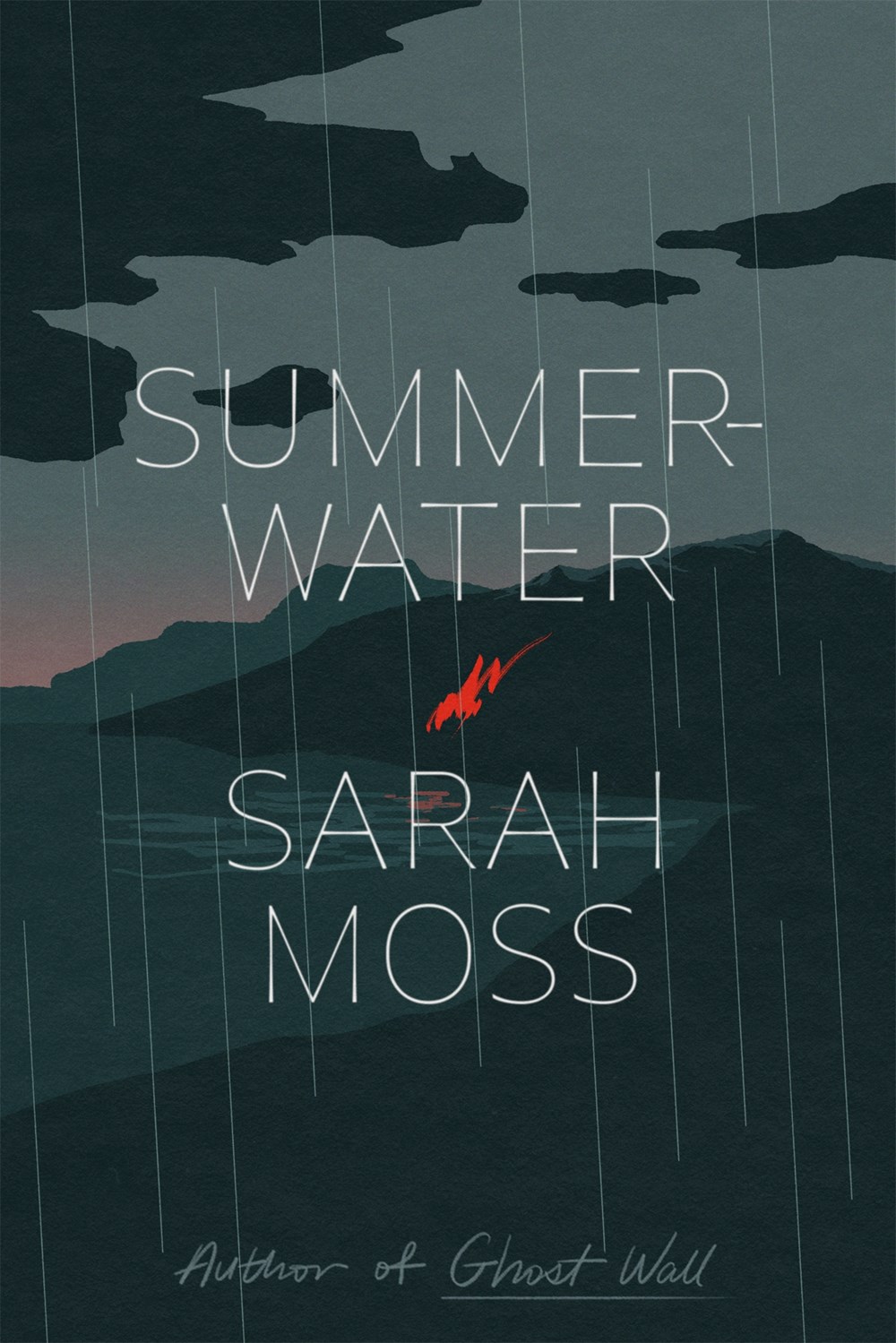
What to read right nowSummerwater by Sarah Moss (Farrar, Straus & Giroux: Jan. 12 Macmillan Audio: 4 hr, 27 min). Written almost as linked short stories or vignettes, this slim novel, told over the course of one day, follows about a dozen people who are vacationing in a remote area of Scotland.

At the beginning of the day, which opens with a young mother taking a dawn run, each family is insular, hunkering down in their own cabins or following their own amusements. As we see the day progress through the eyes of different characters, we begin to view the temporary community of strangers as unique individuals, understanding their behavior from a variety of perspectives. By the end of the day, several groups have crossed paths, quarreled, or bonded . . .

The novel is beautifully written. Moss creates an uneasy atmosphere, building a sense of dread beneath what should be a relaxing summer day for the vacationers. This isn't an uplifting story, and some threads are left open-ended. But life isn't always bright and we can't predict how people are going to face their challenges.

The audiobook is read by Morven Christie, who does an excellent job conveying the author's style, building the tension, and subtly distinguishing between the characters. Highly recommended.

Thanks to the publisher and libro.fm for the audio review copy.

What to read right nowThe Effort by Claire Holroyde (Grand Central: Jan. 12; Hachette Audio: 10 hr, 38 min). What happens when a comet is destined to hit Earth? A secret international team is quickly cobbled together to try to figure out a way to deflect the comet's path. Meanwhile, a team of scientists is heading to the North Pole, with a poet and photographer in tow, to try to record the last vestiges of Arctic wildlife and the icy landscape before climate change finally wins.

We follow the individuals from these two groups as the countdown to either the comet's impact or the comet's destruction occurs. We also see what happens afterward.

I liked the premise and the different ways people reacted to the news of the impending death of the world as we know it. This isn't an action-packed story but more a slow burn as individuals rise to the occasion or crumple under hopelessness. In addition, this isn't a feel-good story, but it does give us lots to think about.

This will not be the best book I'll read this year, but I'm glad I read it. This would be a good book club pick because readers will likely have differing opinions about the characters' actions. Worth your while.

The audiobook was read by Jay Ben Markson, whose sense of pacing was good match for this book. Thanks to the publishers for the digital and audio copies of this book.

What to read right nowThe Power of the Dog by Thomas Savage (Back Bay: 2001; Hachette Audio: 8 hr, 15 min). This is a re-issue of a book originally published in 1967 and my first time reading it. It is soon to be a movie.

Set in the 1920s in Montana, this is the story of two brothers, aged 38 and 40. The older, Phil, has always been thought of as the smarter, tougher, more sociable of the two. George is stocky and quiet. The brothers run a successful cattle ranch, living together in their childhood home, which their parents left them when they moved to Salt Lake City.

Strict routines are kept until George suddenly, and without telling Phil, marries Rose, a widow from town, bringing her out to the ranch to make a new home for her and her son. Teenage Peter is bookish, somewhat effeminate, and has trouble connecting with others, but George hopes to be a good stepfather. Phil concocts myriad reasons for disliking and distrusting Rose and Peter and is determined to break up the marriage so life can get back to normal.

Savage writes with power and insight. He provides just enough of the characters' history, through minimal backflashes and memories, to give foundation to the events that unfold after George brings Rose into their home. Chilling and moving. In a way, Savage reminds me of Mishima: through sparse prose, a full and lush story is told. The Power of the Dog will likely be on my best of 2021 list.

This is my first Savage book, but now I must read the rest of his work.

The unabridged audiobook was brilliantly read by Chad Michael Collins. This is my first experience with him, and I was taken in by his pacing, his delivery style, and his ability to build a mood. The afterword (do not miss this!) is read by Annie Proulx, who provides context and thoughts gleaned from several close readings.

Thanks to the publisher and Libro.fm for the audio review copy.

Click for more

10 August 2020

12 Audiobooks: What I've Listened to This Summer

Here's what I've read since my last check-in. All books were received for review or for a freelance assignment unless otherwise indicated. Where you see "AFM," please check out my full audiobook review on the AudioFile Magazine website. Also note that I've given fuller treatment to some of these titles over on Goodreads. Also note that I listened to all of these titles. I miss print/digital reading, but audios are what works for now.

Audiobooks for 2020
Before I get into my brief thoughts on the dozen books I listened to since my last post, I want to mention one that I didn't finish. While I really liked the first book in the Aurora Cycle series, I ultimately turned off Aurora Burning. It may be my mood, it may be a case of sophomore slump for the authors, but I just didn't care enough to find out what happens to the characters. Note that I normally love Amie Kaufman and Jay Kristoff, so blame the DNF on me. The narrators were Kim Mai Guest, Johnathan McClain, Lincoln Hoppe, Donnabella Mortel, Jonathan Todd Ross, Erin Spencer, and Steve West, and they all did a fine job. The performances were not the issue. (Listening Library; 15 hr, 16 min).

  • Wandering Strange Lands by Morgan Jerkins (author read; HarperAudio; 8 hr, 3 min): In this memoir, the author sets out to search for her roots and along the way discusses the Great Black Migration north, myths and traditions, food and customs, and more that connect and disconnect Black Americans from each other and their ancestors. Adequately read by the author.
  • The Golden Cage by Camilla Lackberg (read by Ann Richardson; Random House Audio; 11 hr, 2 min): This is a standalone thriller that focuses on a woman who is out to seek revenge on her husband who has done her wrong. A few good twists. I like Lackberg's main series better, but this is a good listen. Richardson does well with the accents and builds the tension.
  • Death of Yesterday by M.C. Beaton (read by Graeme Malcolm; Grand Central; 5 hr, 36 min): The 28th installment in the Hamish Macbeth series still doesn't disappoint. I was, however, unhappy that I downloaded a "Booktrack" version of the audiobook. Malcolm's delivery was fine, but the so-called enhancements (music, sound effects) were too distracting for me. Your mileage may vary, but I'm not a fan of Booktrack.

  • The Hunting Party by Lucy Foley (read by Gary Furlong, Elle Newlands, Morag Sims, Imogen Church, and Moira Quirk; HarperAudio; 10 hr, 8 min): What a super closed-door mystery with a ton of red herrings and an exquisite slow burn. You don't even know who the victim is until pretty far along. Loved this. The full cast was terrific; highly recommended. (personal collection)
  • Summer Longing by Jamie Brenner (read by Molly Parker Myers; Hachette Audio; 11 hr; 36 min): It's not summer without a Brenner book. Her beach reads always have some depth to them and focus a lot on mothers and daughters and family. Perfect for these hot August days. Myers's performance was engaging.
  • Northernmost by Peter Geye (read by Edoardo Ballerini and Lisa Flanagan; Random House; 11 hr, 34 min): Just a quick note here to say that this is probably my top read of the year. I'm pretty much in awe of Geye's talents and love the generations of characters he has created. I write more about this book on GoodReads. Ballerini and Flanagan were amazing. Listen to this one!

  • Death of a Policeman by M.C. Beaton (read by Graeme Malcolm; Hachette Audio; 5 hr, 20 min): I'm almost done with the series and will likely finish up by the time I post reviews again. Still fun and Malcolm is still good.
  • The Aunt Who Wouldn't Die by Shirshendu Mukhopadhyay (read by Deepti Gupta and Zehra Jane Naqvi; HarperAudio; 3 hr, 15 min): I'm not sure I understood this Bengali audiobook in translation. It's the story of a poor woman who marries into a rich family and also the story of her daughter. The magical realism and the cultural references I didn't really get made this only meh for me. On the other hand, Gupta and Naqvi's performances were fine. AFM.
  • His & Hers by Alice Feeney (read by Richard Armitage and Stephanie Racine; Macmillan Audio; 10 hr, 39 min): A twisty thriller set in England. Every time I thought I had figured it all out, I was wrong! Well done and worth your time. Armitage and Racine kept my interest and didn't give the story away.

  • Gideon the Ninth by Tamsyn Muir (read by Moira Quirk; Recorded Books; 16 hr, 50 min): This is the first in the Locked Tomb trilogy and because the second book was (or will be?) released this summer, I thought it was time to get on board. It's a unique fantasy and science fiction mashup with good characters, okay world building, and some mysteries. I'm interested enough to listen to the second book. Quirk was good; I have no complaints.
  • The Fixed Stars by Molly Wizenberg (read by Erin Mallon; Dreamscape; 6 hr 21 min): I wrote more about this on GoodReads. I like Wizenberg's earlier memoirs so I knew I would like this one too, though the subject matter is not food related. Instead Wizenberg writes about her growing self-awareness in terms of her sexuality and discusses gender in broader terms. Mallon was excellent.
  • Becoming Eve by Abby Chava Stein (author read; Seal; 7 hr, 53 min): Go see my thoughts on GoodReads for more. Fascinating look into both contemporary Hasidic life and the journey of a transgender member of the community. Stein writes with openness and feeling and seems like a natural behind the mic. One of my favorites of the year.

Click for more

18 February 2019

Stacked-Up Book Thoughts: A Great Reading Week

recommended audiobooksI've reached that point where cabin fever is starting to set in. The sleet or ice or cold or snow has kept me cooped up inside and made me miss way too many outdoor walks. It's driving me crazy!

We finally started the new season of True Detective. I like it but need to see a few more episodes before commenting. We finished the Netflix series You, which started out strong, but I was less enamored by the end. We also finally watched the movie Room, which I liked. It's been too long since I read the book to make detailed comparisons, but the young actor who played Jack did an excellent job.

Here's what I read last week.

review of The Raven Tower by Ann LeckieThe Raven Tower by Ann Leckie (Orbit, Feb. 26): I really liked this epic fantasy--told in a mix of first and second person--about gods and humans, sons and fathers, how power travels through the world. As other reviewers have noted, some of the plot lines are similar to Hamlet (a young man returns from war to find his father dead and his uncle on the throne), but much is unique. The god Strength and Patience of the Hill has witnessed eons of the world's history and the rise of humans. Through Strength's narration we learn about the ancient gods, how they gain (and lose) power, where that power lies, what they can (and cannot do), their relationships with each other, and their complex connections with people. At the same time, we are following the political and religious goings on in the kingdom of Iraden. I was intrigued by Leckie's take on the world of the gods, which is different from that of Roman and Greek mythology. In The Raven Tower universe, gods must think carefully before they speak, because their words have the power to change the world and to change their own fate. I was also caught up in the court politics and how the paths of the gods and the humans were intertwined. Don't miss this one. I listened to the unabridged auidobook (Hachette Audio; 12 hr, 2 min) read by Adjoa Andoh, who does a brilliant job conveying the emotional depth of Strength and Patience of the Hill and the god's reactions to all it witnesses throughout the millennia. (audiobook provided by the publisher)

Review of Good Riddance by Elinor LipmanGood Riddance by Elinor Lipman (Houghton Mifflin Harcourt, Feb. 5): In a fit of Kondo-inspired tidying up, Daphne Maritch throws her late-mother's annotated high school yearbook into the recycling bin. In 1968 in a small New Hampshire town, Daphne's mom, June, was a teacher and the yearbook adviser; from that time on, she never missed a reunion of that class, updating her copy of the yearbook with the juicy tidbits of gossip and facts she learned each year. After Daphne's documentary-filmmaker-wantabe neighbor retrieves the yearbook, Maritch family secrets begin to leak out. This is a light, fun contemporary story of a young woman trying to find her place in the world and in New York. Her widowed father, snobby older sister, and various apartment building neighbors have parts to play as Daphne learns that her mother may not have been perfect and that her parents' loving marriage may have had some cracks. Pop culture, humor, and desperate acts keep the plot moving. Unfortunately one of the principal motivators for the entire novel is based on genetics, and the author got those genetics wrong. If I hadn't been listening to this book for a freelance assignment, I would have quit right there. The non-geneticists among you will enjoy this lighthearted novel. The unabridged audiobook (Dreamscape; 8 hr, 7 min) was very nicely read by Mia Barron, whose expressive performance brought out the humor and tapped into the characters' emotional journeys. (audiobook provided for a freelance assignment).

Review of The River by Peter HellerThe River by Peter Heller (Knopf, March 5): I love Peter Heller, and this novel was one of my most anticipated books of the year. I was not disappointed, and The River is now sitting pretty as the best book I've read in a long while. This is the story of Wynn and Jack, both outdoorsy and from rural backgrounds, who meet at college and become best friends. They spend as much time as possible canoeing rivers, fly-fishing, and camping. They have a natural and respectful interpersonal rhythm, and easily travel and work together. While on a canoe trip in Canada, they notice the signs of a not-so-distance forest fire and thus decide to make haste to their take-out point. On that foggy morning they pass two other sets of campers: a pair of drunken older men who mock the boys and a couple camped on an island who can be heard arguing. From that point on the trip takes a dark turn as the boys' safety seems to be jeopardized along more than one front. I love how Heller conveys what it's like to be on a wilderness river--the sights, sounds, work, conditions--and his obvious passion for and knowledge of fly fishing shines. Heller is a master at creating a creeping buildup of danger, holding it just out of sight so you never quite know where and when or if it will manifest. I was completely connected to Wynn and Jack and understood what moved them, what made them who they were. Do not miss this one. (copy provided for a freelance assignment)

Review of Enchantee by Gita TreleaseEnchantee by Gita Trelease (Flatiron, Feb. 5): I already wrote about this nicely done alternate history look at pre-revolutionary France and the intrigues of Louis XVI and Marie Antoinette's court. Camille has inherited the gift of magic from her mother and the printer's trade from her father, but her apprenticeships are cut off when both parents die from smallpox in the late 1780s. Her older brother fails to offer Camille and their younger sister protection, leaving the girls on their own in a Paris that isn't kind to the poor or to girls. Realizing she must use whatever power she has, Camille dons her mother's enchanted dress and infiltrates Versailles, hoping her magic will help her win at cards and rise from poverty. The only trouble is that the magic of the dress lasts only so long, life at court is much more complicated than Camille is prepared for, and she is not the only magician in the palace. In some ways Enchantee is a Cinderella retelling: through magic, a poor girl is transformed, goes to court, and turns heads; but she must leave before her disguise falls apart. I always like a fairy tale retelling and enjoyed those aspects of Enchantee. I also liked the historical facts and period details of Paris: the rumblings of revolution, the storming of the Bastille, the attitudes of the rich, the fashions of court, and the new technology of hot-air ballooning. There were few surprises in Enchantee, but the ending was both exciting and satisfying. I listened to the unabridged audiobook (Macmillian Audio, 12 hr, 56 min) read by Justine Erye, who is one of my go-to narrators. She did an excellent job with the various accents and distinguishing among the characters. (print copy provided by the publisher; audio copy provided for a freelance assignment)

Mercy by Mandeliene Smith, from Rutting Season"Mercy" by Mandeliene Smith from Rutting Season (Scribner, Feb. 12). This week's short story comes from a debut collection. "Mercy" is set on a small family farm, where May is coping with sudden widowhood and the stresses of being a single mother solely in charge of keeping everything on track. The farm was her idea; her husband was a lawyer who gamely agreed to keeping animals, especially Pam's beloved horses. The emotional and dramatic aspects of the story were strong but realistic, and I could sense just how hard it was for Pam to move through her new reality while trying to present a strong and upbeat front for her young children. I will be reading more from this collection; the stories are billed as being about women and families on the brink of transformation. (digital copy provided by the publisher)

Click for more

19 November 2018

Stacked-Up Book Thoughts: 5 Books, 2 Settings

Book reviews from Beth Fish ReadsIt's is soooo weird but many of the books I read in late October and early November had connections to the Caribbean and involve people who are not exactly who they appear to be on the surface.

The crossovers have been totally coincidental--I had no idea of the setting of some of them before I started reading--and this has led to some confusing moments. As in, "Wait! What island am I on? What year?"

For example, Trinity (which I reviewed earlier this month), has a section that takes place at Oppenheimer's Virgin Island home, and Winter in Paradise has a scene in which the characters are in a boat and motor on by Oppenheimer's beach.

The unnamed young wife in The Winters grew up in the Caymans, is comfortable on boats, and is an orphan; one of the main characters in Winter in Paradise is around the same age, is also an orphan, and is also comfortable on boats, though she lives in St. John. A novel I edited in October takes place in Nassau in the past, and the last audiobook I reviewed for Audio File magazine takes place in Nassau in the present.

You would think that after those books I'd race for new and different settings, wouldn't you? Well, yes I did, but the next two books I read both took place in Paris! I think I've broken the cycle though because the book I'm currently listening to is a collection of science fiction short stories: very few real-life settings here. Phew!

Review of The Winters by Lisa GabrieleThe Winters by Lisa Gabriele (Viking, October 16): I was pleasantly surprised by how much I liked this retelling of Daphne du Maurier's Rebecca. I loved the reimagining of the characters and situation in a modern setting and thought it was clever to change Dani from creepy maid to bratty, unstable teenager. The isolated estate, called Asherley, is located on an a small island off the Hamptons, and instead of a forbidden boathouse, we have a forbidden greenhouse. The dead Rebecca is, of course, perfect and beautiful and loved by everyone. Max is a New York state senator, so his duties often call him away from home, leaving his young (unnamed) fiancee alone. The soon to be second Mrs. Winters was raised in the Caymens and is now orphaned, so she has no one to turn to when she begins to feel uncomfortable--and the tension and sense of foreboding are definitely there. Even though I pretty much knew where the story was going (because this is, after all, a retelling of the classic), there were still some surprises, and I was completely engrossed, especially at the end, wanting to know how the new twists were going to play out. I think you can safely read and enjoy Gabriele's contemporary story, even if you haven't read the classic, but being familiar with the original will add depth. (review copy provided by the publisher)

Review of Winter in Paradise by Elin HilderbrandWinter in Paradise by Elin Hilderbrand (Little, Brown, October 9): In a departure from Hilderbrand's normal books, there is only one brief passing mention of her beloved Nantucket. The book starts in the Midwest but takes place mostly in St. John, where a mother and her two grown sons reunite just after the new year. Each of them is in the middle of a personal crisis, but before they can talk about their own problems, they're hit hard by a devastating family tragedy: Irene's husband and the boys' father died in a helicopter accident over the ocean. That would be horrible all in and of itself, but Russell hadn't told his family that he was going to be in the Caribbean; he was supposed to be on a boring business trip. Thus the family trip to the island is not for pleasure, and as they piece together the puzzles and surprises Russell left behind, the family discovers they didn't know him at all. Meanwhile, the brothers meet a beautiful young woman (a rivalry ensues), and Irene meets a a man who offers her kindness and understanding. I can always count on Hiderbrand to give me great characters, a tight plot, and a good mystery. This is the start of new series, and I really like the characters and St. John setting. I think I kind of know where the story is going, so the ending, which sets up the next installment, was not altogether unexpected. I wasn't a fan of the abrupt ending, but I'm looking forward to the second book. I listened to the unabridged audiobook edition of Winter in Paradise (Hachette Audio; 10 hr, 11 min), read by Erin Bennett, who has narrated almost all of Hilderbrand books. Bennett is always a pleasure to listen to, and I enjoy her characterizations and the way she captures the essence of Hilderbrand's writing. (audiobook review copy provided by the publisher)

Review of Learning to Breathe by Janice Lynn MatherLearning to Breathe by Janice Lynn Mather (Simon & Schuster Books for Young Readers, June 2018): The only thing I knew about this debut novel before I started it was that it had won a number of awards and dealt with real-life issues. Sixteen-year-old Indira was raised by her loving, but strict grandmother in the Bahamas. She has spent most of her life trying to prove that she is nothing like her mother, who is known for her drug addition and loose reputation. Granny believes in Indy and wants to give her a better life and chance to climb out of poverty, so she sends her to live with her son's family in Nassau and attend a private high school. What Indy finds in the city is an aunt who thinks she's poor trash, an older male cousin who disrespects her and abuses her, and a distant uncle. She is teased at school, and her same-age female cousin runs hot and cold. This is an all-too-real and heartbreaking story of a young girl who tries her best to be good but who is thwarted and divested of power at every turn. After a chance meeting of the owners of a yoga retreat, Indy slowly learns to trust but finds it hard to overcome her self-shame until she realizes only she can save herself and others from the fate of her mother. My heart went out to Indy, and I loved her voice. Mather presents Indy's situation with honesty and respect, and I'm pretty sure this book will have a place on my top-ten of the year list. I listened to the unabridged audiobook (Dreamscape Media, 9 hr, 18 min), read by Chrystal Bethell. This is my first time with Bethell, but I'm looking forward to more of her work. Her sensitive narration captured Indy's pain, and her accents were believable, while avoiding stereotypes. Indy's internal dialogue sometimes verges on free verse, which Bethell delivered with aplomb. Read or listen, but don't miss this book. (review copy for a freelance assignment)

Review of Love a la Mode by Stephanie Kate StrohmLove a la Mode by Stephanie Kate Strohm (Disney-Hyperion; November 27): After so many heavy books, I needed a palate cleanser, which I found in this delightful novel, perfect for food lovers. The story is told from the alternating perspectives of Henry Yi and Rosie Radeke, both of whom were accepted into a young chef's academy in Paris. Henry grew up in the kitchen of his father's Chicago restaurant, whereas Rosie is a home baker from Ohio. Their backgrounds, talents, and ethnicities are very different, but they share the dream of becoming professionals in the culinary world. This contemporary young adult rom-com is so much fun. We meet the other (diverse) teen students and the demanding chef teacher. We enter the kitchens and feel for the teens' struggle to perfect their cooking and baking techniques while also meeting their academic requirements. There is romance drama, mean girl drama, and kitchen drama. Love a la Mode was the perfect escape novel for me, combining humor, a love story, cooking, and Paris in one package. There's nothing high-brow here, but I enjoyed meeting Rosie, Henry, and their friends. I listened to the unabridged audiobook (Listening Library; 9 hr, 35 min) read by the author. You know how I usually feel about author-read audiobooks, but Strohm was great. Her French pronunciations seemed fine to me, and she (as one would hope) captured the personalities of her characters beautifully. This audiobook would be the perfect accompaniment to your holiday cooking. Too much fun to miss. (audiobook review copy provided by the publisher)

Review of The Rain Watcher by Tatiana de RosnayThe Rain Watcher by Tatiana de Rosnay (St. Martin's Press; October 30): I had high hopes for de Rosnay's latest novel, which promised a dysfunctional family and a Paris setting. The novel does indeed provide both and was particularly interesting in light of last winter's flooding of the city. Most of the book is told from the viewpoint of Linden Malegarde, a world-famous photographer who returns to his native France to attend his father's 70th birthday celebration. His mother, American by birth, decided to hold the gathering in Paris with just the original family; no in-laws or grandchildren are invited. Paul, the patriarch, is a renown arborist, who seems to like his trees better than people, but his wife hopes the gathering will be a success. The party weekend coincides with the worst flooding of the Seine in a century, and the events that follow (including family illnesses) are complicated by the rising water. While I enjoy de Rosnay's writing style, I didn't think this was her strongest novel. The flow of Linden's story is interrupted by sections from Paul's diary, in which he describes a traumatic event of his own childhood. That story is, indeed, disturbing, but it's never really tied into the main narrative, and I ended up wondering why it was included in the novel. I also found the number of big things this family faced to be slightly over the top: one or more of them were dealing with LGBTQ issues, alcoholism, bad marriage, affairs, suicide, unrequited love, distant parents, self-doubt, PTSD, bullying, rape, and medical problems. While I know that many of us are juggling several significant simultaneous problems, it seemed unbelievable in The Rain Watcher. I think de Rosnay had several good ideas here, including thoughts on the changing environment, but she didn't quite pull them off in the novel. I am, however, looking forward to her next book. (review copy provided by the publisher)

Click for more

18 December 2017

Stacked-Up Book Thoughts: From Fantasy to Biography; Or My Reading Life

Reading during the Holiday SeasonBaby it's cold outside! Winter is here, even if the calendar says not quite yet. We have snow and the promise of a white Christmas, though there's hardly enough white stuff on the ground to shovel.

We also made enormous progress on our holiday shopping, and I think we're done. Phew. We haven't wrapped anything, but, hey, that's what Christmas Eve is for, right?

All that running around plus two holiday parties meant very little time for reading, though I did manage to finish one book, reread another, ditch one, and start two more.

This Week's Highlight: On Wednesday over on the AudioFile Blog, I will be recommending five good audiobooks for winter solstice listening. Because the kids are likely on school holidays, two of the titles are appropriate for family listening. I hope you take a look.

What I Read Last Week

Review: The City of Brass by S. A. ChakrabortyThe City of Brass by S. A. Chakraborty (Harper Voyager, Nov.): Like many of you, I often shy away from the big-buzz books because they so often fall short of the hype. Not so with The City of Brass. The setting is the Mideast and the time period is likely the turn of the 19th century. The action starts in the streets of Cairo and ends at the magical city of Daevabad, the city of brass where only those with djinn blood may enter. Our protagonist is Nahri, a 20-year-old orphan who has no knowledge of her family or background and who supports herself by attempting to heal the sick and by reading fortunes, with a little swindling and thieving on the side. During a ceremony in which she is pretending to perform a kind of exorcism, she inadvertently conjures up a dangerous djinn warrior, and her life is completely flipped.

Based on Mideast folklore and traditions, Nahri's story is full of adventure, magic, politics, danger, friendship, and intrigue. I loved the setting and the beings Nahri meets on her journey. Secretive Dara, is a djinn of many talents whose legendary reputation is either hero or uber-villain, depending on one's family's history. Ali, the second son of Daevabad's ruler, is both a trained warrior and a devout Islam. Muntadhir, brother to Ali, is the heir to the throne and lives for all the pleasures his money and status can buy. Nahri is streetwise in the human world, but how will she fare in the city of brass, where the king takes a special interest in her and claims she is the half-blood daughter of the djinn's most famous healer?

Complex, different, non-Western, adult and the promise of more books to come. Don't hesitate to give The City of Brass a try.

Audiobook notes: I read most of this novel in print, but I listened to the middle third when cooking last week. I enjoyed Soneela Nankani's performance of the unabridged audiobook (Harper Audio; 19 hr, 35 min). I noted good pacing and and distinct voices for the characters. I especially liked hearing the correct pronunciation of the names, beings, and places. Overall, however, Nankani didn't capture my attention enough to prevent my returning to print.

Review: The Invisible Library by Genevieve CogmanThe Invisible Library by Genevieve Cogman (Roc, 2016): I love this alternate history, time-bending series in which the librarians of an extra-world library engage in espionage and theft, um, preservation of books that are emblematic or important to each of the different versions of the world. When I received The Lost Plot, the newest installment, which is coming out next month, I thought I'd reread the entire series--this time in audio instead of print (Audible Studios; 10 hr, 31 min). It was fun to start over with the first book in the series and see librarian Irene and her assistant, Kai, at the beginning of their working relationship. I had forgotten some of the details of their adventure in an alternative steampunk London, and the overall story held up well to a second reading. I like both the world building and the characters, and the story is light enough for holiday season reading. Book lovers and librarians should give the series a try.

Audiobook notes: Susan Duerden's performance is enthusiastic but almost too dramatic for my tastes. She creates distinct voices and has good pacing, but I felt as if she were reading to children. The protagonists of the series are absolutely adults and there is some mention of sex, so the juxtaposition of the theatrical reading with some of the text was jarring. I noticed that she narrates all the books in the series, and I'm not quite sure if I'm going to finish my reread in print or audio. Stay tuned.

Thoughts: The Shores of Tripoli: Lieutenant Putnam and the Barbary Pirates by James L. HaleyThe Shores of Tripoli: Lieutenant Putnam and the Barbary Pirates by James L. Haley (Putnam, 2016). I loved the Patrick O'Brian's Aubrey/Maturin series (you may have seen the movie Master and Commander based on the books), so thought I'd like Haley's new series, which explores the early days of the U.S. Navy. Set in 1801 in the Mediterranean, the book is full of fascinating details of life aboard a naval vessel and introduces us to pirates, privateers, and European and North African politics. Although I have a paperback, I decided to try the audiobook. Sadly, Paul Boehmer's performance (Penguin Audio; 15 hr, 43 min) didn't work at all for me. I could hear breath noises, and there was something about Boehmer's cadence and earnest delivery that bothered me. I listened for almost 2 hours before returning it to Audible. The story definitely has promise, so I'll continue the book in print, but probably not until after the holidays. There is quite a lot of information dumping at the beginning--basically to set up the complex foundation of the series--which may have been some of the problem with the audio. I'll let you know if I carry on.

What I'm Reading Now

2 books for December reading

I started listening to Felicity Hayes-McCoy's The Library at the Edge of the World, read by Emma Lowe (Dreamscape; 9 hr, 42 min). The story is set in modern times in a remote area of Ireland and is about a woman of a certain age who is taking a chance on new beginnings. I'm enjoying the story and the narration. I also started reading Laura Thompson's The Six (Picador, 2017, paperback). I'm one of those people who's totally fascinated with the Mitford sisters and can't seem to read enough about them (and by them). This new biography is terrific so far.

Click for more

25 August 2017

10 Audiobooks for Late August

Summer isn't officially over for a few more weeks, even if county fairs and the return to school are saying otherwise. Get outside and enjoy the last days of warm weather, and be sure to take an audiobook along on your adventures. Here are 10 suggested listens, all of which will be published next week.

  • 10 Audiobooks for Late AugustLouise Penny's Glass Houses (Macmillan Audio; 13 hr, 32 min) is the thirteenth book in her much-loved Three Pines series and the third one read by Robert Bathurst, who replaced the late Ralph Cosham. This installment starts at Halloween and ends in the summer and involves a murder, folk lore, and a trial. The novel has won several starred reviews, and Bathurst's performances have won over Penny's fans. (mystery)
  • Claire Messud's The Burning Girl (Recorded Books; 6 hr, 38 min) is performed by Morgan Hallett, who is known for good pacing and consistent characterizations. The story focuses on two childhood girlfriends who drift apart when they reach adolescence. Hallett is a good pick for this thoughtful look at the choices we make when we're young and full of dreams and light on experience. (coming-of-age)
  • Gabriel Tallent's My Absolute Darling (Penguin Audio; 15 hr, 47 min), performed by Alex McKenna, masterfully examines the tough, disturbing issue of child abuse. McKenna, who has experience portraying teens, is said to have hit the emotional heart of this audiobook (see AudioFile magazine). The novel is an Indie Next pick for August. (general fiction)
  • Kathryn Miles's Quakeland: On the Road to America's Next Devastating Earthquake (Penguin Audio; 12 hr, 10 min) is read by veteran narrator Bernadette Dunne. Dunne's voice should be well suited to this piece of investigative journalism that takes listeners on a tour of the U.S. infrastructure and examines the projected aftermath of a large earthquake on levees, mines, nuclear plants, and major economic hubs. (nonfiction)
  • 10 Audiobooks for Late AugustAshley Shelby's South Pole Station (Dreamscape Media; 12 hr, 42 min), performed by Rebecca Gibel, should be on everyone's listening list. Do you have what it takes to live and work in the isolated small community of scientists who conduct research in Antarctica? Gibel, who is widely liked by listeners, takes on this sometimes funny story of a woman's experiences after receiving an artists and writers grant to spend a year at the South Pole. Perfect for those who like quirky characters. (general fiction)
  • Jennifer Ryan's Montana Heat: Escape to You (Harper Audio; 9 hr, 30 min), performed by Coleen Marlo, is the first full novel in a new series featuring male DEA agents and the women they get to know and love. Based on Marlo's narration of a Montana Men novella, romance fans are in for a treat. This story involves an actress who escapes a kidnapping and receives protection from a handsome agent. (romance)
  • Erin Carlson's I'll Have What She's Having: How Nora Ephron's Three Iconic Films Save the Romantic Comedy (Hachette Audio; 10 hr, 41 min) is performed by Amy Tallmadge. Tallmadge is an expressive narrator who is easy on the ears and should be a good match for this behind-the-scenes look at three hit movies. Written by a journalist, this audiobook contains interesting trivia but also explores the more serious issue of Hollywood's poor treatment of women. (nonfiction)
  • Cutis Craddock's An Alchemy of Masques and Mirrors (Macmillan Audio; 18 hr, 21 min), narrated by Erin Bennett, is the first in a fresh new fantasy series set in a world of airborne continents. Bennett's vocal skills will likely shine in this debut story of magic, court politics, adventure, and musketeer protectors. The novel has been earning starred reviews and critical praise. (fantasy)
  • 10 Audiobooks for Late AugustCherise Wola's The Resurrection of Joan Ashby (Macmillan Audio; 19 hr, 20 min) has two narrators: Gabra Zackman and Michael Dickes. The story centers on the question of what happens when a brilliant young writer has an unplanned pregnancy and is talked into becoming a mother. This appears to be Dickes's first outing as an audiobook performer, so I can't comment on his skills, but Zackman's deep experience and strength as a narrator promise to make this an enjoyable listening experience. (general fiction)
  • Kelly Simmons's The Fifth of July (Blackstone Audio; 7 hr, 16 min), read by a full cast, focuses on the fate of a well-off family in the aftermath of a tragedy. Told from six viewpoints, each with a different narrator, this story reminds us that money can't always bury our secrets. Listeners will quickly be caught up in this Nantucket drama. (women's fiction)

Click for more

Copyright

All content and photos (except where noted) copyright © cbl for Beth Fish Reads 2008-2020. All rights reserved.

Quantcast

Thanks!

To The Blogger Guide, Blogger Buster, Tips Blogger, Our Blogger Templates, BlogU, and Exploding Boy for the code for customizing my blog. To Old Book Illustrations for my ID photo. To SEO for meta-tag analysis. To Blogger Widgets for the avatars in my comments and sidebar gadgets. To Review of the Web for more gadgets. To SuziQ from Whimpulsive for help with my comments section. To Cool Tricks N Tips for my Google +1 button.

Quick Linker

Services

SEO

  © Blogger template Coozie by Ourblogtemplates.com 2008

Back to TOP